
Phacidium blight
Phacidium
Description
Symptoms
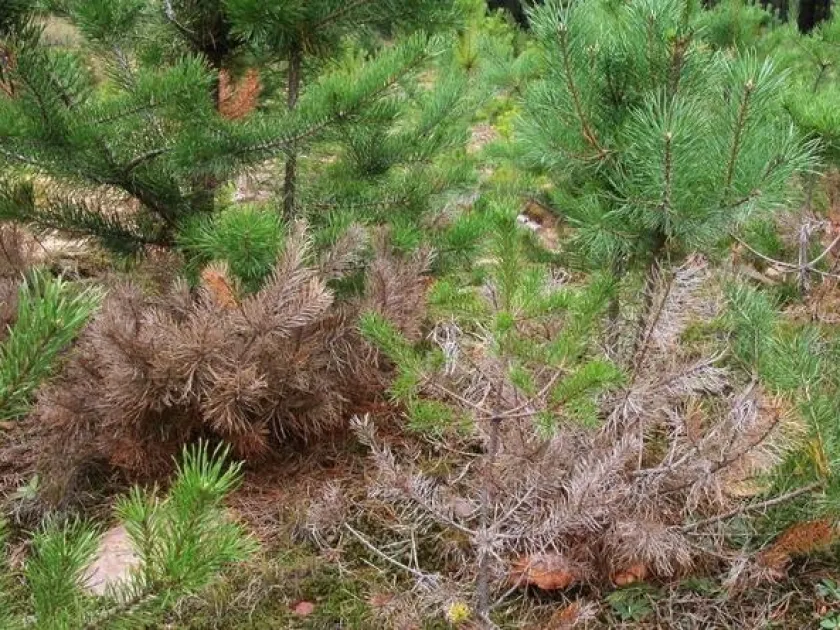
The most distinctive sign of Phacidium blight appears in early spring as the snow begins to melt. Infected needles turn a grayish-brown or straw color, appearing withered and dead.
If examined closely, a grayish white web-like mycelium may be visible on the surface of the needles. Shortly after, tiny black dots—the apothecia—emerge as the fungus prepares for reproduction.
Defoliation is a common consequence of advanced infection. The needles eventually drop, leaving the twigs bare. In severe cases, the entire tree can become defoliated, leading to rapid decline.
The disease typically presents in patches. Clusters of trees in the lower canopy, which were in direct contact with the snowpack, are usually the first to show symptoms.
Needle deformation, such as twisting or curling, is frequently observed during the colonization phase. These symptoms are often more pronounced in young, dense stands where humidity remains high near the ground.
Pathogen
The disease is caused by the fungus Phacidium infestans, an ascomycete pathogen known to attack young conifer trees. It is particularly prevalent in northern latitudes where deep snow cover persists for extended periods.
The life cycle involves the formation of apothecia (fruiting bodies) on infected needles. These structures release spores that are easily dispersed by wind and splashing rain, allowing the pathogen to spread across plantation sites.
The fungus is psychrophilic, meaning it thrives in cold temperatures. Its mycelium can remain active even under the snow, slowly colonizing host tissues throughout the winter months.
Infection usually occurs via stoma or minor injuries on the needles. Once inside, the fungus spreads rapidly, filling the needle tissues with mycelium and eventually compromising the tree's health.
Because the pathogen can survive in dead organic matter, it is considered a persistent threat in nurseries where fallen needles are not systematically removed and destroyed.
Conditions for development
The primary factor for disease development is a deep and persistent snow cover, especially if it lands on unfrozen ground. This creates a moist, cool microclimate perfect for fungal growth.
Dense planting schemes inhibit air circulation and reduce sunlight exposure, significantly increasing the duration of leaf wetness and susceptibility to infection.
Trees stressed by nutrient deficiencies or previous drought conditions are more susceptible to the pathogen. Proper tree vitality is essential for natural resistance against fungal invasion.
Fluctuating temperatures during winter, particularly periods of thaw, can accelerate fungal activity. High humidity is the critical environmental variable that drives the pathogen’s success.
Failure to implement sanitation practices allows the inoculum to accumulate. Accumulated debris provides a continuous source of spores for the subsequent growing season.
Why it matters
Phacidium blight causes substantial economic losses in conifer nurseries by killing seedlings or making them unsuitable for sale. The mortality rate in young stands can be very high.
In mature trees, the disease leads to significant growth inhibition and crown thinning. The weakened trees are subsequently prone to infestation by secondary pests, such as bark beetles.
The loss of foliage directly impacts the tree's ability to perform photosynthesis, leading to an energy deficit that makes the tree vulnerable to extreme weather events like summer drought.
In landscape management, the disease destroys the visual appeal of conifers, turning lush green trees into unattractive, patchy specimens that require expensive replacement.
In forestry, the disease hinders natural regeneration. Young seedlings are often lost during their first years of establishment, necessitating costly replanting efforts to maintain forest density.
Protection
Prevention is the most effective management strategy. Avoid overcrowding when planting and ensure proper spacing to promote air circulation and quick drying of the needles.
Sanitary measures are crucial: all infected needles and fallen debris should be collected and incinerated to reduce the spore load on the site. Keeping the area clean is vital for success.
Fungicide applications, particularly those containing copper-based compounds, can be effective if applied in late autumn before the onset of permanent snow cover.
Maintaining high plant vigor through balanced fertilization and proper irrigation helps the trees defend themselves against the fungus. A healthy tree is always a more resilient tree.
- Use only disease-free planting stock for new plantations.
- Conduct regular field inspections during early spring to identify outbreaks.
- Improve soil drainage to reduce excess humidity around the base of the trees.
- Mulching can prevent contact between foliage and contaminated soil.
Discussion
No discussions yet — be the first.