
Phacidiopycnis rot
Phacidiopycnis washingtonensis
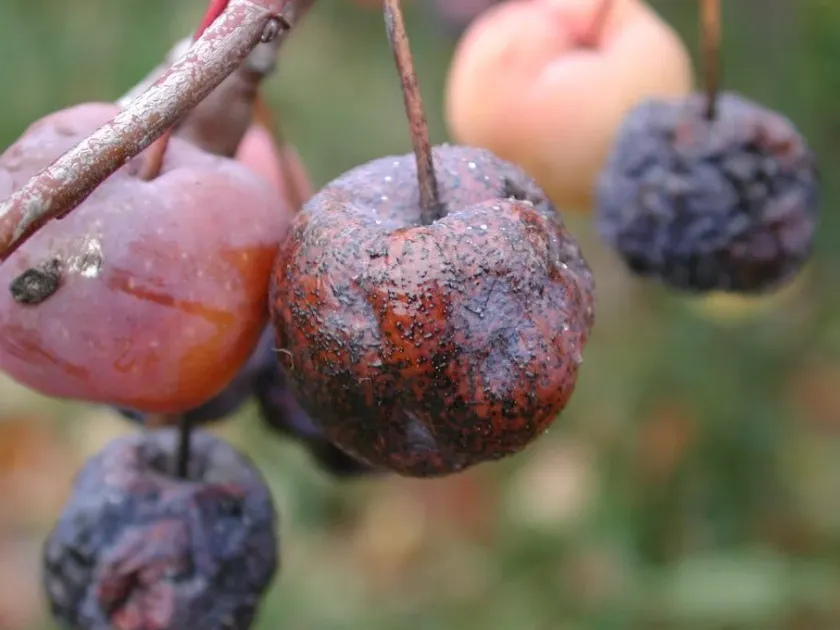
Description
Symptoms
The most distinctive symptom of Phacidiopycnis rot is the development of circular, brown, and sometimes sunken lesions on the fruit surface. These lesions typically appear during storage but can sometimes be observed on late-season fruit.
Internally, the flesh of the infected apple decays, becoming firm but later softening as the rot advances. The infected tissue often has a bitter taste, which is a common characteristic of this specific fungal infection compared to others.
On the skin of the fruit, small, dark, pimple-like structures (pycnidia) may emerge. Under high humidity, these structures can ooze spores, creating a visible light-colored mass or exudate that distinguishes it from other storage rots.
Besides fruit rot, the fungus causes branch cankers. These cankers appear as sunken, necrotic areas of the bark that gradually girdle the branch, leading to chlorosis, wilting of foliage, and eventual death of the affected limbs.
In cases of advanced infection, the fruit turns into a mummified husk. These mummies are rich in fungal spores and serve as a critical component in the disease cycle, necessitating their immediate removal.
Pathogen
The causal agent of this disease is the fungus Phacidiopycnis washingtonensis (often associated with its teleomorph Potebniamyces pyri). It is a significant pathogen that affects various pome fruits, primarily apples, leading to post-harvest decay.
The fungus persists as mycelium in infected bark or mummified fruits. It is highly adapted to temperate climates, allowing it to survive throughout the year and initiate infection during the next growth cycle of the host plant.
Spore dissemination is primarily driven by moisture, specifically splashing rain and irrigation water. Wind-borne spores also contribute to the spread of the disease within the orchard environment, especially during the humid late summer months.
Biologically, the fungus produces pycnidia, which are asexual fruiting structures. These structures release conidia that serve as the primary inoculum. The versatility of its life cycle makes it a persistent threat in both commercial and private orchards.
Research indicates that Phacidiopycnis washingtonensis is capable of colonizing dormant tissue, making it a difficult pathogen to eradicate once it is established in the woody parts of the tree.
Conditions for development
High humidity and moderate temperatures are the primary environmental drivers for the disease. Frequent rain events during the weeks preceding harvest significantly increase the risk of field infection.
Mechanical injuries, such as those caused by hail, insects, or picking equipment, create entry points for fungal spores. The integrity of the fruit cuticle is essential in preventing the initial colonization by the pathogen.
Orchards with poor air circulation due to dense canopy growth or inadequate pruning provide a sheltered environment for the fungus. These conditions prevent fruits from drying out quickly after rain, favoring spore germination.
In storage facilities, improper climate control is a major risk factor. Fluctuations in temperature can cause condensation on the surface of the apples, providing the necessary moisture for the fungus to activate and spread.
Lack of sanitation in warehouses and packing houses allows the fungus to survive on crate surfaces and equipment, leading to recurring infections across successive batches of harvested fruit.
Why it matters
The economic impact of Phacidiopycnis rot is severe, primarily due to the loss of marketable fruit during the storage period. Large-scale rot outbreaks can render entire shipments unsellable.
The fungus is highly contagious in storage conditions, where physical contact between infected and healthy fruit facilitates rapid spreading. This necessitates aggressive grading and inspection protocols to protect stored assets.
The destruction of branches and bark due to cankering reduces the overall health and longevity of the trees. This leads to increased labor costs for maintenance and pruning, as well as reduced yields over time.
The requirement for high-quality chemical control and post-harvest treatments increases the cost of production. Farmers must invest in rigorous monitoring programs to catch infections early before they spread.
Failure to manage the disease leads to a negative reputation in the market, as consumers associate brown, bitter-tasting spots with poor fruit quality. This can significantly reduce the profitability of a farming operation.
Protection
Effective management begins with strict orchard sanitation. This includes pruning out infected branches showing signs of canker and removing all fallen or mummified fruit from the orchard floor.
Preventative fungicide applications are necessary, particularly during wet weather periods in late summer. Using a rotation of systemic fungicides helps manage the pathogen while minimizing the risk of resistance development.
Post-harvest handling is critical; fruits should be cooled immediately after harvest to stop the progression of latent infections. Maintaining a strict cold chain is the most reliable way to extend the shelf life of apples.
Integrated Pest Management (IPM) is essential to reduce the number of insect bites or other skin damage on fruits. Protecting the fruit's natural barrier is one of the most effective non-chemical strategies available.
- Pruning to increase light and air penetration.
- Sanitizing storage crates and cooling rooms annually.
- Monitoring the orchard for early symptoms of branch dieback.
- Proper sorting to ensure only clean fruit enters storage.
Discussion
No discussions yet — be the first.