
Petrakia
Petrakia liobae
Description
Symptoms
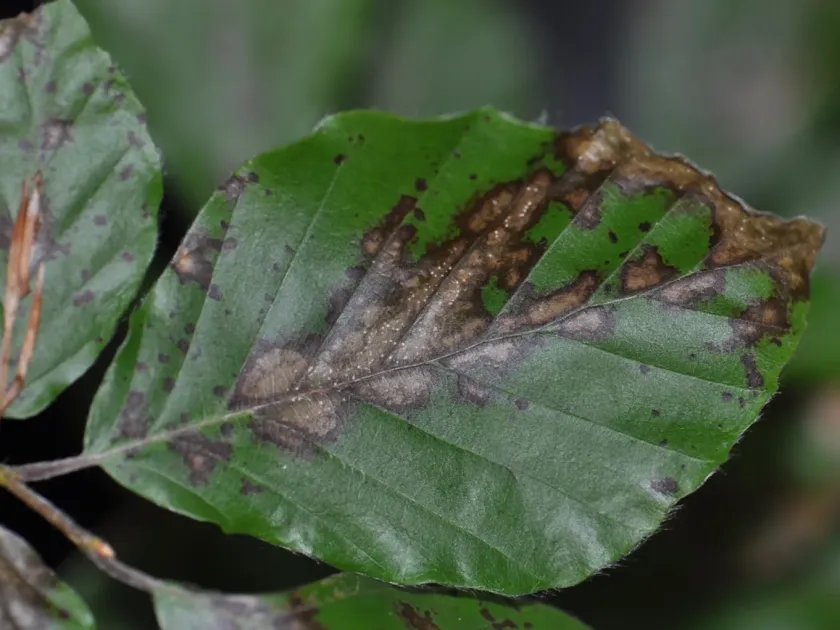
Symptoms of Petrakia typically begin as small, chlorotic spots on the leaf blades. As the infection progresses, these spots expand, change color to brown or dark brown, and often become irregular in shape as they coalesce.
The most diagnostic feature of this disease is the appearance of dark, cushion-like sporodochia on the underside of the leaves. These structures often look like soot or dark velvet, distinguishing it from other common leaf spots.
In cases of heavy infestation, the leaves may curl, shrivel, and undergo premature necrosis. The tissue surrounding the spots may remain green for a while before the entire leaf becomes chlorotic and drops off prematurely.
Young shoots can occasionally be affected if environmental conditions remain extremely humid. However, the primary damage is concentrated on the leaf canopy, where the fungal reproductive structures are most visible.
Microscopic analysis of the lesions reveals the characteristic multi-cellular conidia of Petrakia liobae. These spores are highly resistant to short-term environmental stress, which helps the fungus survive and spread during wind or rain events.
Pathogen
The disease is caused by the fungus Petrakia liobae, which belongs to the group of mitosporic fungi. It is a specialized pathogen that primarily targets maple species, utilizing conidia for reproduction and dissemination throughout the growing season.
The fungus thrives by colonizing the leaf mesophyll, where it develops reproductive structures known as sporodochia. These appear as small, dark, velvet-like cushions on the surface of the infected tissue, producing large quantities of spores.
Overwintering occurs primarily in fallen leaves, where the pathogen persists as mycelium or dormant conidia. When temperatures rise and moisture becomes available in the spring, the fungus reactivates, starting a new cycle of infection.
The infection process is facilitated by enzymatic activity that degrades the host cell walls, allowing the fungus to feed on nutrients within the leaf tissue. This process is particularly aggressive in young, rapidly developing foliage.
The epidemiology of Petrakia liobae is largely governed by environmental variables. Once established, the fungus can produce multiple infection cycles in a single year, significantly increasing the risk of severe outbreaks if left unmanaged.
Conditions for development
The development of Petrakia liobae is strictly dependent on moisture availability. High humidity (above 80%) and moderate temperatures between 18°C and 24°C create the optimal environment for spore germination and colonization.
Frequent rainfall and persistent dew are the primary drivers of disease spread. If the foliage remains wet for extended periods, the infection rate increases dramatically, as the water film allows conidia to move and germinate.
Dense planting schemes hinder air circulation within the canopy, preventing foliage from drying out quickly after rain. This creates a microclimate that is conducive to rapid fungal growth and spore production.
Tree health status also plays a significant role. Trees under abiotic stress, such as drought or nutritional deficiency, often have a reduced ability to mount an effective defense against the pathogen, making them more susceptible to attack.
The peak incidence of the disease is usually observed in mid-to-late summer, following periods of wet weather. The duration and intensity of the rainy season often dictate the severity of the outbreak for that specific year.
Why it matters
The primary impact of Petrakia is the reduction of the leaf surface area capable of photosynthesis. This impairs the tree's ability to produce carbohydrates, which are vital for winter survival and spring regrowth.
Chronic annual infections significantly weaken the host tree, leading to reduced annual shoot growth and diminished crown density. Over time, this makes the affected plants much less attractive and less effective as landscape trees.
In nursery settings, Petrakia can lead to substantial financial losses due to the unsellable condition of the foliage. Plants that are continuously defoliated lose their vigor and may fail to meet quality standards for sale.
Secondary damage occurs as the weakened trees become targets for secondary pests, such as wood-boring insects. Furthermore, the inability of the tree to harden off properly before winter increases the risk of cold injury.
In urban environments, the cumulative effect of Petrakia and environmental pollutants accelerates the decline of maple trees. This contributes to premature senescence and the need for frequent tree removal in parks and avenues.
Protection
Sanitation is the cornerstone of managing Petrakia. Collecting and removing all fallen leaves during autumn is essential to eliminate the primary inoculum source that allows the disease to survive through the winter.
Fungicide applications are effective if timed correctly. Preventive spraying at the start of leaf expansion, followed by additional applications during prolonged wet periods, can significantly reduce the incidence of the disease.
Improving cultural practices, such as pruning to open up the canopy, is highly effective. Enhanced light penetration and better air circulation discourage the fungus by reducing the humidity around the leaves.
Maintaining adequate soil moisture and nutrient availability helps ensure the tree remains vigorous. A well-nourished plant is naturally more resistant to infection and better equipped to recover from minor leaf loss.
- Remove and destroy all leaf litter every autumn.
- Prune trees to increase airflow and light penetration.
- Use copper-based or systemic fungicides as a preventative measure.
- Monitor the canopy regularly during wet weather cycles.
Discussion
No discussions yet — be the first.