
Petrakia leaf spot
Petrakia echinata
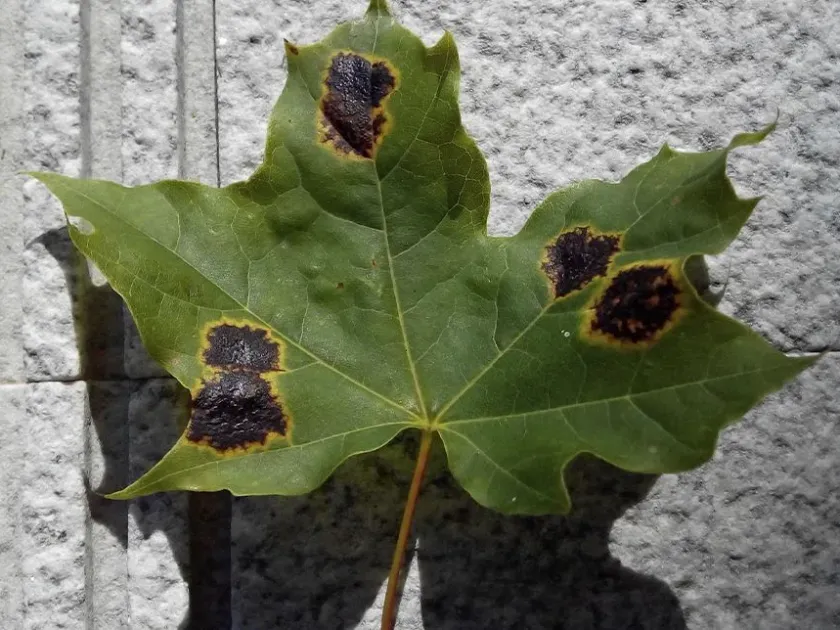
Description
Symptoms
Early symptoms appear in early summer as small, scattered spots on the leaf surface. These spots gradually enlarge and develop a characteristic brown or dark-brown necrotic appearance.
A yellow halo often surrounds the necrotic spots, indicating the plant's response to the toxins produced by the fungal activity. Eventually, individual spots may coalesce to cover large portions of the leaf.
On the underside of the infected leaves, velvet-like sporulation cushions emerge. These are dark-colored, often appearing nearly black, which serves as a definitive diagnostic feature.
Severely affected leaves exhibit premature yellowing and curling. In heavy infection scenarios, leaves may drop from the tree well before the natural autumn senescence.
Regular monitoring of the lower canopy is recommended, as high humidity levels in these areas typically lead to the earliest and most severe infection symptoms.
Pathogen
The causative agent of this disease is the fungus Petrakia echinata, a hyphomycete pathogen that specifically targets the foliage of various maple species.
The fungus overwinters primarily on fallen leaves as mycelium or conidia, serving as the main source of primary inoculum in the spring when temperatures begin to rise.
During the growing season, conidia are disseminated by wind, splashing rain, and occasionally by insects, facilitating secondary infection cycles across the tree canopy.
The pathogen enters the leaf tissue through stomata or mechanical injuries. Once inside, it colonizes the intercellular spaces, disrupting the plant's physiological activities.
This pathogen is highly specialized and has evolved mechanisms to thrive in the microclimates commonly found within dense or poorly maintained tree canopies.
Conditions for development
The development of Petrakia echinata is heavily dependent on moisture and moderate temperatures, typically between 18°C and 25°C.
Extended periods of rainfall and high relative humidity create the ideal environment for the germination and spread of fungal spores across the foliage.
Poor aeration within the canopy, often caused by overly dense planting or lack of pruning, significantly increases the severity of the outbreak by trapping moisture.
Irrigation methods that spray water directly onto the leaves, especially in the evenings, are discouraged because they prolong the period of leaf wetness required by the fungus.
Trees already weakened by nutrient deficiencies, pest pressure, or drought stress are significantly more susceptible to successful colonization by the pathogen.
Why it matters
The primary damage caused by Petrakia leaf spot is the reduction of the leaf's photosynthetic capacity, which directly impacts the tree's overall energy budget.
Infected trees may show stunted shoot growth and reduced vigor. Over time, the loss of photosynthetic area weakens the tree, making it susceptible to secondary pathogens.
Premature leaf drop reduces the tree's ability to accumulate reserves for the winter, which can lead to increased winter kill or dieback in sensitive specimens.
Aesthetic value is significantly diminished, which is particularly detrimental for trees planted in urban landscapes, parks, and residential gardens.
Persistent yearly infections can cause gradual branch dieback, leading to a thin, sparse crown and long-term decline in the health of the individual maple tree.
Protection
Sanitation is the cornerstone of control. Collecting and disposing of all fallen leaves during autumn is essential to remove the primary source of overwintering inoculum.
Chemical control involving copper-based fungicides or systemic products can be effective if applied during the early stages of leaf development in the spring.
- Prune branches to improve air circulation and sunlight penetration into the canopy.
- Apply fungicides at 10–14 day intervals during wet, favorable weather conditions.
- Maintain tree health through balanced fertilization and proper watering techniques to strengthen natural defenses.
Avoid overhead watering to keep foliage as dry as possible, which effectively inhibits the spore germination process of the fungus.
Always sanitize pruning equipment after working on infected trees to prevent the accidental transfer of fungal spores to healthy parts of the canopy or neighboring trees.
Discussion
No discussions yet — be the first.