
Petractis
Petractis
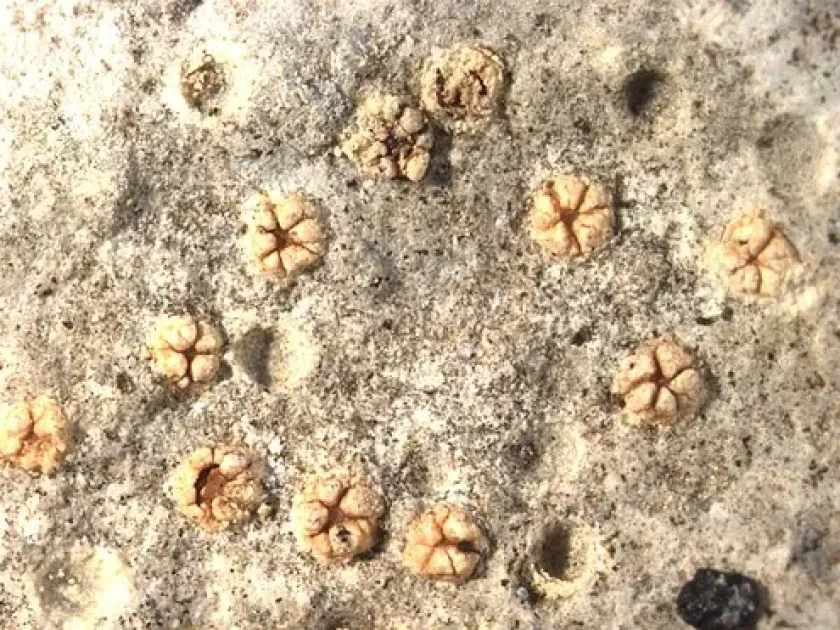
Description
Pathogen
The genus Petractis comprises lichenized fungi belonging to the family Stictidaceae. These organisms form symbiotic relationships with algae to create a complex lichen structure.
These fungi are not pathogens of agricultural plants and do not induce diseases, decay, or physiological stress in cultivated crops.
They are categorized as obligate lichen-forming organisms that rely on specialized structures called apothecia to produce spores for reproduction.
Taxonomically, they are part of the order Ostropales, and their biological cycle is entirely dependent on the presence of a compatible photobiont.
From an agronomic perspective, Petractis is recognized primarily for its role in the epiphytic community rather than as a biological threat.
Conditions for development
Petractis species thrive in environments with high humidity and stable temperatures, typically colonizing substrates like limestone or tree bark.
They require shaded environments where solar radiation is limited, as direct sunlight can be detrimental to their vegetative development.
Air quality is a significant factor for their survival; they are highly sensitive to pollutants like sulfur dioxide, which inhibits their growth.
Steady mineral availability from the substrate is essential for the slow growth rate typical of this genus.
The development of the thallus depends on persistent moisture levels, often found in undisturbed woodland or orchard habitats with high ambient humidity.
Why it matters
There is no economic damage associated with Petractis; they are non-parasitic and do not penetrate or consume living plant tissues.
The presence of these lichens on tree bark does not compromise the host's vitality or structural integrity.
Unlike parasitic fungi, they do not produce toxins or enzymes that could lead to host tissue necrosis.
Their impact is limited to the physical surface occupation, which is generally viewed as neutral in an agricultural context.
Often, they are mistaken for disease, leading to unnecessary concern; however, they have no negative impact on yield or crop health.
Protection
No chemical control measures are recommended or necessary, as Petractis poses no threat to crop productivity.
Preventative cultural practices, such as maintaining proper orchard spacing and canopy aeration, can reduce the humidity favorable to lichen growth.
If removal is necessary for aesthetic purposes in nursery or landscape settings, manual cleaning of the bark surface is sufficient.
Promoting tree health through balanced fertilization and proper irrigation ensures that trees remain vigorous and resistant to excessive epiphytic colonization.
Agrochemical intervention is strongly discouraged as it disrupts the local ecosystem without providing any agronomic benefit.
Discussion
No discussions yet — be the first.