
Downy mildew
Peronosporales
Description
Symptoms
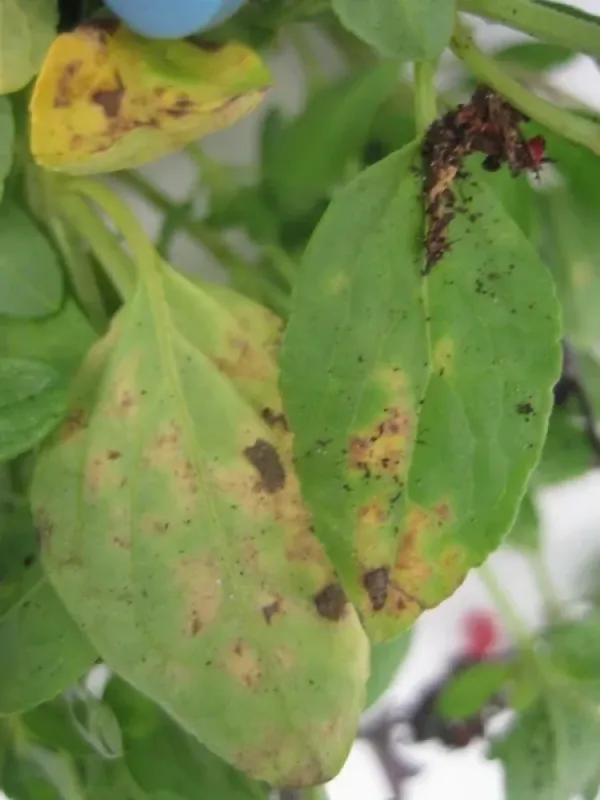
The primary symptom is the appearance of chlorotic, yellow-green spots on the upper surface of leaves, often bounded by leaf veins.
A distinct feature of the disease is the development of a fuzzy, gray or purplish mold growth on the undersides of the infected leaves.
As the infection progresses, the yellow spots may turn brown or necrotic, leading to leaf death and premature senescence.
In severe cases, plants may show signs of stunting, curling, or overall wilting due to the loss of functional photosynthetic area.
Fruits and flowers can also be affected, showing discoloration, deformation, or shriveling, which reduces marketability significantly.
Pathogen
Downy mildew is caused by a group of oomycetes within the order Peronosporales, which are pathogens that thrive in moist conditions.
These organisms are obligate biotrophs, meaning they must colonize living plant tissues to survive and propagate.
The mycelium grows intercellularly, using specialized structures called haustoria to extract nutrients directly from the host cells.
Reproduction occurs through sporangia, which are dispersed efficiently by wind currents and splashing water droplets.
Under stressful conditions, the pathogen produces hardy oospores that can remain dormant in the soil for several years.
Conditions for development
Downy mildew development is highly dependent on high humidity and cool to moderate temperature conditions, usually between 15°C and 22°C.
Leaf wetness, caused by rain, heavy dew, or overhead irrigation, is essential for the germination of sporangia and zoospores.
Poor airflow, especially in dense crop canopies or greenhouses, creates a microclimate that drastically speeds up disease spread.
Secondary infections occur rapidly throughout the growing season if the weather remains cloudy, humid, and mild.
Short periods of moisture are sufficient for the pathogen to infect a healthy plant, making early morning monitoring critical.
Why it matters
This disease causes significant economic losses in various crops, including vines, brassicas, cucurbits, and sunflowers.
By killing leaf tissue, downy mildew severely limits the plant's photosynthetic capacity, leading to lower yields and reduced vigor.
Infested produce often loses its shelf life and nutritional value, which can lead to total rejection in wholesale markets.
In extreme cases, rapid defoliation can lead to sunburn on fruits and increased susceptibility to secondary rot organisms.
The cumulative effect of infection over a season can cause total crop failure, impacting farm profitability and sustainability.
Protection
Management strategies focus on reducing humidity and implementing strict sanitation practices in the field and greenhouse.
Using resistant cultivars is the most effective long-term strategy for minimizing the impact of Peronosporales pathogens.
Proper plant spacing and weed control are essential to improve air circulation and reduce the duration of leaf wetness.
- Apply copper-based fungicides as a preventative measure.
- Use systemic fungicides like metalaxyl or fosetyl-aluminum for control.
- Ensure adequate greenhouse ventilation to manage ambient humidity.
Always rotate crops and remove infected crop residues promptly to reduce the primary inoculum load for the next season.
Discussion
No discussions yet — be the first.