
Carnation downy mildew
Peronospora dianthicola
Description
Symptoms
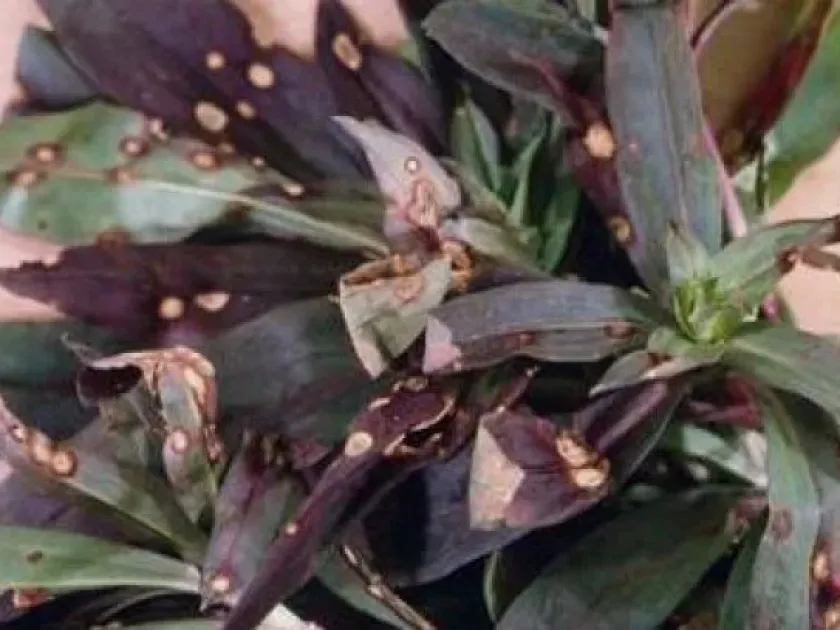
The first symptoms are chlorotic, pale yellow spots appearing on the upper surface of the leaves, which eventually turn necrotic and brown.
A hallmark of this infection is the development of a grayish-purple or whitish downy fungal growth on the underside of the affected leaves, corresponding to the leaf spots.
As the disease progresses, infected foliage begins to curl, wither, and eventually drop from the stem, leading to significant defoliation of the carnation plant.
In severe cases, the stem itself may show dark lesions or necrotic areas, which lead to the bending or stunted growth of the plant's flowering stalks.
- yellow chlorotic leaf spots;
- gray-purple fungal growth on leaf undersides;
- leaf curling and necrosis;
- stunted growth of stalks;
- premature leaf drop.
Pathogen
The disease is caused by the oomycete pathogen Peronospora dianthicola, which is a specialized obligate parasite. This fungus specifically targets plants belonging to the Caryophyllaceae family, particularly carnations.
Downy mildew has a distinct biological cycle that relies on the formation of sporangia, which are released from the underside of leaves when conditions are sufficiently humid.
The pathogen overwinters as oospores within infected plant debris or in contaminated soil, making sanitation a critical component of disease management.
The mycelium grows intercellularly, absorbing nutrients directly from the host plant's cells, which leads to the weakening of the plant's overall vascular system.
The spread of the disease is rapid, as sporangia can be easily dispersed over short distances by water splashes and over longer distances by air currents or human activity.
Conditions for development
High humidity levels exceeding 85% are the primary catalyst for the development of Peronospora dianthicola, as the spores require free water for germination.
Optimal temperatures for the pathogen range from 15 to 22 degrees Celsius, with cool nights and morning dew providing the perfect environment for infection.
Poor airflow, often caused by high plant density in greenhouses or dense beds in gardens, allows moisture to linger, facilitating the spread of the fungus.
Overhead irrigation acts as a primary vector for the disease, as the water splashes effectively transfer zoospores from infected leaves to healthy ones.
Lack of light and improper plant spacing exacerbate the condition, making it difficult for the foliage to dry out quickly after rain or irrigation.
Why it matters
The economic impact of carnation downy mildew is significant, as it renders cut flowers unsellable due to their unsightly and damaged appearance.
In large-scale nursery production, the disease can wipe out entire batches of young plants, leading to major financial losses and increased production costs.
The infection severely drains the plant's resources, preventing the development of high-quality blooms and reducing the overall vigor of the plant.
Infected plants are often predisposed to secondary pathogens, such as root rot or botrytis, which can further damage or kill the carnation plants.
Controlling the disease in a greenhouse setting requires expensive chemical applications and labor-intensive sanitation protocols to prevent recurrence.
Protection
Cultural management is the first line of defense: ensure proper plant spacing to improve air circulation and reduce the humidity around the canopy.
Switch to drip irrigation or sub-irrigation methods to ensure that water is delivered to the roots without wetting the leaves, effectively breaking the infection cycle.
Sanitation is essential; remove and destroy all infected plant material immediately to reduce the inoculum levels in the growing environment.
Fungicide applications, particularly those containing systemic active ingredients, should be used preventively or at the very first sight of symptoms.
Maintain consistent monitoring of the plants to identify early outbreaks and implement strict greenhouse hygiene protocols to disinfect tools and surfaces.
Discussion
No discussions yet — be the first.