
Gentian downy mildew
Peronospora chlorae
Description
Symptoms
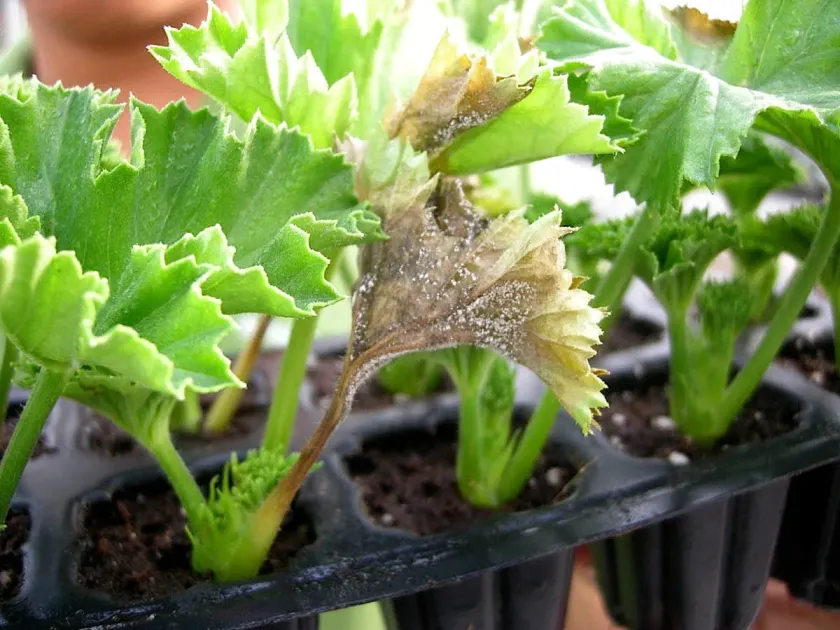
The primary symptom of Gentian downy mildew is the appearance of chlorotic, yellowish spots on the upper side of the leaves. Over time, these areas darken to brown or necrotic lesions, indicating tissue death.
On the underside of the infected leaves, a characteristic grayish-violet fuzzy growth appears. This fungal sporulation is most visible in the early morning when humidity levels are at their peak.
As the disease progresses, leaves begin to curl, wither, and eventually drop prematurely. Infections can also spread to the stems and flower buds, causing severe deformation and stunted growth.
The plant loses its aesthetic appeal, looking weak and ragged, which is a major issue for gardeners who value the Gentiana species for their ornamental beauty.
Early diagnosis is crucial, as the initial signs are often subtle. Inspecting the underside of the leaves regularly helps in identifying the presence of the pathogen before it spreads.
Pathogen
The causative agent of this disease is the oomycete Peronospora chlorae. It is an obligate parasite that requires living host tissue to complete its life cycle and thrive.
The pathogen utilizes specialized hyphae to penetrate the leaf tissue through the stomata, absorbing nutrients directly from the host plant's cells, which significantly depletes the plant's health.
Reproduction occurs via zoospores, which are motile in water. Rain splashes and dew droplets are the primary transport mechanisms that allow the fungus to jump from one leaf to another or to neighboring plants.
The fungus overwinters as oospores, which can remain dormant in the soil or in decaying plant debris for extended periods, ready to re-emerge when environmental conditions turn favorable.
Peronospora chlorae is highly host-specific, primarily infecting plants within the Gentiana genus, which limits the risk to other non-related ornamental species in the garden.
Conditions for development
High relative humidity, typically above 80-90%, is the most critical environmental factor for the development and spread of Gentian downy mildew.
The fungus thrives within a temperature range of +15°C to +22°C (59°F to 72°F). During this time, the pathogen can produce new generations of spores very rapidly.
Poor aeration in dense plantings significantly contributes to the disease. Without sufficient airflow, moisture persists on the foliage for longer periods, providing an ideal environment for spore germination.
Overhead irrigation, especially if practiced in the evening, keeps the foliage wet overnight, creating a perfect pathway for the infection to take hold and proliferate.
Excessive nitrogen fertilization can lead to succulent, soft foliage that is much more susceptible to the penetration of the pathogen's hyphae compared to plants grown under balanced nutrition.
Why it matters
The most immediate harm caused by the disease is the degradation of the plant's ornamental value. Yellowing, spotted, and deformed foliage makes the Gentian unsuitable for landscape use.
Premature defoliation prevents the plant from storing enough energy for the upcoming dormant season, significantly reducing the plant's winter hardiness and long-term survival rates.
If the infection reaches the flower buds, it often leads to aborted or malformed blooms, destroying the plant's primary decorative purpose for the season.
Infected plants become more prone to secondary infections from other pathogens and pests due to their weakened immune system, leading to a downward spiral in health.
Left unchecked, the disease can spread rapidly throughout the entire Gentian patch, potentially killing the collection within one or two seasons and necessitating complete replacement.
Protection
Sanitation is the most effective management strategy. All infected plant debris should be carefully removed and destroyed, preferably by burning or discarding it away from the garden, to eliminate overwintering spores.
Proper plant spacing is essential to ensure adequate air circulation around the Gentian foliage, which helps keep the leaves dry and limits the survival of the fungus.
Applying fungicides with systemic action during the growing season can help protect the plants. Products containing copper or specific anti-oomycete agents are generally effective.
- Select resistant cultivars whenever possible.
- Use drip or basal irrigation to keep foliage dry.
- Mulch the soil to prevent soil-borne splash onto leaves.
- Use balanced potassium-phosphorus fertilizer to strengthen the plant's natural defenses.
Continuous monitoring and immediate pruning of any symptomatic leaves can prevent small outbreaks from becoming widespread epidemics in the garden.
Discussion
No discussions yet — be the first.