
Blue mold of citrus
Penicillium italicum
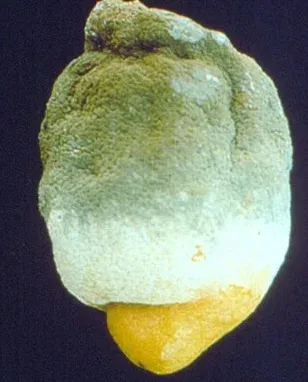
Description
Symptoms
Initial symptoms include the appearance of soft, water-soaked spots on the fruit surface that lack a defined margin. These areas quickly become discolored.
A distinctive feature of blue mold is the formation of a dense, powdery blue-green sporulation center surrounded by a narrow white mycelial ring.
Infected tissues soften rapidly, turning into a mushy, water-soaked mass. A typical musty or moldy odor is often associated with advanced stages of the infection.
As the infection spreads, the entire fruit can be covered in a thick layer of blue-green conidia, which are easily dislodged by air movement or physical handling.
Eventually, the fruit becomes shriveled and mummified, leaving behind only the outer peel and the masses of fungal spores that will serve as secondary inoculum for other fruits.
Pathogen
The causal agent of blue mold is the fungus Penicillium italicum Wehmer. This pathogen is a well-known postharvest fungus characterized by the prolific production of conidia.
The fungus produces masses of blue-green spores on branched conidiophores. These spores are highly efficient at dispersing through the air, quickly infecting adjacent healthy fruits.
Once it colonizes the fruit, the mycelium penetrates deep into the albedo and flavedo, secreting enzymes that degrade the structural integrity of the citrus peel and pulp.
The fungus survives as dormant spores in orchard soil, on decaying debris, and as a common contaminant in packinghouses and storage facilities.
Penicillium italicum is considered an aggressive pathogen, capable of infecting citrus fruits through microscopic injuries caused by harvesting and handling procedures.
Conditions for development
Development of Penicillium italicum is favored by high relative humidity (above 90%) and temperatures between 20°C and 25°C, although it can grow at lower temperatures.
Mechanical wounds such as punctures, scratches, or compression bruises on the fruit surface are critical entry points for the fungal spores during the harvesting process.
Poor ventilation within storage rooms or shipping containers contributes to moisture buildup, which facilitates the rapid germination of conidia and colonization of tissues.
Temperature fluctuations during transport often cause water condensation on the fruit surface, creating an ideal microenvironment for the rapid progression of the disease.
The accumulation of inoculum in packinghouse machinery and storage crates significantly increases the risk of contamination for sound, healthy fruit entering the supply chain.
Why it matters
Blue mold is recognized as one of the most economically significant postharvest diseases of citrus globally, causing substantial losses during storage and transit.
The disease spreads rapidly from infected fruit to healthy neighbors via air-borne spores, creating "nests" of rot that can ruin entire shipping containers of citrus fruit.
Apart from physical spoilage, the mold degrades the quality of the fruit, making it completely unsuitable for fresh market sale or industrial processing due to off-flavors.
Economic damage includes not only the loss of the product but also the increased operational costs associated with labor-intensive sorting and proper disposal of waste.
The presence of Penicillium italicum negatively impacts brand reputation and creates significant challenges for exporters trying to meet strict phytosanitary quality standards.
Protection
Effective management begins with careful harvesting and handling techniques to minimize mechanical damage to the fruit skin, which is the primary defense mechanism against infection.
Maintaining a strict cold chain, with temperatures maintained at 2°C to 5°C and proper airflow, is essential to slow down the growth rate of the pathogen during storage.
Fungicide treatments applied as aqueous dips or sprays in the packing line are standard industry practices to protect fruits from infection during transit.
- Regular sanitation of packinghouse equipment and storage facilities to reduce inoculum loads.
- Prompt removal of diseased fruit from containers to prevent spread to healthy produce.
- Monitoring humidity levels in storage to avoid condensation on the fruit surface.
Integrated disease management (IDM) practices, including the use of biological control agents and resistant fruit coatings, provide sustainable alternatives for minimizing losses to blue mold.
Discussion
No discussions yet — be the first.