
Penicillium bulb rot
Penicillium hirsutum
Description
Symptoms
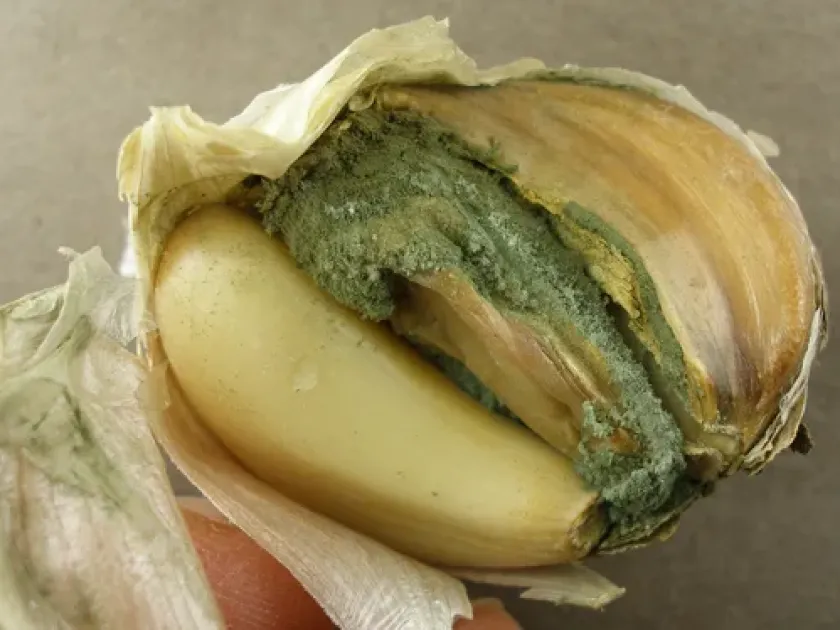
The most distinctive symptom is the appearance of a blue-green, dusty fungal growth on the bulb surface. In the initial phases, it may appear as a white, cottony mycelium.
As the infection progresses, the affected tissue becomes soft, spongy, and develops a brownish discoloration. The rot often starts at the basal plate or around any mechanical wounds.
Internally, the scales of the bulb turn brown and exhibit a watery rot. In severe cases, the entire bulb internal structure may be replaced by the fungus mycelium.
Plants growing from infected bulbs typically emerge weakly or not at all. If they do sprout, the leaves are often yellowed, stunted, or exhibit necrotic spots, reflecting a poor physiological state.
Under humid storage conditions, the visible fungal mass covers the entire bulb, and the sporulation can become so dense that it releases clouds of spores when moved.
Pathogen
The causative agent of the disease is the fungus Penicillium hirsutum (formerly identified as P. corymbiferum). It is a persistent soil-borne pathogen that thrives on decaying organic matter and bulb tissues.
This pathogen has a broad host range, infecting various bulbous species such as tulips, hyacinths, lilies, and garlic. It produces large quantities of spores (conidia) that facilitate its rapid spread in storage facilities.
The fungus is highly resilient and can survive in the soil for extended periods. It often enters bulbs through physical injuries sustained during harvest or transport, exploiting the compromised plant defense.
Penicillium species are notorious as storage pathogens. They possess an array of enzymatic capabilities, allowing them to degrade cell walls and colonize tissue even at relatively low temperatures.
Its biological cycle is characterized by rapid sporulation, especially when moisture levels are sufficient. These spores can easily contaminate storage crates, equipment, and even the hands of workers.
Conditions for development
High relative humidity, consistently above 70%, is the primary factor promoting disease development. Poor ventilation in warehouses leads to stagnant air and condensation, which triggers fungal growth.
While the fungus prefers moderate temperatures of 15–20°C, it remains metabolically active at lower temperatures. This is why storage rot is a persistent problem throughout the winter.
Mechanical damage is the most critical predisposing factor. Bruises, cuts, and abrasions from harvesting machinery act as direct entry points for the pathogen into the bulb's interior.
Improper curing after harvest is a common cause of outbreaks. If bulbs are not dried quickly and thoroughly, their surface moisture provides the perfect medium for spore germination.
Crowded storage conditions and lack of sanitation in the storage facility lead to the build-up of inoculum, causing cross-contamination between healthy and infected bulbs.
Why it matters
The primary damage caused by Penicillium bulb rot is the total loss of commercial value. Large quantities of planting stock can be decimated within a short timeframe during storage.
The disease causes significant financial losses for both commercial growers and amateur gardeners. It reduces the propagation rate and the viability of the bulb population.
Infected bulbs produce poor-quality flowers, often with deformed petals or stunted stalks. This leads to a loss of aesthetic and market value for decorative floriculture.
The accumulation of toxins produced by the fungus can weaken the plant's overall system, making it more susceptible to secondary bacterial infections that lead to complete collapse.
Exporting regions suffer heavily, as the presence of this pathogen can lead to quarantine issues and the rejection of entire shipments at international borders.
Protection
The most important control measure is rapid and thorough curing. Bulbs should be kept in a well-ventilated area with controlled temperature to ensure the skin dries and wounds heal quickly.
Fungicidal treatments are highly effective when applied immediately after harvest or before planting. Systemic fungicides are preferred to provide long-lasting protection.
- Ensure proper crop rotation to break the disease cycle in the soil.
- Sanitize storage facilities and crates with approved disinfectants annually.
- Sort bulbs carefully and discard any showing signs of rot immediately.
- Maintain low humidity (below 65%) in storage rooms.
Careful handling during harvest is paramount. Avoiding skin damage significantly reduces the chances of infection, as the natural barriers of the bulb remain intact.
Monitoring for signs of humidity spikes in storage is essential. Using fans to ensure constant airflow helps prevent the condensation that facilitates the growth of Penicillium spores.
Discussion
No discussions yet — be the first.