
Penicillium mold
Penicillium corylophilum
Description
Symptoms
The first visible sign of infection is the appearance of a loose, powdery coating on the surface of seeds or fruits, which gradually changes color. Initially, the coating may be white, but as the spores mature, it becomes darker.
Plant tissues affected by the fungus gradually lose their natural color and structure. In the case of cereal crops, the darkening of the germ is observed, which leads to a significant decrease in the germination capacity of the seeds.
When examining seeds under a microscope, a dense network of mycelium is revealed, penetrating deep into the seed coats. In infected areas, a characteristic musty moldy smell is often noticeable, especially in closed storage facilities.
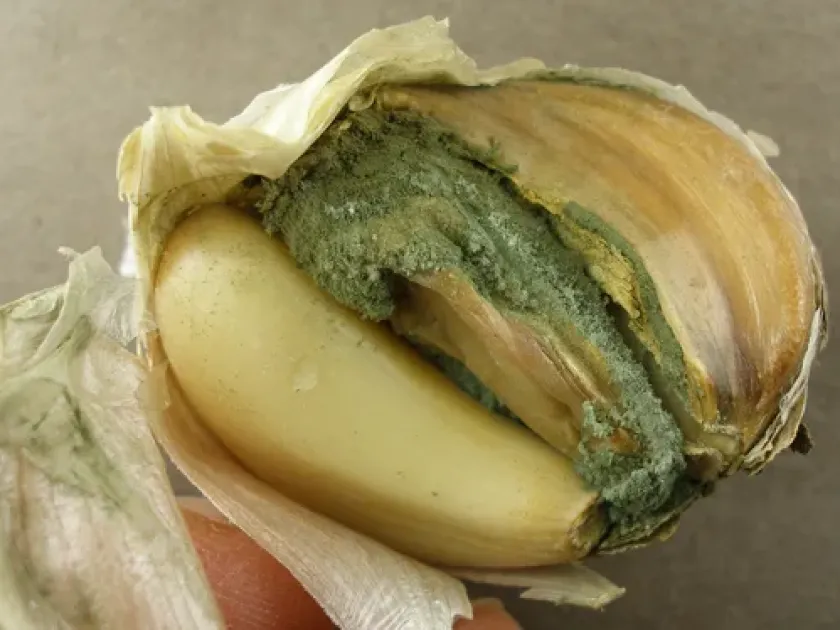
On vegetables and fruits, penicilliosis manifests as soft, watery spots that spread rapidly. Soon, a characteristic greenish spore powder forms in the center of these spots, covering significant areas of the fruit.
In the field, symptoms can occur as mold on ears or cobs during years with excessive humidity. Affected parts of the plant become brittle, and in cases of severe infection, complete destruction of the tissue occurs.
Pathogen
The causative agent of this disease is the microscopic imperfect fungus Penicillium corylophilum, which belongs to the genus Penicillium. It is a common saprotrophic microorganism found in soil, air, and plant debris worldwide.
The fungus produces conidia, which are asexual spores that spread easily through the air, water, or agricultural tools. The fungal mycelium is characterized by rapid growth on organic substrates and the ability to secrete specific degrading enzymes.
This pathogen acts as a facultative parasite, primarily affecting weakened plant tissues, seeds, and fruits. Its life cycle is closely linked to the storage of agricultural products, where it manifests as an aggressive spoilage agent.
The biology of Penicillium corylophilum allows it to survive in a wide range of temperatures, adapting to the storage conditions of grain or vegetables. The pathogen can persist in seed material for a long time in a dormant state until favorable conditions arise.
Morphologically, fungal colonies often have a characteristic blue-green or gray-green color due to the mass production of conidiophores. The texture of the colonies is velvety or powdery, which distinguishes them from other types of mold fungi.
Conditions for development
The key factor in the development of Penicillium mold is high humidity of both the air and the substrate. The fungus develops intensively when relative humidity levels exceed 75–80%.
The temperature regime also plays a crucial role: Penicillium corylophilum actively reproduces at moderate temperatures ranging from +18°C to +25°C. However, the pathogen can remain active at lower temperatures typical for storage facilities.
Inadequate ventilation in storage rooms creates localized zones with stagnant humid air. This contributes to the rapid spread of fungal spores from one fruit or grain kernel to others.
Breaches in the integrity of the protective tissues of fruits and seeds significantly facilitate the penetration of the infection. Mechanical damage sustained during harvesting or transportation acts as a portal for the fungal mycelium.
Contamination of the product with soil particles is also a favorable factor for infection. Soil serves as the primary reservoir of the inoculum, from which spores are transferred to agricultural products.
Why it matters
Penicillium mold causes serious economic damage, primarily by reducing the quality and marketability of the produced harvest. Affected fruits become unsuitable for long-term storage and commercial sale.
When seed material is infected, the germination energy and viability decrease sharply. Using such seeds for planting leads to sparse crops and the development of root rots in young plants.
During its life cycle, the fungus releases mycotoxins, which can be hazardous to human and animal health. Products affected by mold become toxic and are forbidden for consumption or use as animal feed.
In storage facilities, Penicillium can lead to the complete destruction of a product batch in a short time. The rotting process quickly encompasses healthy fruits that are in direct contact with infected ones.
In addition to direct tissue destruction, the fungus releases enzymes that cause the hydrolysis of proteins and fats, degrading the nutritional value of the grain. This makes the product unsuitable for the food and processing industries.
Protection
The main protection method is maintaining optimal storage conditions by controlling humidity and temperature. It is essential to keep the air humidity below the critical level for mold development.
Preventive disinfection of warehouses, storage rooms, and containers before storing the harvest significantly reduces the infection load. The use of approved fungicides for surface treatment effectively prevents disease outbreaks.
Thorough cleaning of seed material from impurities and damaged grains reduces the risk of pathogen development. Properly drying the harvest to safe moisture levels is a mandatory requirement for good agricultural practice.
If necessary, pre-sowing treatment (dressing) of seeds with modern fungicide preparations is performed. This protects seedlings from soil-borne infections, including Penicillium species.
Regular monitoring of product conditions in storage facilities allows for the timely identification and isolation of infection hotspots. Disposing of moldy batches prevents the further spread of spores within the warehouse.
Discussion
No discussions yet — be the first.