
Penicillium bulb rot
Penicillium albocoremium
Description
Symptoms
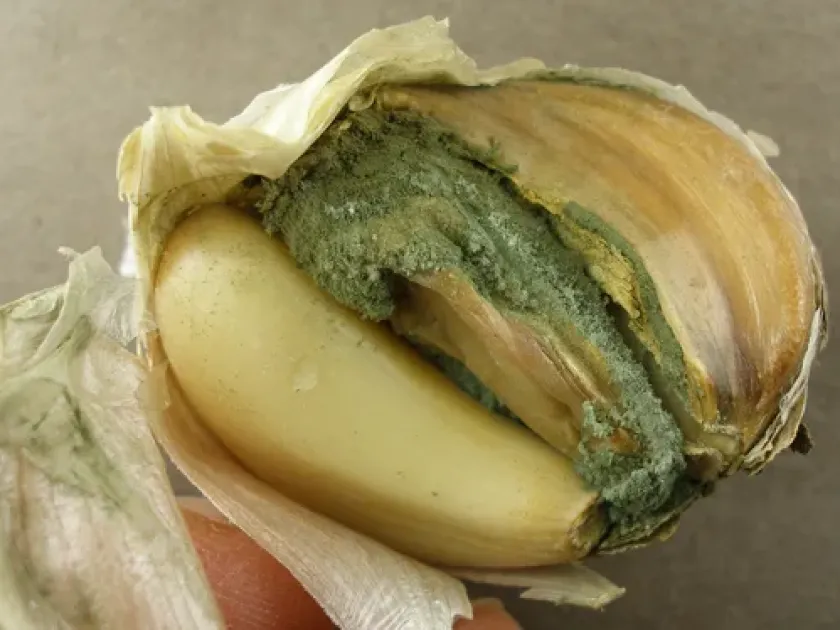
The initial symptoms are manifested as small, light-colored spots on the outer scales of the bulb, which gradually expand and darken as the infection deepens.
A characteristic sign of this rot is the appearance of a dusty, blue-green or gray-green fungal mat on the surface, composed of mycelium and massed conidiospores.
Beneath the affected surface, the bulb tissue becomes soft, watery, and develops a distinct, often unpleasant, musty odor indicative of active microbial decomposition.
In advanced stages, the internal scales of the bulb are completely destroyed, transforming into a mushy, disorganized mass that is easily separated from the remaining healthy tissue.
When cutting open a bulb, one may observe concentric rings of discolored, rotting tissue, a classic symptom caused by the inward progression of the fungal mycelium.
Pathogen
The disease is caused by saprophytic fungi of the genus Penicillium, notably Penicillium albocoremium. These fungi are ubiquitous in nature and are common inhabitants of soil and organic matter.
These organisms act as opportunistic pathogens that thrive on weakened or wounded plant tissues. They are characterized by their ability to produce an immense quantity of airborne conidia.
The life cycle of the pathogen is closely linked to storage facilities, where spores can persist on wooden crates, walls, and equipment for long periods, leading to recurrent infections.
The fungus is highly resilient and can withstand diverse environmental conditions, making it a persistent challenge for agricultural producers and gardeners alike.
Biological studies indicate that these fungi produce specialized enzymes that break down plant cell walls, allowing the mycelium to colonize the bulbous tissue rapidly.
Conditions for development
High relative humidity, typically exceeding 70-80 percent in storage environments, is the primary driver for the development and spread of Penicillium bulb rot.
Mechanical injuries sustained during harvesting, cleaning, or sorting processes are critical, as they provide an easy entry point for the fungal spores to infect the bulb.
Poor ventilation within storage warehouses leads to stagnant air and moisture accumulation, which exponentially accelerates the rate at which the fungus spreads to healthy bulbs.
Fluctuating temperatures that encourage condensation on the surface of stored bulbs are significant factors that promote the activation of the resting spores of the pathogen.
Planting in poorly drained soil or under conditions that stress the bulb, such as excessive watering, increases the plant's susceptibility to primary infection from the soil.
Why it matters
Penicillium bulb rot causes severe economic losses in the horticultural industry, particularly affecting tulips, daffodils, onions, and garlic during the dormant storage phase.
The disease can destroy entire batches of stored material in a short timeframe if infected bulbs are not identified and removed during the initial grading process.
Infected bulbs that are planted often fail to sprout or produce stunted, weak plants that are highly prone to secondary diseases and environmental stress.
Besides the physical loss of product, the fungus can produce mycotoxins that render the bulbs completely unsuitable for consumption, posing risks to human and animal health.
The cost of managing this disease includes not only the loss of crop value but also the expenses associated with chemical treatments, increased labor for sorting, and facility disinfection.
Protection
Preventive measures begin with careful harvesting techniques to avoid damaging the outer layers of the bulbs, which serve as the primary protective barrier against pathogens.
Effective drying of bulbs in a well-ventilated space immediately after harvest is essential to reduce surface moisture and inhibit the initial establishment of fungal spores.
Regular monitoring of stored bulbs and the immediate removal of any softened or discolored individuals are critical steps to prevent the spread of the infection.
Sanitation of the storage environment, including the thorough disinfection of crates and facilities, helps to break the cycle of infection between subsequent harvest seasons.
- Use of certified, disease-free planting stock
- Crop rotation to reduce soil-borne inoculum
- Application of appropriate fungicidal dips
- Maintenance of low humidity in storage
Discussion
No discussions yet — be the first.