
Pavlova lutheri
Pavlova lutheri
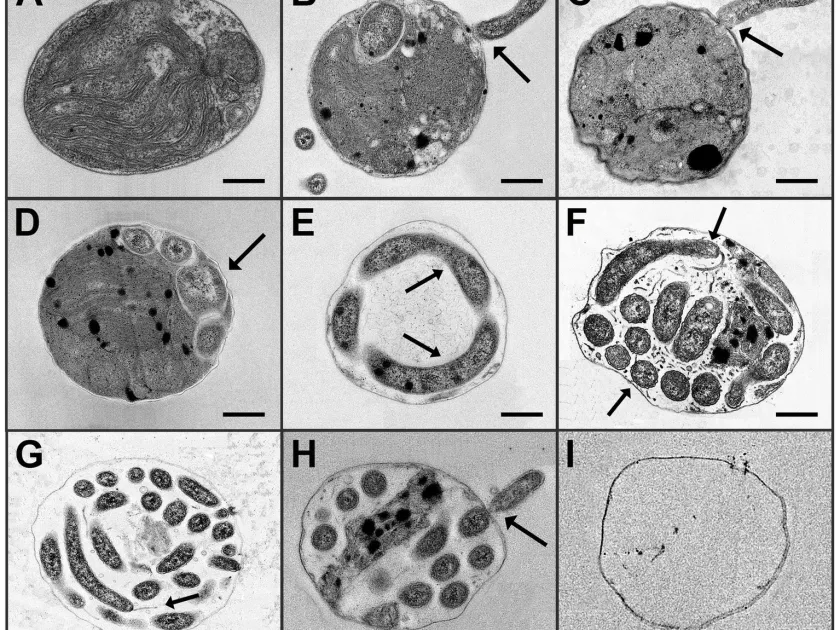
Description
Symptoms
The presence of Pavlova lutheri is often marked by a distinct change in water color, typically shifting towards a yellowish-brown or greenish tint.
A notable visual sign is the accumulation of a frothy, slimy layer on the water surface, especially near aeration points.
Plant roots submerged in infested water may appear coated with a slick biofilm, which impedes the uptake of minerals and oxygen.
Microscopic examination of the water sample reveals dense populations of small, active cells moving through the liquid medium.
Growth stunting in seedlings is a common observation when high concentrations of this algae are present in the irrigation supply.
Pathogen
Pavlova lutheri is a species of haptophyte microalgae, frequently recognized in aquaculture and high-tech hydroponic systems as an opportunistic organism.
The organism is characterized by a mobile unicellular structure equipped with two flagella, allowing it to colonize aquatic environments rapidly.
While primarily a photosynthetic organism, it can exhibit mixotrophic behavior, allowing it to survive in nutrient-rich but varying light conditions.
In the context of agricultural systems, it serves as a persistent competitor that can disrupt the chemical balance of nutrient solutions.
Understanding its biology is crucial for managers of closed-loop water systems who aim to maintain optimal plant growing conditions.
Conditions for development
Optimal development occurs in temperatures ranging from 15°C to 25°C, with high nutrient availability, particularly nitrates and phosphates.
Exposure to consistent light sources stimulates photosynthesis, causing massive blooms of the population within short timeframes.
Stagnant water in drainage systems or reservoirs provides a perfect breeding ground for these algae to establish dominance.
Fluctuations in the pH level of the nutrient solution often create favorable conditions for Pavlova lutheri to outcompete beneficial microflora.
Inadequate filtration systems often fail to block the microscopic spores, facilitating the rapid spread of the pathogen throughout the facility.
Why it matters
The primary damage is caused by the intense competition for essential nutrients, which deprives cultivated plants of required minerals.
The accumulation of algae biomass can lead to physical clogging of irrigation pipes, drip emitters, and other precision delivery components.
As the algae population dies off, the decomposition process drastically lowers dissolved oxygen levels, stressing the plant roots.
Toxic metabolites produced by the algae can inhibit root development and lead to poor crop quality and reduced overall yield.
Increased maintenance costs associated with cleaning systems and managing water quality represent a significant economic burden for growers.
Protection
Proactive prevention involves installing high-efficiency mechanical filtration systems to trap micro-particulate matter before it enters the crop cycle.
UV-C sterilization is highly effective at destroying the cellular integrity of Pavlova lutheri, ensuring safe water circulation.
Routine sanitation of reservoirs and piping using approved oxidizing agents helps to prevent the formation of persistent biofilms.
Careful monitoring of electrical conductivity (EC) and pH levels helps in identifying early contamination and maintaining a stable environment.
- UV sterilization;
- Mechanical filtration;
- Regular system flushing;
- Strict water quality monitoring.
Discussion
No discussions yet — be the first.