
Pachyella babingtonii
Pachyella babingtonii
Description
Symptoms
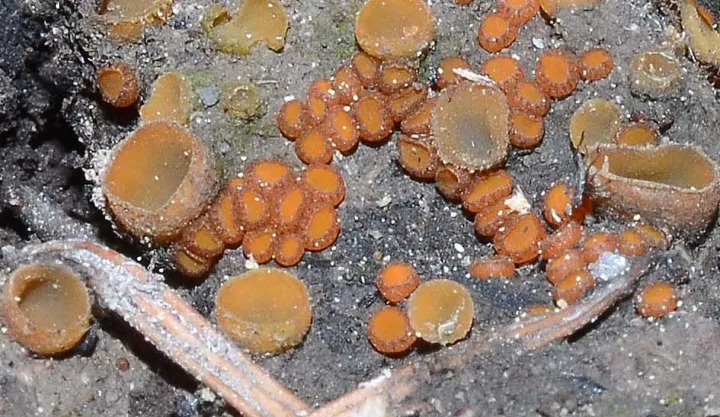
The primary symptom is the presence of distinctive, brownish or yellowish-tan, cup-like or saucer-shaped fungal bodies on the surface of wood.
These fruiting bodies are most frequently observed clustered in bark fissures, old insect galleries, or around areas of mechanical injury.
Infected bark may show localized discoloration, cracking, and a gradual separation from the underlying cambium layer.
Affected wood often exhibits signs of soft rot, where the structure loses its mechanical strength and becomes spongy to the touch.
Visible mycelial growth may appear under the bark, further disrupting the movement of nutrients and water within the affected stem or branch.
Pathogen
The causal agent of this condition is the ascomycete fungus Pachyella babingtonii, typically recognized for its saprotrophic nature in damp environments.
The fungus produces small, saucer-shaped apothecia which serve as the reproductive structures, often appearing on decorticated wood or damaged bark.
Its biological cycle is focused on decomposing lignin and cellulose, which makes it a secondary invader in forest and orchard ecosystems.
Spores produced by the fungus are wind-dispersed, allowing them to travel long distances and infect new sites through wounds or existing cracks in the wood.
While often categorized as a saprobe, it can exploit the tissues of weakened trees, gradually consuming the organic matter and impacting the host's vitality.
Conditions for development
High humidity and consistent moisture levels are essential for the maturation of the fungus and the production of its visible reproductive structures.
Wounds and mechanical damage to the bark are the main entry points, making trees with such injuries highly susceptible to infestation.
Temperate climate conditions with mild, humid weather favor the rapid expansion of the fungal colony throughout the damaged host tissue.
Overcrowded plantations or dense forest stands with poor airflow create a stagnant microclimate that promotes fungal sporulation and spread.
Presence of accumulated deadwood or debris in the immediate vicinity provides a reservoir for the fungus to persist and re-infect living specimens.
Why it matters
The fungus causes progressive wood degradation, reducing the structural integrity of the tree and increasing the risk of branch failure.
In forestry, the presence of this pathogen reduces the timber quality, making the wood unsuitable for construction or high-end woodworking.
Infested trees demonstrate reduced vigor, making them more vulnerable to drought, temperature extremes, and further pest infestations.
The long-term impact on the host can range from the loss of significant scaffold branches to the eventual death of the tree if the infection reaches the main trunk.
Ecological harm is manifested by the premature thinning of the tree stand, which disrupts the natural balance and biodiversity of the forest area.
Protection
Sanitation remains the most critical control measure, involving the systematic removal and destruction of all wood showing signs of fungal growth.
Proper pruning techniques, ensuring clean cuts and immediate sealing of wounds, are vital to prevent the entry of fungal spores into the plant system.
Maintaining tree health through adequate irrigation and balanced fertilization helps trees maintain the natural defenses required to resist secondary pathogens.
Minimizing mechanical impact on tree trunks during routine garden or forestry maintenance significantly reduces the risk of initial infection.
In high-risk areas, the application of protective copper-based fungicides to wounded surfaces can act as a physical barrier against spore germination.
Discussion
No discussions yet — be the first.