
Ovulinia
Ovulinia
Description
Symptoms
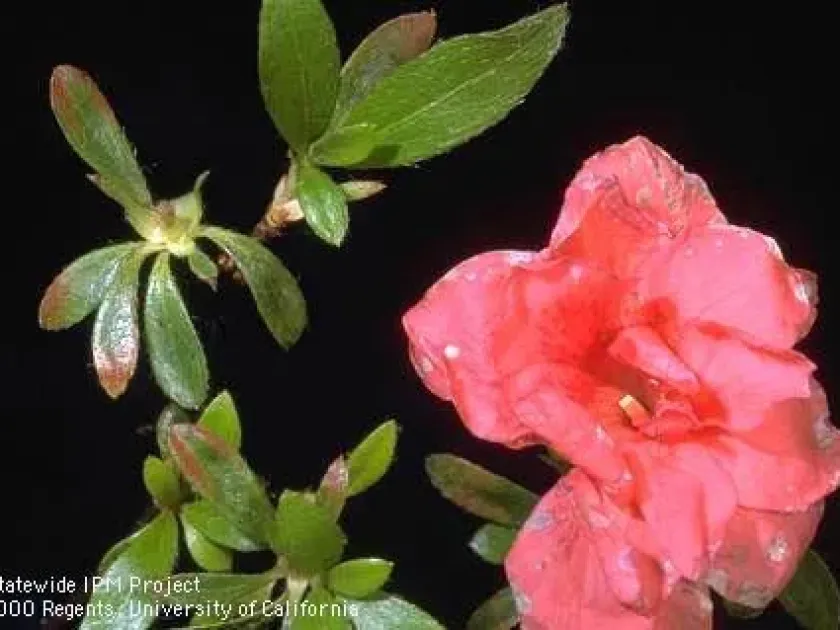
The first symptoms are small, water-soaked, translucent spots on the petals. These spots enlarge rapidly, eventually involving the entire surface of the flower.
Affected flowers lose their turgor pressure and become limp. They quickly turn brown or tan, eventually collapsing into a slimy, decayed mass that clings to the branches.
On the late stages of infection, a whitish fungal growth may be visible on the surface of the blighted flowers, followed by the appearance of minute black sclerotia.
A distinctive characteristic of Ovulinia blight is that it affects only the flowers. Leaves, stems, and roots remain unaffected, which differentiates it from other root or vascular diseases.
The infection is often mass-proportional; under favorable environmental conditions, an entire bush can lose all of its blossoms within a few days, creating a sudden appearance of blight.
Pathogen
The causative agent of the disease is the fungus Ovulinia azaleae (also known as Sclerotinia azaleae), an ascomycete fungus. This pathogen is highly specialized and primarily attacks members of the Ericaceae family.
The fungus overwinters as small black sclerotia in fallen blossoms or the soil surface. In spring, during the flowering season, these sclerotia produce apothecia, which release ascospores into the air.
Spores are dispersed by wind and splashing rain, landing directly on the petals of opening or fully bloomed buds. High humidity is essential for the germination and subsequent infection process.
The fungus mycelium penetrates the floral tissue, causing rapid cellular degradation. This leads to the collapse and rotting of the petals within a very short period.
As the disease progresses, the pathogen completes its cycle by forming new sclerotia within the decaying floral tissue, ensuring its survival for the next season.
Conditions for development
Ovulinia development is strictly dependent on moisture and moderate temperature. The ideal environment for infection consists of high humidity and temperatures between 15–20°C.
Frequent spring rain and heavy fogs are primary drivers of pathogen dispersal. Prolonged leaf and petal wetness during the evening and night significantly increases the risk of successful infection.
Poor air circulation in dense plantings prevents flowers from drying, creating a favorable microclimate for the spores to germinate and infect the floral tissues.
The presence of old, blighted debris from previous years acts as the primary inoculum source, making sanitation a critical factor in disease management.
Shaded, sheltered areas that maintain cool, moist conditions for long durations are highly susceptible to severe outbreaks of petal blight.
Why it matters
The primary damage caused by Ovulinia is the total loss of aesthetic value. For gardeners and nursery owners, the rapid destruction of flowers results in the loss of the plant's intended beauty.
In landscape settings, the blight interrupts the flowering cycle, making plants appear unsightly and prematurely ending the decorative season for azaleas and rhododendrons.
The economic impact on nurseries is significant, as blighted plants are often unsellable, leading to substantial financial losses during the peak retail season.
While the disease does not directly kill the shrub, the constant stress of flower loss and the requirement for repeated fungicide applications increase maintenance costs.
Repeated annual outbreaks can weaken the vigor of the plant, potentially leaving it more susceptible to other stressors, although the primary impact remains strictly floral.
Protection
The most important control measure is rigorous sanitation. Removing and disposing of all fallen blossoms before they produce sclerotia is essential to reducing the inoculum level.
Preventive fungicide applications using systemic products (such as triazoles or strobilurins) should be initiated just before the flower buds begin to open.
Improving air circulation through proper pruning of shrubs is crucial to ensure that petals dry quickly, reducing the window of opportunity for fungal infection.
Avoid overhead irrigation during the flowering period, as water droplets on petals directly facilitate the germination of fungal spores and spread of the pathogen.
Applying a fresh layer of mulch beneath the plants in early spring can help bury the overwintering sclerotia, preventing the release of spores and protecting the next flush of blossoms.
Discussion
No discussions yet — be the first.