
Blue stain of wood
Ophiostoma minus
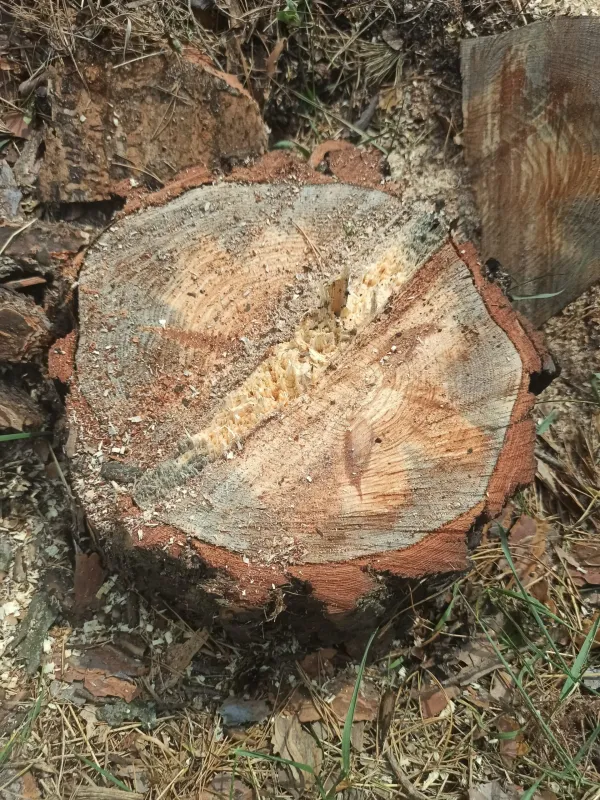
Description
Symptoms
The primary symptom is the appearance of gray-blue, bluish, or dark-gray stains and streaks on the wood surface or cross-section. This discoloration occurs deep within the sapwood layer.
Infected wood loses its natural aesthetic appeal, developing a patchy appearance that cannot be removed by simple sanding, as the fungus penetrates deep into the wood fibers.
During the early stages, one might observe a faint grayish film on the logs or near injury sites, representing accumulations of the fungus's conidiospores.
Unlike surface mold, blue stain grows inward, making it difficult to detect until the log is sawed, at which point the internal damage becomes fully visible.
Over time, the structure of the wood may become slightly more porous, although the distinct color remains the most reliable indicator of the presence of the infection.
Pathogen
The causative agent of blue stain of wood is a microscopic ascomycete fungus known as Ophiostoma minus. This pathogen is specialized in infecting the sapwood of coniferous tree species.
The fungus typically enters the wood structure through wounds in the bark caused by wood-boring insects, such as bark beetles. The mycelium develops within the wood cells, utilizing nutrients stored in the sap.
Spore reproduction allows the pathogen to spread rapidly through wind, rain, or via the bodies of beetles. It exhibits a high rate of colonization in fresh-cut or stressed timber.
It is important to note that Ophiostoma minus is not a wood-decay fungus in the traditional sense, as it does not consume cellulose or lignin. However, its presence significantly alters the quality of the wood.
The fungus's life cycle is closely linked to the forest ecosystem, where it persists alongside insect populations, which serve as vectors to facilitate the infection of vulnerable trees.
Conditions for development
Key factors promoting fungal development include high wood moisture content (above 20%) and moderate air temperatures ranging from 15 to 25 degrees Celsius.
Poor ventilation during timber storage creates a stagnant environment where moisture and heat accumulate, providing ideal conditions for spore germination.
The presence of fresh bark wounds or beetle galleries on the surface significantly accelerates the rate at which the fungus colonizes the timber.
Seasonality is crucial: infection risks are significantly higher during warmer months when the activity of vector insects is at its peak.
Properly dried timber or wood treated with appropriate preservatives shows a significantly higher resistance to this pathogen even when spores are present in the environment.
Why it matters
The main economic impact is the reduction of timber grade. Stained wood loses its commercial value and cannot be used for high-end finishing or premium furniture manufacturing.
Blue stain increases the hygroscopicity of the material. Increased moisture uptake creates a favorable environment for secondary colonization by more destructive decay fungi.
While the structural strength of the wood remains largely unaffected in the initial stages, using infected material in load-bearing applications is discouraged due to the potential for further biodegradation.
Wood processing companies suffer direct financial losses, as they are forced to downgrade their products or dispose of contaminated batches entirely.
Furthermore, blue stain complicates finishing; pigments may bleed through paints or varnishes, ruining the final appearance of the wooden product.
Protection
The foundation of protection is prevention: rapid removal of timber from the forest and processing it before the peak season of wood-boring insects.
- Rapid kiln drying of timber to reach a moisture content of less than 20%.
- Application of specialized fungicidal treatments immediately after sawing to seal the wood surface.
- Ensuring proper warehouse storage with adequate cross-ventilation between stacked boards.
- Sanitary forest management, including the removal of trees infested by wood-boring insects.
If infection signs are detected in storage, stacks should be dismantled immediately for ventilation and treated with deep-penetrating antiseptics.
Implementing debarking methods during the summer helps reduce the attractiveness of logs to insects, thereby preventing them from transporting spores to healthy wood.
Discussion
No discussions yet — be the first.