
Powdery mildew of kalanchoe
Oidium kalanchoeae
Description
Symptoms
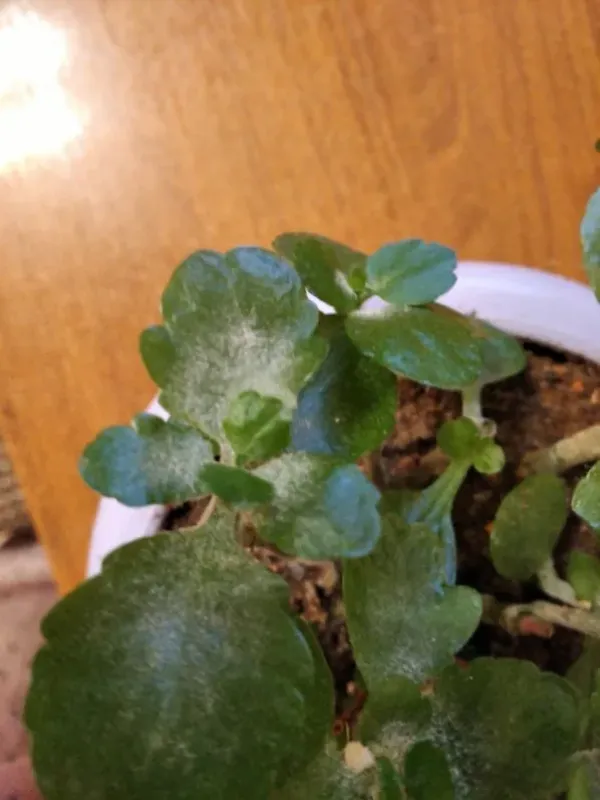
The primary symptom of this disease is the appearance of a white, powdery coating on the leaves and stems of the plant. This dust-like layer is actually the mycelium of the fungus, which eventually thickens and takes on a grayish hue.
As the infection progresses, the tissues beneath the fungal mat start to yellow and eventually die off. Kalanchoe leaves become deformed, curl, and lose their turgor, significantly diminishing the aesthetic value of the plant.
In advanced stages, the fungus spreads to the flower stalks and buds, preventing them from opening properly. The flowers may look wilted, and the blooming process is either stunted or completely halted.
If examined closely, the mycelium is often more visible on the upper surface of the leaves, though it quickly covers the entire plant under favorable conditions. Affected areas become brittle, and severe cases result in total coverage of the plant with the pathogen.
The plant appears stressed and growth is severely limited. Because the fungus derives nutrition from the host, the metabolic processes of the kalanchoe are disrupted, leading to stunted development.
Pathogen
The causative agent is a fungus of the Oidium genus, specifically adapted to succulent plants. It is an obligate parasite, relying entirely on the living tissues of the host for its survival and reproduction.
The infection spreads via conidia — asexual spores that are easily dispersed by air currents, splashing water during irrigation, or contaminated gardening tools. Once they land on a susceptible surface, they germinate and penetrate the epidermis to feed.
The fungus is mainly superficial, developing its mycelium on the exterior of the organs. However, it can establish haustoria deep into the plant cells to extract nutrients, which makes the disease difficult to eradicate once it is deeply rooted.
Biologically, the pathogen can persist as mycelium or dormant structures on plant debris or in the soil. Under greenhouse conditions, the life cycle of the fungus can repeat multiple times throughout the year.
The high sporulation rate makes this pathogen extremely dangerous for crowded plant collections, where spores can easily travel between neighboring pots, leading to a rapid outbreak.
Conditions for development
The development of the fungus is promoted by high humidity and poor air circulation. Stagnant air is often the trigger that allows the spores to germinate and establish the initial infection sites.
A temperature range of +18 to +25 degrees Celsius is optimal for the growth of the mycelium. Temperature fluctuations and cool nights, combined with high humidity, create the perfect microclimate for aggressive fungal outbreaks.
Improper watering practices, leading to excessive soil moisture, weaken the plant's natural immune system. Kalanchoes that are already stressed from overwatering are significantly more susceptible to fungal penetration.
A lack of regular ventilation, especially during the winter months, provides a safe haven for the pathogen to thrive. In these enclosed environments, the fungus can flourish without the interference of external weather factors.
Light levels also play a critical role; insufficient light weakens photosynthesis, causing the plant to accumulate sugars in its tissues that serve as an excellent food source for the Oidium fungus.
Why it matters
The primary harm lies in the loss of ornamental appeal, making the kalanchoe unsellable and visually unappealing. For collectors, this represents a significant disappointment and a loss of potential display value.
Severe infection causes premature leaf drop, leading to sparse stems and a loss of structural integrity. In extreme cases, the plant can lose its ability to recover even after the fungus is removed.
The fungus depletes the plant's stored nutrients, making it vulnerable to secondary bacterial infections. Bacteria can enter through the micro-wounds caused by the fungal haustoria, resulting in rapid tissue rot.
The inhibition of the blooming cycle is the most significant damage for kalanchoe owners. Since this plant is cherished for its vivid flowers, the disease essentially strips away its main aesthetic purpose.
Without immediate control measures, the pathogen can destroy an entire collection in a short period. The ease of spore transmission makes this a high-priority disease for commercial and hobbyist growers alike.
Protection
The first step in management is the immediate isolation of infected plants to prevent the further spread of spores. This is critical for protecting the health of the rest of the collection.
The use of systemic fungicides is the most effective approach to control the disease. Products containing sulfur or triazoles are often recommended for treating ornamental succulents.
Improving cultural practices is essential: increase ventilation, reduce ambient humidity, and avoid overhead watering. Ensuring that the plant has enough space to breathe will significantly lower the risk of recurrence.
Prevention involves regular inspections, sanitation of tools, and proper plant spacing. Maintaining optimal light levels helps keep the plant's immune system strong enough to resist initial infections.
- Isolation of infected specimens.
- Application of systemic fungicides.
- Improved airflow and humidity control.
- Removal of diseased leaves and stems.
- Regular monitoring of the entire collection.
Discussion
No discussions yet — be the first.