
Neurospora sitophila
Neurospora sitophila
Description
Symptoms
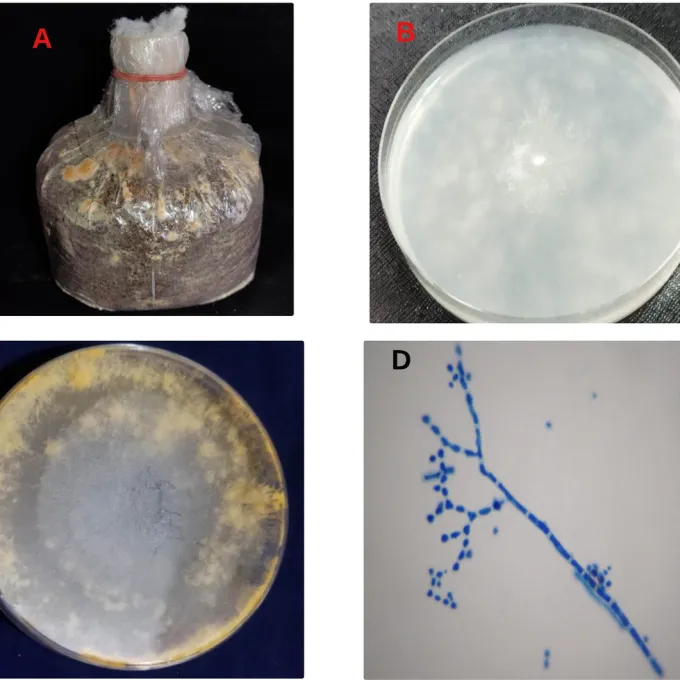
The first observable sign of an outbreak is the emergence of white, wispy aerial mycelium on the surface of the substrate. This initial stage is often overlooked, but it signifies the establishment of the fungal colony.
Within a short period, the colony develops its distinct, vivid orange or salmon-colored appearance. This color is the result of massive conidial formation, which coats the surface of the infected material in a fine, powdery layer.
Structural damage becomes apparent as the fungus degrades the tissue. Affected food products or grains exhibit softening, loss of texture, and a characteristic musty or yeasty odor, which is an indicator of metabolic byproduct accumulation.
Microscopic analysis of the growth reveals branched chains of conidia. These structures are loosely attached to the conidiophores and can be easily dispersed by the slightest air movement, contributing to the rapid spread of the disease within enclosed areas.
On grain batches, the infection manifests as a powdery orange coating that covers the individual kernels. The presence of this orange dust is a clear diagnostic feature distinguishing it from other common fungal storage molds.
Pathogen
The pathogen is the fungus Neurospora sitophila, a member of the Ascomycota phylum. It is widely known in agriculture and food science as the agent causing "orange bread mold," capable of rapid colonization of various organic materials.
The fungus is characterized by an extremely high growth rate of its mycelium. Its life cycle involves the mass production of conidia, which are tiny, dust-like spores that provide the fungus with a significant advantage in colonizing new substrates rapidly.
As a facultative parasite and saprotroph, the fungus does not rely on a single host. It thrives on diverse plant-based materials, using potent extracellular enzymes to break down complex carbohydrates and proteins into accessible nutrients for its metabolism.
The resilience of the spores allows the fungus to survive in harsh conditions for extended periods. Once moisture levels become favorable, these spores germinate almost immediately, allowing the pathogen to exploit temporary weaknesses in storage or handling environments.
The genetic adaptability of Neurospora sitophila makes it a persistent challenge in professional environments, such as bakeries, warehouses, and storage facilities, where it can rapidly become a dominant and destructive fungal population.
Conditions for development
High relative humidity is the most critical environmental factor for the development of Neurospora sitophila. Air humidity levels exceeding 75 to 80 percent are sufficient to trigger rapid spore germination and mycelial expansion.
The optimal temperature range for the metabolism and reproduction of the fungus is between +25 and +30 degrees Celsius. In such environments, the organism achieves its maximum growth potential, colonizing surfaces in just a few days.
Adequate oxygen supply is essential, as the fungus is highly aerobic. Therefore, its growth is most aggressive in environments where there is ample airflow, although even trapped air pockets within grain piles are often sufficient to sustain significant outbreaks.
Substrates rich in simple carbohydrates provide the ideal fuel for rapid expansion. Flour residues, starch-heavy materials, or kernels damaged by machinery provide easy access points for the fungus to initiate its colonization process.
Poor sanitation within storage facilities is the main driver of persistent infection cycles. Spores accumulate in corners, equipment, and walls, creating a continuous reservoir of inoculum that waits for favorable moisture and temperature conditions.
Why it matters
The primary economic damage is the total loss of the commodity's quality and market value. Products contaminated with the mold are typically deemed unsuitable for human or animal consumption due to the risk of secondary metabolites and degradation.
In the grain industry, the fungus is known to induce "hot spots" in storage. The metabolic heat generated by the fungal respiration can raise the temperature of the bulk mass, leading to further spoilage and the activation of other opportunistic pathogens.
Bakeries and food processors face significant losses when batches are compromised. Because the spores are easily airborne, a single infected unit can lead to the widespread contamination of an entire production line, necessitating costly shutdowns and cleanup.
Seed viability is severely compromised by this pathogen. Seeds colonized by the fungus either fail to germinate or develop into weak, stunted seedlings, frequently succumbing to pre-emergent root rot caused by the residual fungal infection.
The cost of managing this pathogen is significant, requiring recurring investments in disinfection chemicals, air filtration systems, and laboratory testing to ensure that the storage environment remains free of viable Neurospora sitophila spores.
Protection
Effective management begins with strict environmental control in storage areas. The most important preventive measure is drying grain to a moisture content of 13-14 percent, which effectively inhibits the growth of surface molds like neurospora.
Improving airflow and maintaining proper ventilation in grain storage systems prevents the accumulation of moisture. Continuous temperature monitoring allows for early detection of potential outbreaks, enabling timely intervention before the infection spreads.
- Rigorous sanitation of storage facilities after each harvest cycle.
- Application of approved fungicidal treatments on surfaces and containers.
- Regular cleaning to remove dust and debris that serve as nutrient sources.
- Implementing automated sorting to remove damaged or contaminated kernels from batches.
In the event of an outbreak, isolating the affected batch and performing deep cleaning of the surrounding area is mandatory. Biological control agents, including specific bacterial antagonists, are increasingly used in organic storage management to suppress growth.
Minimizing mechanical damage to crops during harvesting is crucial, as broken kernels offer immediate nourishment for the fungus. Proper post-harvest handling, including prompt drying and cleaning, remains the foundation of a successful control strategy.
Discussion
No discussions yet — be the first.