
Powdery mildew of Lamiaceae
Neoerysiphe galeopsidis
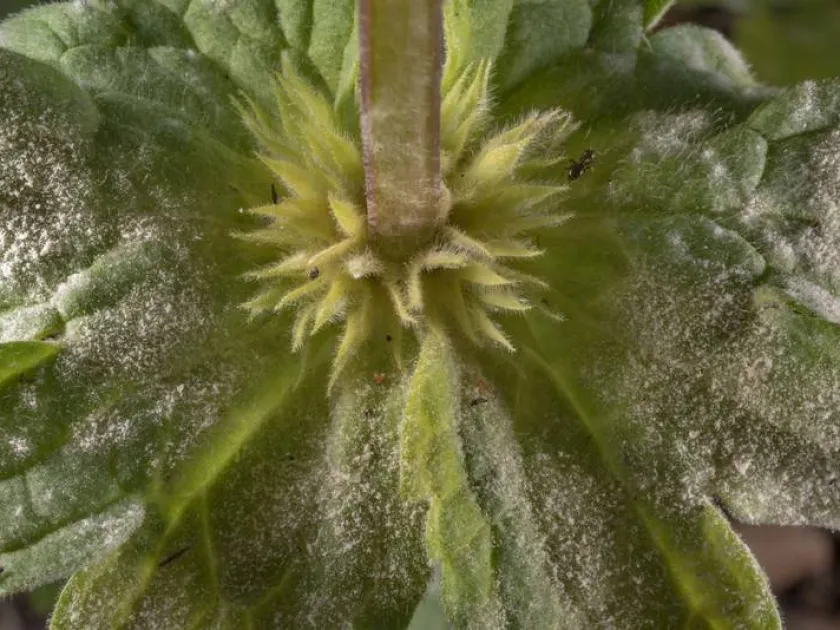
Description
Symptoms
The most prominent symptom is the appearance of white, powdery spots on the upper surfaces of leaves, which are composed of fungal mycelium and spores.
As the infection progresses, the white patches expand and merge, eventually covering stems, petioles, and lower leaf surfaces, causing the plant to look as if it has been dusted with flour.
Infected leaves often show signs of chlorosis, curling, and early senescence, leading to defoliation in severe cases of infestation.
Tiny black fruiting bodies called cleistothecia may appear within the white mycelial mats toward the end of the growing season as the fungus prepares for dormancy.
Flower buds and young shoots may become stunted or deformed, resulting in significantly reduced yield and poor overall plant vigor.
Pathogen
The causative agent of this disease is the obligate parasitic fungus Neoerysiphe galeopsidis, a member of the Erysiphales order. It extracts nutrients directly from host plant cells using specialized structures called haustoria.
This pathogen specifically targets plants within the Lamiaceae family, such as mint, balm, and various dead-nettle species. Its specialized nature makes it a significant threat to aromatic and medicinal herbs.
The fungal life cycle involves both asexual reproduction via conidia, which spread rapidly through wind currents, and sexual reproduction via cleistothecia.
Overwintering occurs primarily as dormant mycelium on perennial parts of host plants or as cleistothecia within plant debris left on the soil surface.
As an obligate parasite, Neoerysiphe galeopsidis cannot survive on dead matter, which dictates its focus on maintaining the health of the host until it has successfully produced its spores.
Conditions for development
The disease thrives in warm, humid conditions with temperatures typically ranging between 18°C and 25°C, providing an ideal environment for spore germination.
Poor air circulation, often caused by overly dense planting or high humidity in sheltered environments, is a major factor in the rapid spread of powdery mildew.
While the pathogen does not require liquid water on the leaf surface for infection, high ambient humidity levels are essential for the survival of the fungal structures.
Excessive nitrogen fertilizer promotes rapid, succulent plant growth, which is highly susceptible to penetration by the fungal hyphae.
Environmental stress, such as temperature fluctuations or drought, can weaken the plant's natural defenses, making it more prone to a sudden outbreak.
Why it matters
The primary impact of the disease is the inhibition of photosynthesis, as the dense mycelial layer blocks sunlight and disrupts gas exchange through the stomata.
For medicinal and culinary herbs, the quality is severely degraded, as the presence of the fungus alters the chemical profile and reduces essential oil concentration.
Severe infestations weaken the host plant, significantly reducing its energy reserves, which can lead to plant death during harsh winter conditions.
The aesthetic value of ornamental plants within the Lamiaceae family is completely lost once the powdery coating covers the foliage.
The pathogen's ability to spread quickly means that without intervention, entire garden beds or crops can become heavily diseased in a very short amount of time.
Protection
Cultural practices, such as removing and destroying infected plant debris, are critical for reducing the primary inoculum source for the following season.
Maintaining proper spacing between plants ensures adequate airflow and light penetration, which helps to keep the leaves dry and less hospitable to the fungus.
Fungicidal treatments, particularly those containing sulfur or potassium bicarbonate, are highly effective when applied at the first sign of infection.
Biological control methods include the use of the mycoparasitic fungus Ampelomyces quisqualis, which actively parasitizes the powdery mildew fungus.
Balanced fertilization and regular monitoring allow for early detection and mitigation, ensuring the health and productivity of the herb garden.
Discussion
No discussions yet — be the first.