
Nemania
Nemania
Description
Symptoms
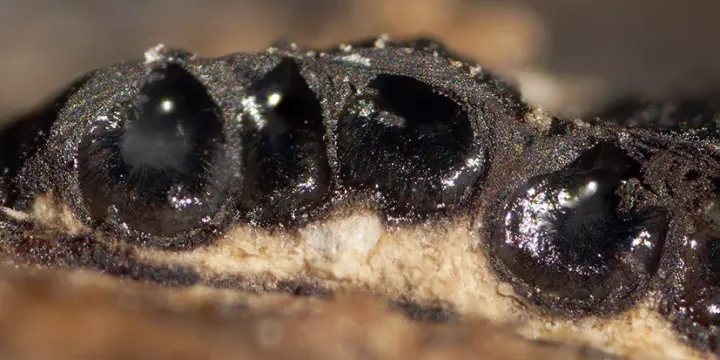
The most prominent sign is the presence of hard, coal-like black stromata protruding through cracks in the tree bark.
Affected bark areas often appear discolored, brittle, or necrotic. Beneath the bark, one might observe a dense mat of mycelium.
Trees infected by Nemania often exhibit general decline, characterized by premature yellowing of leaves and dieback of the terminal branches.
The wood underneath the infected bark becomes soft and light-colored, showing classic symptoms of white rot decay.
In advanced stages, large sections of the bark peel away, revealing the underlying woody tissue that has been significantly degraded by the fungus.
Pathogen
The genus Nemania consists of ascomycetous fungi that primarily act as saprotrophs on dead wood, though some species may behave as opportunistic pathogens on stressed trees. They belong to the order Xylariales.
These fungi produce stromatic fruiting bodies, which appear as carbonaceous, black, and hardened structures erupting through the bark of the host plant.
Nemania species are known to cause soft rot or white rot by degrading cellulose and lignin. This activity gradually reduces the density and structural integrity of the wood.
The life cycle involves the release of ascospores into the environment, which are dispersed by wind and rain, particularly during humid weather conditions.
Taxonomically, they are closely related to the genus Hypoxylon, and their identification often requires the examination of spore morphology under a microscope.
Conditions for development
High humidity and mild temperatures provide the optimal environment for the germination of spores and the subsequent colonization of the host tissue.
Trees that are stressed due to drought, poor soil conditions, or inadequate maintenance are significantly more susceptible to infection by these fungi.
Physical injuries to the trunk or branches, such as frost cracks, pruning wounds, or damage from pests, act as primary entry points for the fungal mycelium.
Poor orchard sanitation, including the presence of dead wood and debris, increases the inoculum pressure in the vicinity of healthy trees.
Lack of airflow in the canopy, caused by dense growth or improper planting density, creates a stagnant microclimate that encourages fungal development.
Why it matters
The primary danger posed by Nemania is the progressive degradation of wood, which leads to a significant loss of structural strength in the infected limbs.
This weakness makes branches highly susceptible to breakage during high winds or heavy snowfall, which can cause significant damage to the tree architecture.
Systemic infection disrupts the vascular system, preventing the efficient transport of water and nutrients, which results in stunted growth and decreased yield.
Persistent infection can ultimately lead to the death of the entire tree if the pathogen reaches the main trunk or root collar.
As a source of airborne spores, infected trees threaten the health of the entire orchard, making disease management increasingly difficult over time.
Protection
The most effective management strategy is the prompt removal and disposal (burning) of all infected branches to stop the cycle of spore production.
Strict disinfection of all pruning tools using alcohol or bleach is essential to prevent cross-contamination between trees during maintenance.
Regular applications of copper-based fungicides during the dormant season can help reduce the density of spores on the bark surface.
Maintaining high tree vigor through proper fertilization, irrigation, and pest management is the best long-term defense against colonization by wood-decay fungi.
Protecting the bark from mechanical injury and properly treating all pruning wounds with suitable sealants significantly reduces the risk of new infections.
Discussion
No discussions yet — be the first.