
Pink disease
Necator salmonicolor
Description
Symptoms
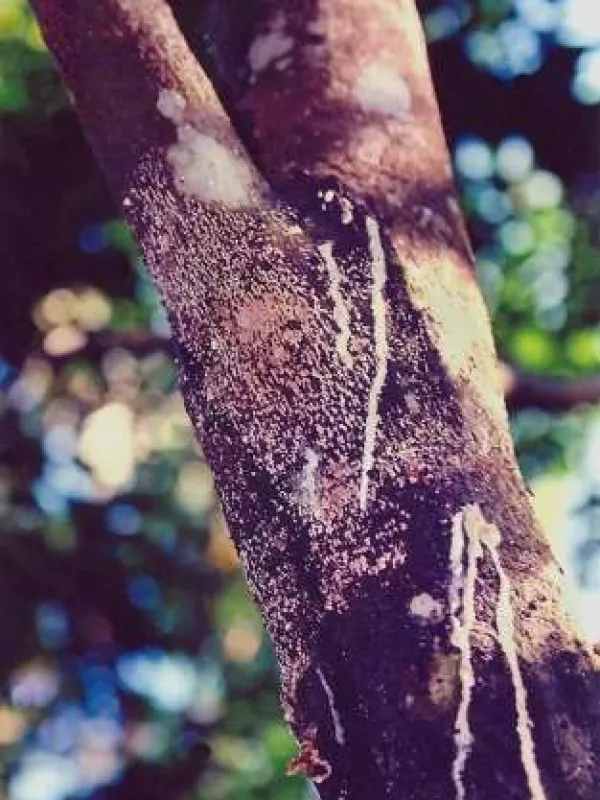
The first visual symptom of pink disease is the appearance of a thin, cobweb-like mycelial layer on the bark, which later thickens and transitions into a vibrant pink or orange-pink crust.
As the infection progresses, the bark starts to crack and peel away from the wood. This exposure of underlying tissues makes the tree extremely susceptible to secondary infestations by insects and other wood-rotting pathogens.
Foliage symptoms include sudden yellowing and wilting of leaves on infected branches. Dead leaves often remain attached to the branches for a significant time, creating a "flagging" effect characteristic of this disease.
In response to the fungal invasion, the plant may exhibit localized gum exudation. This is the tree's attempt to seal off the affected areas and prevent the further internal spread of the fungal hyphae.
- Presence of a pink/salmon-colored crust on bark.
- Cracking and peeling of the bark layer.
- Premature yellowing and wilting of leaves.
- Development of deep necrotic ulcers on stems.
- Excessive gum production at infection sites.
Pathogen
Pink disease is caused by the fungus Necator salmonicolor (formerly classified as Corticium salmonicolor). It is a persistent basidiomycete pathogen that primarily colonizes the bark and branches of various woody plants and shrubs.
The fungus is named for the characteristic pinkish or salmon-colored mycelial crust that develops on the surface of infected bark during its active reproductive stage. This growth is a distinctive diagnostic feature for field identification.
Propagation is primarily achieved through airborne basidiospores that are dispersed by wind and splashing rain. The pathogen enters the host plant through cracks in the bark, wounds caused by pests, or natural openings, establishing infection in the cambial layer.
The biology of Necator salmonicolor allows it to survive within host tissues for extended periods. When environmental conditions become adverse, the fungus can remain latent until high humidity levels provide the necessary stimulus for renewed growth.
Once established, the mycelium penetrates deeper into the wood, disrupting the transport of nutrients and water. This systemic interference eventually leads to the wilting and subsequent death of the affected branch or the entire tree.
Conditions for development
High relative humidity is the most critical factor for the development of pink disease. The pathogen thrives in tropical and subtropical regions where rainfall is frequent and prolonged moisture is present.
Optimal temperatures for fungal growth and sporulation range between +20°C and +30°C. Within this temperature window, the disease can spread rapidly throughout an orchard or a nursery setting.
Dense planting schemes significantly contribute to the severity of the disease. Limited airflow between trees allows humidity to stay trapped within the canopy, creating an ideal environment for spore germination.
Trees under physiological stress, due to poor nutrition or mechanical damage, are far more susceptible to infection. Healthy trees with robust vascular systems are better equipped to resist the initial colonization by the fungus.
Extended wet seasons or periods of heavy fog provide perfect conditions for the pathogen to thrive. During these times, the damp surface of the bark facilitates the successful attachment and colonization of fungal spores.
Why it matters
Pink disease is a major threat to commercial fruit crops such as citrus, coffee, and rubber trees. It can cause severe yield losses by destroying fruit-bearing branches and eventually killing the plant.
If the infection reaches the main trunk, the entire tree is often at risk of total failure. This necessitates expensive and time-consuming eradication efforts, including the complete removal of infected specimens.
The economic impact involves both decreased production and the rising costs of chemical control measures. Furthermore, the loss of mature, productive trees represents a long-term setback for agricultural profitability.
Wood quality is severely degraded in trees affected by the fungus, rendering them brittle and dangerous, which poses safety risks in both plantations and urban landscaping settings.
The chronic nature of the infection makes it difficult to manage. Often, the disease persists for several seasons, slowly weakening the tree until it becomes a reservoir for further inoculum in the environment.
Protection
The most effective management strategy is rigorous sanitation. All infected branches must be pruned at least 20-30 cm below the visible infection site to ensure all affected wood is removed.
Pruned material must be immediately gathered and destroyed by burning. Leaving infected branches on the orchard floor provides a continuous source of spores, facilitating re-infection of the surrounding trees.
Chemical control involving copper-based fungicides (such as Bordeaux mixture) is recommended during the rainy season to protect healthy trees and prevent the further establishment of the pathogen.
Maintaining good orchard management is vital. This includes proper thinning of canopies to improve airflow, balancing fertilizer applications to promote tree vigor, and removing potential sources of mechanical injury.
Always disinfect pruning tools with a suitable sanitizer between trees. This prevents the accidental transfer of Necator salmonicolor spores from infected plants to healthy ones during routine maintenance.
Discussion
No discussions yet — be the first.