
Navicula viridis
Navicula viridis
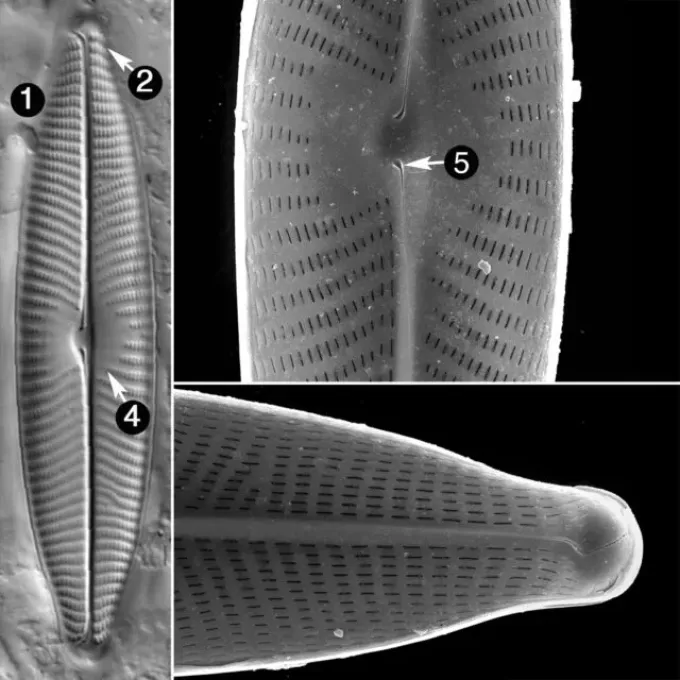
Description
Pathogen
Navicula viridis is a common species of diatomaceous algae belonging to the genus Navicula. In agricultural and environmental science, it is studied primarily as a component of the phytoplankton community that thrives in freshwater ecosystems.
The organism features a distinct, elongated, boat-shaped shell made of silica, known as a frustule. This rigid structure provides the cell with significant protection against environmental fluctuations and physical stress in aquatic environments.
Biologically, it is a photosynthetic microorganism that requires light and dissolved minerals, particularly silica, nitrogen, and phosphorus, to sustain growth. It reproduces through binary fission, which allows it to colonize available surfaces rapidly.
While not a disease-causing agent for terrestrial crops, its presence in large quantities is often indicative of specific water chemistry conditions. It serves as an essential primary producer in the food web of freshwater bodies.
Under certain conditions, it forms colonies that appear as brown or greenish slimy mats on submerged surfaces, which is a frequent concern for managers of irrigation infrastructure.
Conditions for development
The development of Navicula viridis is primarily driven by the availability of nutrients such as nitrogen and phosphorus. Runoff from fertilized agricultural lands often leads to elevated nutrient levels in nearby water sources, triggering blooms.
Optimal growth occurs in well-illuminated water bodies where photosynthesis can take place efficiently. Shallow, slow-moving, or stagnant water provides the best conditions for its population to expand significantly.
Temperature plays a vital role in its metabolic rate. While the species is highly adaptable, moderate temperatures typically favor more rapid cell division and higher biomass production throughout the growing season.
Water pH also influences the availability of dissolved silicon, which is critical for the development of its silica frustule. Slightly alkaline conditions are generally considered ideal for its proliferation.
Stagnation in irrigation channels or storage ponds creates a stable environment for these algae to adhere to pipes and filters, leading to accumulation over time.
Why it matters
The main issue with Navicula viridis in agricultural contexts is its interference with water management systems. Heavy accumulation can clog irrigation filters, nozzles, and delivery pipes, disrupting water supply to crops.
Massive algae blooms cause fluctuations in dissolved oxygen levels, which can negatively impact aquatic life if the water is reused for aquaculture or stored in holding ponds.
The presence of large amounts of organic material from algae can alter the smell and taste of water, which might be problematic for certain agricultural processes or livestock watering requirements.
Eutrophication caused by excessive algae growth accelerates the siltation of irrigation canals. This requires frequent mechanical dredging to maintain flow capacity, adding to the operational costs of a farm.
While it does not attack the plants directly, it acts as a bio-indicator of poor water quality and nutrient loading, signalling that the water source may need treatment or management intervention.
Protection
Preventative measures center on managing nutrient runoff. Establishing vegetated buffer strips between fields and water sources helps capture fertilizers before they enter the drainage system.
Mechanical maintenance of irrigation infrastructure is crucial. Regularly cleaning storage tanks, pipes, and filter systems helps to remove algal biofilms and prevents long-term accumulation.
Aeration of storage reservoirs can prevent the stagnation that encourages diatom growth. Maintaining water movement keeps conditions unfavorable for the formation of dense algal mats.
If necessary, approved algicides can be used in closed water systems to manage severe blooms. However, this must be balanced with the need to protect the surrounding environment and soil quality.
- Optimizing fertilizer application rates to minimize leaching.
- Using sediment traps to reduce nutrient-rich runoff entering ponds.
- Installing filtration systems to prevent algal clogging in drip irrigation.
Discussion
No discussions yet — be the first.