
Mytilinidiaceae fungi
Mytilinidiaceae
Description
Symptoms
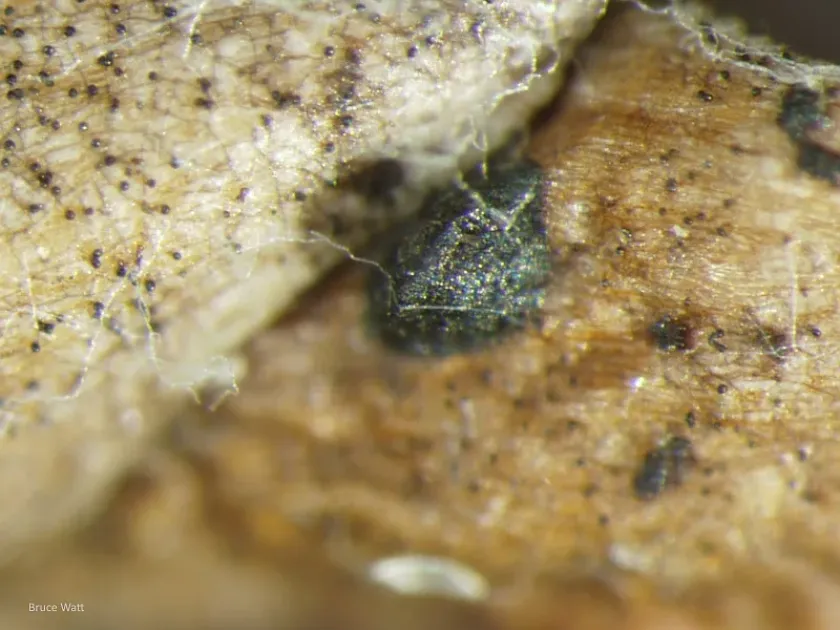
The primary symptom is the appearance of small, black, elongated, slit-like fruiting bodies on the surface of the bark or twigs.
Infected areas of the bark may lose their natural texture, appearing dull, greyish, or covered in a dark, coal-like crust.
Needle yellowing or premature browning on specific branches is often observed in the area directly colonized by the fungal mycelium.
Mass colonization can cause the bark to become brittle, and in severe cases, it may lead to the death of smaller peripheral branches.
Unlike some aggressive pathogens, the damage from Mytilinidiaceae is often localized and appears as a crust covering specific patches of the tree.
Pathogen
The Mytilinidiaceae family belongs to the Mytilinidiales order, within the Dothideomycetes class. These are primarily saprotrophic ascomycetes that live on decaying organic matter.
They are frequently found colonizing the bark and wood of coniferous trees, especially in humid and shaded environments.
Biologically, these fungi are characterized by the production of dark, carbonaceous hysterothecia, which serve as their reproductive structures.
They often act as opportunistic pathogens, colonizing tissues that have been weakened by climate stress or other primary infections.
Spore dispersal occurs through air currents, and their germination is highly dependent on sufficient surface moisture on the host tree.
Conditions for development
Development is favored by high relative humidity, frequent rainfall, and stagnant air conditions surrounding the tree canopy.
These fungi thrive on trees that have sustained mechanical damage, frost cracks, or sunburn, as these provide entry points for colonization.
Dense forest stands or overcrowded ornamental plantations often exhibit higher infection rates due to reduced airflow and light penetration.
Mild winters followed by wet springs provide the necessary moisture for the activation and spread of fungal spores across the tree trunk.
The accumulation of debris and organic matter in the crotches of branches creates a microclimate that supports persistent fungal growth.
Why it matters
While often considered saprotrophs, their presence on living trees indicates poor health and can exacerbate existing weaknesses.
The fungal crust interferes with the bark's normal physiological functions, including gas exchange, which can lead to localized tissue dieback.
In ornamental horticulture, the disfigurement of conifers caused by black fungal growths significantly reduces their aesthetic and market value.
The weakening effect of the fungus can attract secondary pests and wood-boring insects, further endangering the tree's survival.
Long-term colonization contributes to branch desiccation and the overall decline of tree vigor, especially in stressed specimens.
Protection
Sanitation is the cornerstone of control: remove and destroy dead or heavily infected branches to reduce the spore load in the area.
Proper silvicultural practices, including thinning of stands and strategic pruning, are essential to improve air circulation and sunlight exposure.
Regular monitoring for early signs of fungal colonization allows for prompt action before the infestation becomes widespread.
Preventive application of copper-based fungicides can inhibit spore germination and protect healthy bark from colonization.
- Remove infected branches using sterilized tools.
- Improve overall tree nutrition to boost natural resistance.
- Ensure adequate spacing when planting new conifers.
- Apply protective washes to trunks during the dormant season.
Discussion
No discussions yet — be the first.