
Myeloconis
Myeloconis
Description
Symptoms
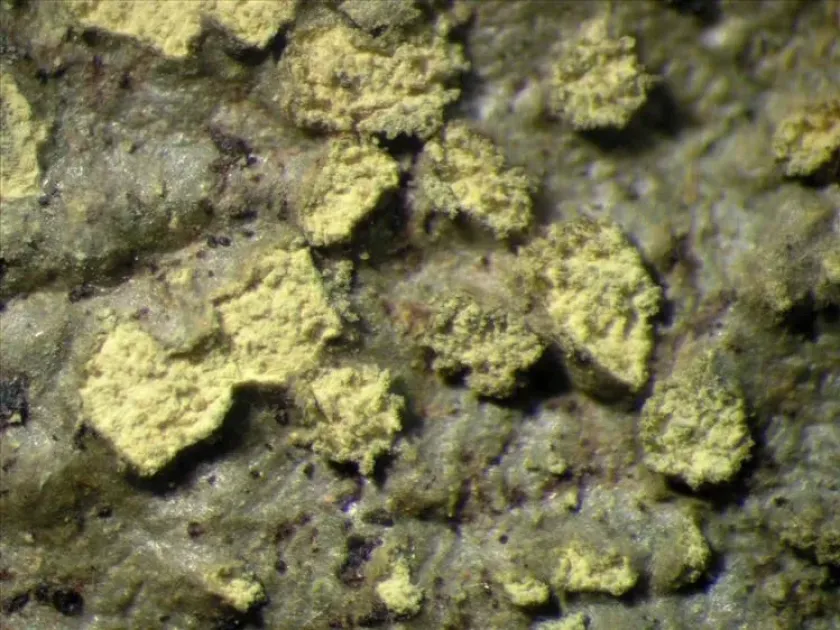
The most visible sign of Myeloconis infection is the presence of crust-like or scaly spots on the bark. These spots often exhibit distinct colors, depending on the species and light exposure.
The affected bark appears noticeably different from the healthy surrounding area. The texture may become rough, hardened, or covered with a thin, persistent film that cannot be easily rubbed off.
Close inspection often reveals small, disc-shaped fruiting bodies known as apothecia. These structures are firmly attached to the substrate and serve as the main mechanism for spore production.
Symptoms are most prominent during periods of high humidity. In these conditions, the fungal growth appears vibrant, expanding its surface area and becoming much easier to identify on the trunk.
During dry seasons, the growth may look shriveled or faded, but it remains dormant. It does not disappear, as it is adapted to survive desiccation until moisture levels rise again.
Pathogen
Myeloconis is a genus of fungi that is often associated with lichenized organisms. In agricultural and horticultural settings, it is primarily regarded as an epiphytic growth that colonizes the bark of woody plants.
Biologically, it is classified within the Ascomycota phylum. Its life cycle involves complex symbiotic interactions, allowing it to thrive on the surface of bark where nutrient availability is generally limited.
The fungus disperses through spores, which are carried by wind, rainfall, or insects. Once these spores land on a suitable surface of a tree, they germinate and begin to develop a mycelial layer.
Unlike aggressive parasitic fungi that invade inner wood tissues, Myeloconis acts primarily on the outer bark. It slowly expands across the surface, effectively becoming a part of the tree's epiphytic community.
The development of the colony is a gradual process. Over time, it can cover large areas of the trunk and branches if the environmental conditions remain favorable for its growth and survival.
Conditions for development
High relative humidity is the most critical factor for the growth of Myeloconis. The fungus thrives on bark that remains moist for extended periods, providing the hydration needed for spore germination.
Orchards or forests with poor air circulation are highly susceptible. Densely planted trees or those with unpruned crowns prevent evaporation, keeping the trunks in a perpetually damp state.
Injured or stressed bark provides an ideal landing site for spores. Cracks, frost damage, or old wounds allow the fungus to anchor itself more effectively than on perfectly smooth, healthy bark.
Sunlight exposure influences growth patterns. While it can adapt to various light levels, it frequently prefers shaded or semi-shaded areas of the tree, such as the lower trunk and the undersides of branches.
The temperature range for active development is moderate, generally between +15°C and +25°C. However, the fungus is quite hardy and can endure significant seasonal temperature fluctuations.
Why it matters
The primary harm is the disruption of bark respiration. By creating a dense layer on the surface, the fungus obstructs the lenticels, which are essential for the gas exchange of the tree.
These fungal colonies serve as a harbor for various tree pests. Tiny insects, such as scale insects or mites, often overwinter under the scales of the fungus to escape environmental stressors.
Continuous presence of Myeloconis leads to the premature weathering of the bark. This reduces the tree's overall vigor and can contribute to a decline in growth rates over several years.
The physical presence of the fungus makes the tree more prone to secondary infections. Damaged bark is more permeable to pathogens, which can then infiltrate deeper into the vascular tissues.
From a commercial perspective, the presence of these growths significantly lowers the aesthetic value and marketability of ornamental trees, fruit saplings, and nursery stock.
Protection
Good agricultural practices are the foundation of prevention. Regular pruning is essential to improve airflow throughout the crown and allow sunlight to reach the bark, creating a drier environment.
Mechanical cleaning of the bark can be an effective way to remove heavy colonies. Using non-abrasive brushes to scrub the bark during the dormant season helps eliminate the pathogen.
Applying traditional lime-based whitewash to the trunks serves as a deterrent. The high pH of the lime creates an environment that is unfavorable for fungal attachment and colonization.
Copper-based fungicides are highly effective when applied as a preventative treatment. These treatments should be timed during the dormant season to maximize their impact on surface-dwelling fungi.
- Maintaining tree health through proper fertilization and irrigation.
- Promptly sealing any deep wounds or physical damage to the trunk.
- Monitoring the bark surface for early signs of colonization to intervene before widespread coverage.
Discussion
No discussions yet — be the first.