
Black leaf spot of chrysanthemum
Mycosphaerella nigromaculans
Description
Symptoms
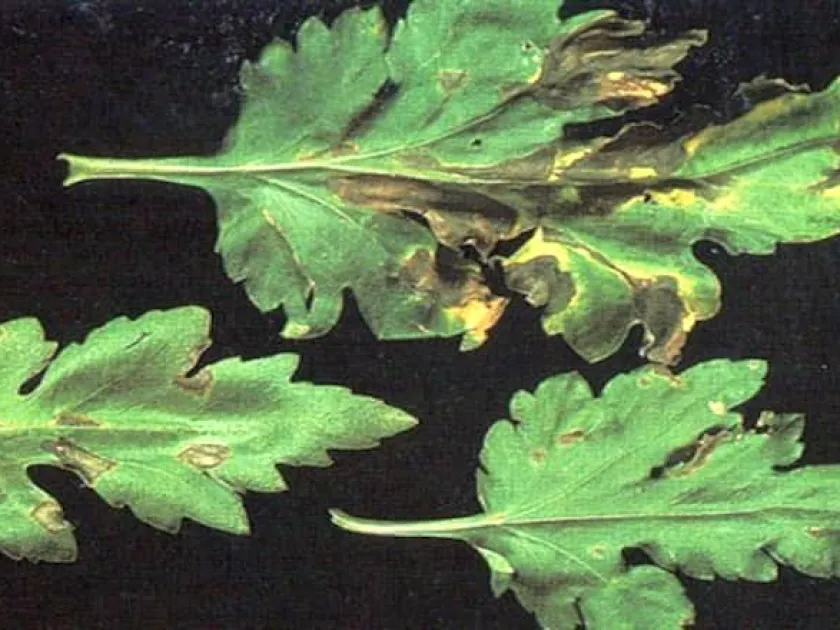
The initial symptoms appear as small, dark brown or black spots scattered across the lower leaves of the chrysanthemum plant.
As the infection progresses, these spots expand, often developing a yellowish halo due to the toxin secretion by the fungal mycelium.
Severe infestations cause the leaves to wilt, curl, and eventually drop off, starting from the base and moving upwards through the plant.
Dark streaks or elongated lesions can sometimes be observed on the stems, indicating systemic spread of the pathogen within the plant.
Under humid conditions, minute fruiting bodies may appear on the necrotic spots, giving them a velvety or granular appearance.
Pathogen
The disease is caused by the ascomycete fungus Mycosphaerella nigromaculans, which specializes in parasitizing chrysanthemum foliage.
This pathogen infects the epidermal cells of the host, leading to cellular degradation and the formation of characteristic necrotic lesions.
The fungus survives the off-season period as spores on plant debris or in the upper layers of the soil, waiting for suitable conditions.
Once conditions become favorable, the pathogen produces conidia, which are disseminated by wind, water splashes, or contaminated tools.
The infection process is insidious, as the fungus penetrates internal tissues before visible signs of damage appear on the surface.
Conditions for development
The primary driver for the development of Mycosphaerella nigromaculans is high relative humidity within the plant canopy.
Crowded planting schemes are highly problematic as they prevent adequate airflow, allowing moisture to linger on the leaves for extended periods.
Optimal temperatures for fungal growth range between 18°C and 24°C, which coincides with the peak growing season for chrysanthemums.
Frequent overhead watering creates prolonged wet leaf surfaces, which are essential for spore germination and successful fungal colonization.
Low light levels and poor soil drainage further contribute to stress in plants, making them significantly more susceptible to infection.
Why it matters
The disease significantly reduces the decorative value of the plant, often rendering it unsuitable for exhibition or commercial sale.
Photosynthetic efficiency is greatly impaired due to the extensive necrosis of the foliage, which leads to stunted growth and poor flower development.
The overall health of the plant is compromised, making it susceptible to secondary bacterial pathogens and other environmental stressors.
In greenhouses, this fungus can cause rapid widespread damage, potentially resulting in complete loss of the flower crop.
Long-term infestation of the growing medium leads to increased management costs and the need for frequent soil replacement or sterilization.
Protection
Integrated pest management starts with strict sanitation: the prompt removal and burning of all infected leaves and plant parts.
Preventive fungicide applications using systemic products can effectively inhibit fungal growth before visible symptoms manifest.
Improving cultural practices, such as spacing plants adequately to ensure good ventilation, is crucial for limiting disease spread.
Switching from overhead irrigation to drip irrigation is highly recommended to keep the foliage dry during the growing season.
- Practice crop rotation to avoid pathogen accumulation in the soil.
- Use sterile, disease-free cuttings for propagation.
- Apply mulch to prevent soil-borne spores from splashing onto lower leaves.
Discussion
No discussions yet — be the first.