
Cotton cercospora leaf spot
Mycosphaerella gossypina
Description
Symptoms
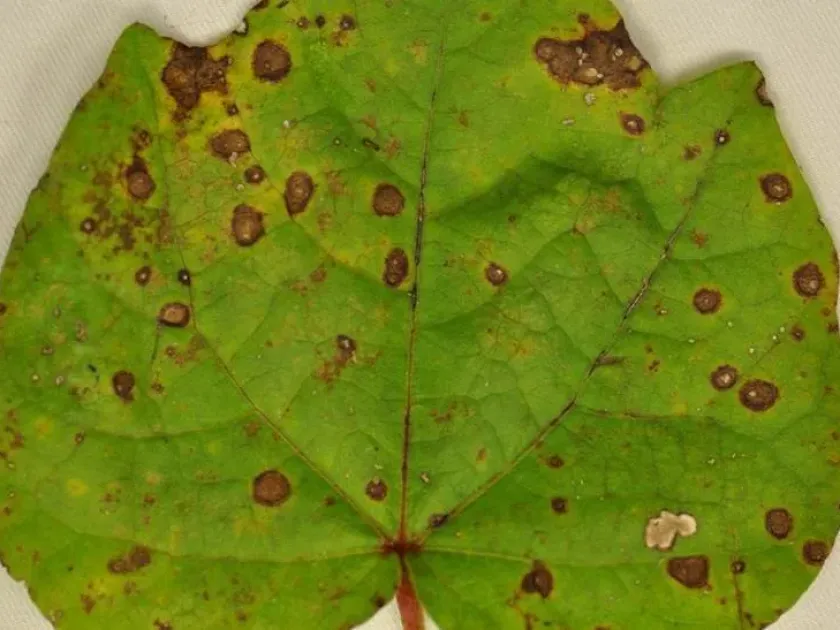
The primary symptom of the disease is the appearance of distinct leaf spots. Initially, they are small and circular, eventually turning brown or reddish-brown as the disease progresses.
In the center of older spots, a pale, grayish-white necrotic area usually develops, often surrounded by a dark, distinct margin that characterizes the fungal infection.
A chlorotic halo often surrounds the necrotic spot, indicating that the fungal pathogen is releasing toxins into the leaf tissue, affecting the overall health of the plant.
Under severe infection pressure, multiple spots may coalesce, leading to significant leaf necrosis, yellowing, and premature shedding of foliage, which weakens the plant significantly.
During periods of high humidity, a fine, fuzzy layer of fungal conidia may become visible on the surface of the spots, serving as a primary source for further spread via wind or water.
Pathogen
The causative agent of this disease is the fungus Mycosphaerella gossypina, which has an anamorph stage known as Cercospora gossypina.
The pathogen survives the winter in infected plant debris left in the soil, utilizing its mycelium or pseudothecia to remain dormant until the next growing season.
As temperatures rise in the spring, the fungus begins producing ascospores and conidia, which are disseminated to developing cotton plants via wind currents or splashing rain.
The fungus is highly aggressive, penetrating the host plant through stomata or mechanical wounds on the epidermis, after which it colonizes the inter-cellular spaces.
The biological lifecycle of the pathogen is highly adapted to the cotton-growing environment, allowing for multiple infection cycles if weather conditions remain favorable.
Conditions for development
The development and spread of Cercospora leaf spot are strictly dependent on environmental factors, with high relative humidity being the most critical component.
Optimal conditions for disease outbreaks include warm weather with frequent rain or heavy dew, which provide the necessary moisture for spore germination and colonization.
Temperatures ranging from +25°C to +30°C create an ideal environment for the rapid growth of the fungal mycelium, coinciding with the active growth phase of the cotton plant.
Poor canopy aeration, often resulting from excessively high plant density, traps moisture within the lower layers of the crop, creating a microclimate that favors infection.
Continuous cropping of cotton on the same land facilitates the buildup of soil-borne inoculum, significantly increasing the risk of widespread disease in subsequent years.
Why it matters
The primary damage caused by the disease is the significant reduction of the plant's photosynthetic capacity due to massive leaf loss, leading to stunted growth and reduced yields.
When the infection spreads to the bolls, it leads to poor boll filling and premature opening, which drastically reduces both the quality and quantity of the raw cotton harvested.
Fiber quality is significantly compromised, resulting in shorter staple length and reduced fiber strength, which lowers the overall economic value of the produce.
Heavily infected plants are often more susceptible to secondary pathogens and environmental stress, leading to a overall decline in the crop's vigor and health.
Economic losses are compounded by the high cost of implementing fungicide programs and the potential need for early harvest or mechanical challenges due to uneven boll maturation.
Protection
The fundamental strategy for control is the implementation of a rigorous crop rotation program, avoiding planting cotton on the same field for at least 3-4 years.
Deep plowing after harvest is essential to bury infected plant residues, which effectively reduces the overwintering population of the fungus and limits future primary inoculum.
Using certified, disease-free seed and maintaining an optimal planting density ensures good airflow within the canopy, preventing the micro-climatic moisture buildup that favors the disease.
When environmental conditions favor the disease, the application of preventative or curative fungicides is necessary to protect the foliage and maintain healthy plant development.
- Regular field scouting to identify and manage initial infection hotspots.
- Optimized irrigation practices to avoid excessive leaf wetness and soil waterlogging.
- Balanced nutrient management, particularly with potassium, to improve the crop's natural resistance.
Discussion
No discussions yet — be the first.