
Green-edged mycena
Mycena viridimarginata
Description
Symptoms
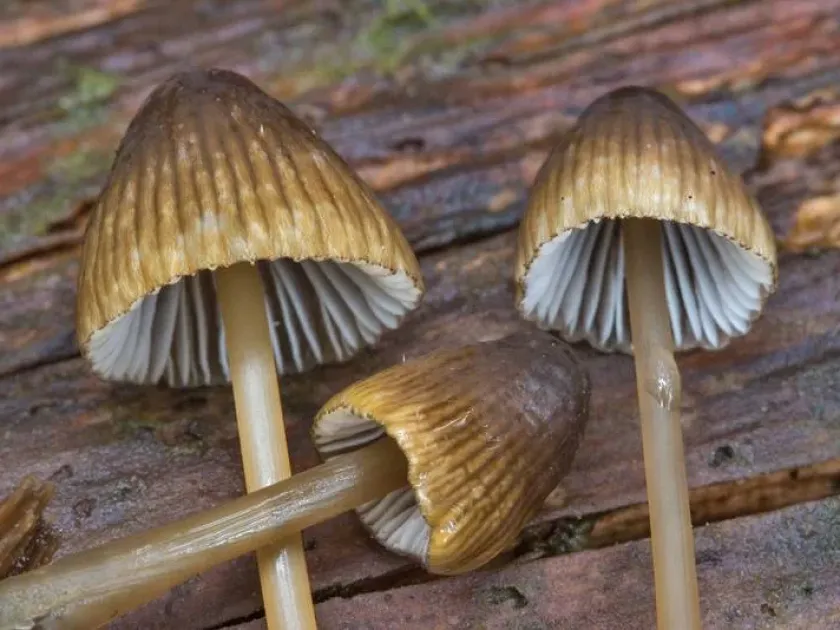
The fruit bodies of the Green-edged mycena have a distinct appearance. The cap is usually bell-shaped, measuring 1 to 3 centimeters in diameter, often with a small bump at the center.
The cap's color is generally brownish or olive-gray. The defining characteristic of this species is the vibrant green or olive-green edge of the cap, which gives it its specific name.
The gills underneath the cap are widely spaced. One of the most important identifying features is the color of the gill edges, which often mimic the green color seen on the margin of the cap.
The stem is typically slender, brittle, and hollow. It usually has a yellowish-brown or grayish appearance, often with fine mycelial threads visible at the base.
When identifying the fungus, mycologists look for the combination of the bell-shaped cap, the green margins on both cap and gills, and its growth habit on decaying woody substrate.
Pathogen
Green-edged mycena (scientific name: Mycena viridimarginata) is not a plant pathogen or a disease-causing organism. In mycological terms, it is classified as a saprotrophic fungus that thrives on dead organic matter.
Unlike parasitic fungi that infect living plant tissues, Mycena viridimarginata does not cause any diseases in agricultural or garden crops. It does not possess the mechanisms required to break down living plant cell walls.
Its biological function is primarily decomposition. This fungus facilitates the breakdown of woody debris, leaf litter, and other forest organic materials, returning nutrients back into the soil cycle.
The fungus is a member of the Mycenaceae family and is commonly found in forest ecosystems. Its presence is an indicator of healthy decomposition processes within the soil and wood matter, rather than a sign of plant stress or pathology.
Therefore, there is no agronomic relevance for managing or controlling this fungus as a plant disease. It does not require any protective measures, fungicides, or quarantine protocols.
Conditions for development
Mycena viridimarginata requires high humidity and shaded environments to thrive. It is commonly found in forested areas where there is a consistent layer of damp leaf litter and decaying wood.
The peak fruiting period occurs during the late summer and autumn months. Cool and moist weather conditions are essential for the fungus to develop its visible reproductive organs (mushrooms).
Temperature plays a significant role in its growth. The species prefers moderate temperatures typically ranging from 12°C to 18°C. Extreme dryness or high heat can inhibit the production of fruit bodies.
The fungus spreads via wind-dispersed spores. Its mycelium network remains active within the substrate for long periods, waiting for the right moisture levels to trigger the emergence of mushrooms.
Because it is restricted to damp forest floor conditions, the fungus is rarely seen in standard agricultural settings unless they are situated directly adjacent to mature forests with heavy organic matter accumulation.
Discussion
No discussions yet — be the first.