
Thick-footed morel
Morchella crassipes
Description
Symptoms
The key morphological features of this mushroom appear in spring, identifying it as a unique species within the morel group.
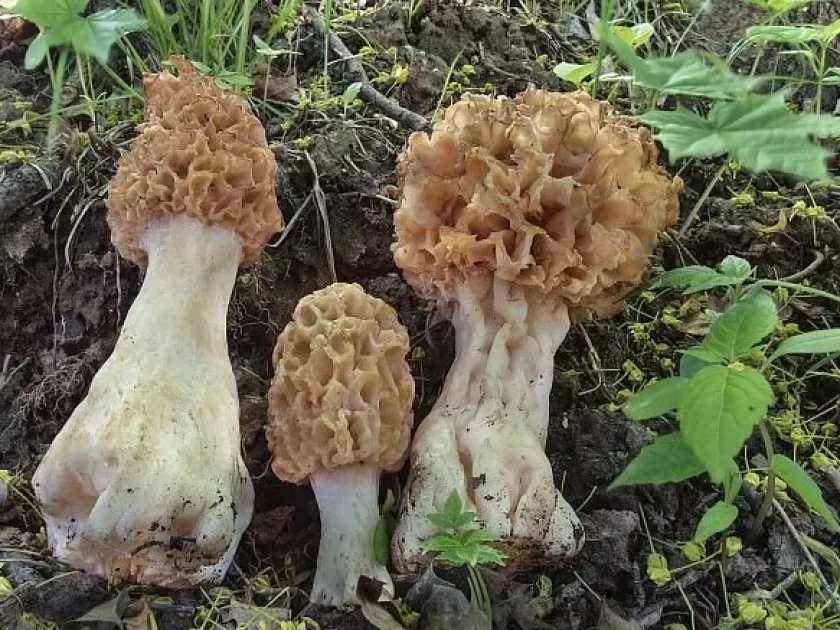
The cap is distinctively pitted with large, deep ridges and honeycomb-like cells, ranging in color from tan to light brown.
The defining characteristic is the exceptionally thick and bulbous stalk, which is often furrowed and significantly inflated at the base.
The entire fruit body is hollow inside, from the cap to the bottom of the stem, a feature that distinguishes it from various other fungi.
These mushrooms are often found growing near the bases of deciduous trees or in areas with nutrient-rich, moist forest soil.
Pathogen
The thick-footed morel (Morchella crassipes) is a species of fungus in the Morchellaceae family. It is strictly a saprotrophic organism and is not a plant disease.
In agricultural contexts, this fungus is not considered a pathogen. It does not infect, parasitize, or damage any crops, vegetables, or field plants.
The organism functions as a decomposer, breaking down complex organic materials in the soil and forest floor into simpler nutrients.
Because it lacks the ability to attack living plant cells, it poses zero threat to farming activities or commercial crop production.
Therefore, there is no requirement for monitoring, control, or management of this species within an integrated pest management program.
Conditions for development
Development is heavily dependent on specific spring environmental conditions, particularly moisture levels in the soil and warming trends.
The species prefers broad-leaved forest habitats where leaf litter provides the necessary organic matter for the fungal mycelium to thrive.
Adequate soil moisture, combined with moderate air temperatures, triggers the emergence of the fruiting bodies during the early growing season.
Light penetration in forest clearings can stimulate more robust development, as these fungi often emerge in gaps where solar warming is higher.
Healthy, non-compacted soils with active decomposition processes are the natural habitat requirements for this particular mushroom species.
Discussion
No discussions yet — be the first.