
Montagnea
Montagnea
Description
Symptoms
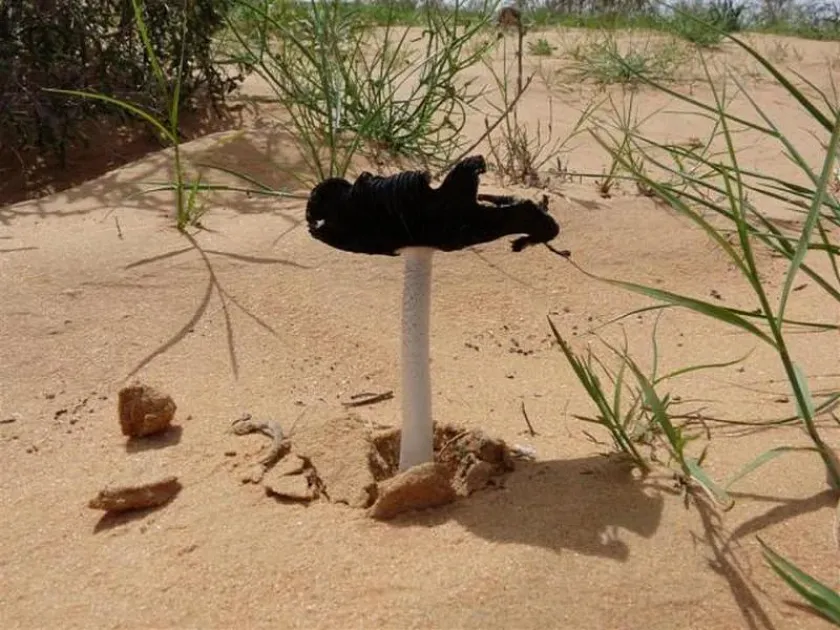
The fungus is characterized by the development of tall, slender stalks topped with a distinctive, radially folded cap structure.
As the fruiting body matures, the cap often collapses, releasing a large volume of dark, dust-like spores into the surrounding environment.
There are no visible disease symptoms such as leaf spots, wilting, or necrotic lesions associated with the presence of this fungus on crops.
Farmers may observe dark spore deposits on leaves, which is merely a passive accumulation due to wind dispersal and not a sign of infection.
Distinguishing this fungus from cereal smuts is crucial, as the latter requires treatment while Montagnea does not.
Pathogen
Montagnea is a genus of fungi within the Agaricaceae family, well-known for its presence in arid and semi-arid environments worldwide.
The most recognized species, Montagnea arenaria, is a saprotrophic fungus, meaning it feeds on decaying organic matter rather than living plants.
It is not classified as a plant pathogen, and it does not possess mechanisms to penetrate or infect healthy agricultural crop tissues.
Biologically, it is an essential part of the soil ecosystem in desert regions, helping to break down complex plant debris in poor soils.
Agronomists should note that Montagnea is essentially a soil resident that occasionally forms visible structures on the surface.
Conditions for development
This fungus thrives in hot, dry climates and is frequently found in sandy or loose soil conditions common in desert ecosystems.
The presence of decomposing plant material in the soil is the primary food source that supports the growth of Montagnea mycelium.
It is highly adapted to extreme temperature fluctuations and can survive long periods of drought in the soil profile.
Sporulation is triggered by shifts in humidity, allowing the fungus to rapidly produce fruiting bodies following occasional desert rain events.
Wind is the primary vector for the dispersal of spores, allowing the fungus to colonize new areas with sufficient organic debris.
Why it matters
Montagnea arenaria causes no economic damage to agricultural crops and is not considered a threat to yield or plant vitality.
It does not produce systemic toxins, nor does it compete with root systems for water or nutrients in a way that affects crop growth.
The main issue associated with this fungus is the potential for misidentification, which might lead to unnecessary use of fungicides.
There are no known reports of this fungus causing harm to domestic livestock or interfering with normal field operations.
It remains a benign inhabitant of the landscape, posing no risks to the overall success of agricultural production in arid regions.
Protection
No specific control measures or chemical treatments are required for Montagnea since it does not act as a crop pest or disease.
Standard agronomic practices, such as proper soil cultivation and crop rotation, are sufficient to manage its presence in the field.
Ensuring soil health and managing the breakdown of organic residues naturally limits the food supply for this saprotrophic fungus.
Accurate field monitoring is the best strategy to avoid unnecessary panic and the misapplication of expensive chemical plant protection agents.
If the visual presence of the fungus is undesirable, deep plowing to disturb the soil surface will effectively prevent further fruiting body formation.
Discussion
No discussions yet — be the first.