
Asian brown rot
Monilinia polystroma
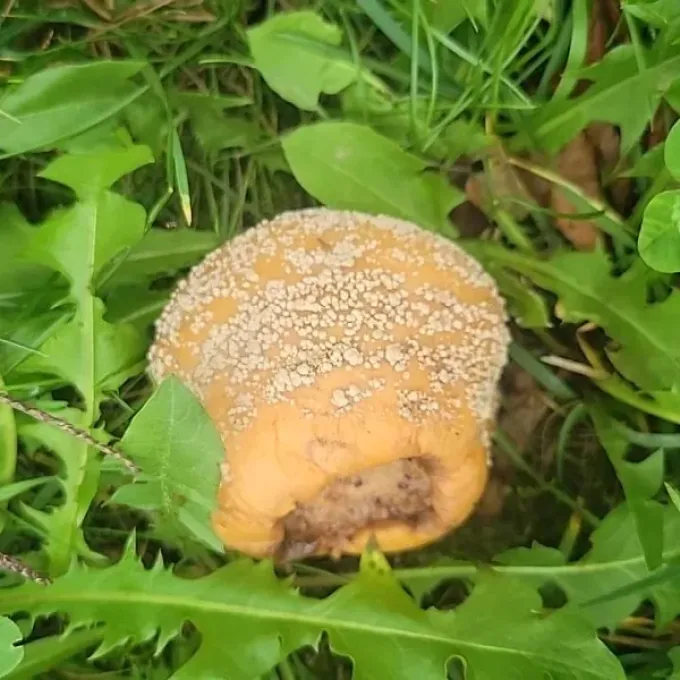
Description
Symptoms
Symptoms often appear as sudden wilting and browning of blossoms and young shoots, creating a characteristic burnt appearance on the affected parts of the tree.
Fruit symptoms begin as small, firm spots that rapidly expand, leading to complete rot and browning of the fruit tissues while they remain on the tree.
Dense clusters of greyish-tan spore masses (pustules) emerge on the surface of rotted fruits, twigs, and leaves, which serve as secondary sources of infection.
A classic sign is the formation of mummified fruits that do not detach from the tree, serving as reservoirs for the pathogen to carry over into the next growing year.
In cases of twig infection, cankers may develop, leading to gummosis (oozing of gum) and potential dieback of branches during the dormant or growing period.
Pathogen
The causal agent of this disease is the fungus Monilinia polystroma, which belongs to the Ascomycota division. It is closely related to other species causing brown rot in fruits but has distinct biological traits.
The pathogen utilizes conidia for dissemination, which are easily spread by wind, splashing rain, or insect vectors throughout the growing season of the fruit trees.
The fungus can survive the winter months by forming dormant mycelium or sclerotia within mummified fruits that remain attached to the branches or fallen on the soil.
The life cycle is highly adapted to orchard environments, involving both sexual and asexual stages that allow the fungus to perpetuate itself successfully across seasons.
Diagnostic identification of this specific species often requires laboratory analysis due to its morphological similarity to other Monilinia species prevalent in agricultural zones.
Conditions for development
Warm temperatures coupled with high relative humidity and frequent rainfall during the flowering period are ideal conditions for the initiation of infection.
The disease thrives in environments where moisture is trapped within the canopy, such as in dense or poorly pruned orchards, facilitating spore germination.
Insects play a critical role in the transmission and severity of the disease by creating entry wounds on the fruit surface, allowing the fungal hyphae to penetrate easily.
Environmental fluctuations that cause condensation on fruit surfaces often stimulate the release and rapid spread of conidia within the orchard environment.
Spring conditions that include heavy fog or lingering moisture allow the primary inoculum to infect blossoms, leading to initial outbreaks of the disease.
Why it matters
Asian brown rot causes significant economic losses by destroying blossoms, preventing fruit set, and rotting mature fruits, leading to a drastic reduction in marketable yield.
The disease reduces the vigor of the tree through repetitive damage to new shoots and branches, which can lead to structural weakness over several seasons.
Post-harvest losses are extreme, as infected fruits deteriorate rapidly during storage and transport, rendering them unsuitable for wholesale or retail markets.
The aggressive nature of the infection makes it difficult to contain, often requiring intensive and costly chemical interventions to prevent total crop failure.
Because it is categorized as a quarantine pathogen in many regions, its presence can halt export opportunities and impose strict phytosanitary regulations on growers.
Protection
Sanitation is the cornerstone of management; this involves the removal and destruction of all mummified fruits and diseased branches during the pruning season.
A prophylactic fungicide spray program is essential, specifically targeting the sensitive growth stages of blossoming and fruit ripening to prevent colonization.
Integrated pest management is vital, as controlling insects that damage fruit skin prevents the fungus from gaining a foothold in the orchard.
Proper orchard canopy management, including thinning and pruning, improves airflow and light penetration, which naturally suppresses fungal growth conditions.
- Utilize resistant or tolerant fruit varieties where available for the region.
- Strictly adhere to quarantine protocols to prevent the introduction of the pathogen into new areas via nursery stock.
- Maintain orchard hygiene by clearing debris and fallen fruits that harbor overwintering spores.
Discussion
No discussions yet — be the first.