
Mollisina leaf spot
Mollisina rubi
Description
Symptoms
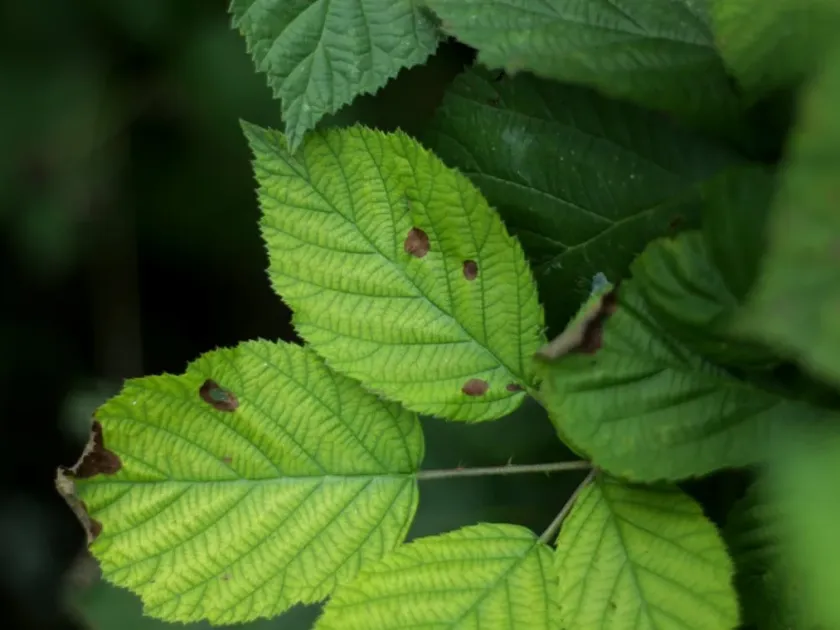
The first signs of infection appear as small, localized spots on the leaves, which often display a distinct pattern compared to other types of leaf spots.
These spots frequently develop a light-colored or grayish center surrounded by a darker border, which helps distinguish Mollisina rubi from other pathogens.
Under close observation, especially with a hand lens, tiny dark fruiting structures known as apothecia can be seen appearing in the center of the infected necrotic spots.
As the disease progresses, these spots may enlarge or coalesce, leading to severe chlorosis and the eventual drying out of the affected leaf tissues.
- necrotic spots on leaves;
- distinctive dark lesion margins;
- premature leaf yellowing;
- withered foliage patches;
- reduced plant vigor.
Pathogen
The disease is caused by the fungus Mollisina rubi, a member of the Ascomycota phylum. It acts primarily as a pathogen affecting the foliage of blackberry plants.
The fungus survives the winter as mycelium or small fruiting bodies within decaying leaf litter and plant debris, which serve as the primary inoculum source.
The life cycle involves the production of spores that are released during humid weather conditions and dispersed by rain splashes or wind to healthy leaf tissues.
Upon landing on a susceptible leaf, the spores germinate and penetrate the epidermal layer, establishing an infection site within the plant's inter-cellular spaces.
The pathogen utilizes enzymes to degrade plant tissue, obtaining nutrients while gradually expanding its footprint across the surface of the blackberry leaves.
Conditions for development
High moisture levels are the most critical factor for the development of Mollisina leaf spot, particularly following prolonged periods of rainfall or heavy dew.
The optimal temperature for fungal growth and spore germination typically ranges between 15°C and 22°C, which is common in many blackberry-growing regions.
Poor air circulation within blackberry canopies, often caused by overcrowding or lack of proper pruning, keeps the foliage damp for extended periods.
The presence of water droplets on the leaf surface for several hours is sufficient to allow the fungus to successfully penetrate and infect the plant tissue.
Weakened plants or those with nutrient deficiencies are generally more susceptible to infections compared to healthy, vigorously growing blackberry shrubs.
Why it matters
The infection significantly reduces the active leaf area, directly impacting the plant's ability to perform photosynthesis and produce energy.
Severe infestations lead to premature leaf drop, which deprives the plant of necessary energy reserves required for cold hardening and winter survival.
Fruit development is hindered because the plant has fewer resources to allocate toward berry sizing, flavor development, and overall crop yield quality.
Cumulative harm over several seasons can cause a decline in the overall health and productivity of the blackberry plantation, reducing its economic lifespan.
An infected field acts as a persistent reservoir for the pathogen, necessitating ongoing and costly management efforts to keep the disease under control.
Protection
Strict sanitation practices, including the removal and destruction of all fallen leaves at the end of the season, are essential to break the pathogen's life cycle.
Proper pruning and thinning of the canes improve airflow through the plant, which helps foliage dry quickly and minimizes conditions conducive to fungal growth.
If the infection level is high, applying authorized fungicides during the vegetative growth period can effectively manage the spread of the disease.
Promoting plant health through balanced fertilization and proper irrigation helps strengthen the blackberry's natural defenses against fungal invaders.
Selecting disease-resistant cultivars when establishing new plantations can drastically reduce the reliance on chemical control methods over time.
Discussion
No discussions yet — be the first.