
Mollisia cinerea
Mollisia cinerea
Description
Symptoms
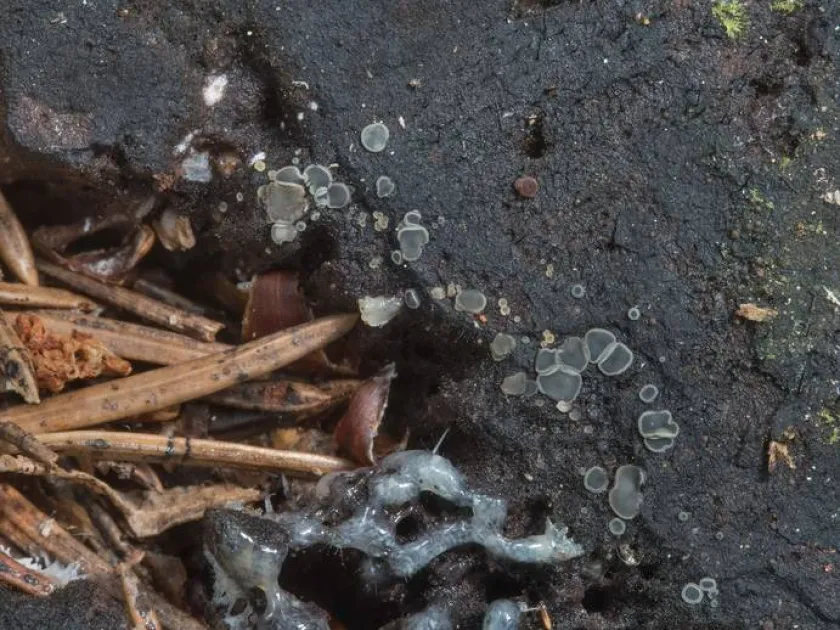
The primary symptom is the appearance of small, flat, saucer-shaped apothecia on the bark or decaying wood surfaces, characterized by their ash-grey or whitish color.
The infected bark often shows visible discoloration, turning darker and sometimes brittle as the mycelium of the fungus penetrates and degrades the structural tissues of the wood.
Under high humidity conditions, the fungal colonies may produce noticeable spore layers, which serve as a clear indicator of active colonization and potential spread.
In advanced stages, the bark may crack, peel away, or show signs of soft rot, revealing the underlying woody tissue which may become soft or spongy due to enzymatic degradation.
The presence of these fruiting bodies often marks localized necrotic areas, which may eventually lead to the dieback of specific branches if the infection progresses unchecked.
Pathogen
The causative agent is the ascomycete fungus Mollisia cinerea, which belongs to the order Helotiales and is known to be a common wood-decaying organism.
The fungus produces spores within its apothecia, which are disseminated primarily by wind and rain splashes, allowing the pathogen to travel to new host plants or damaged bark surfaces.
Mollisia cinerea often behaves as a secondary pathogen or a saprotroph, colonizing trees that have been weakened by environmental stress, pests, or mechanical injury.
Once it establishes a foothold in the bark or sapwood, the fungus secretes enzymes that break down lignin and cellulose, effectively softening the wood and disrupting the transport of nutrients.
The biology of this fungus is closely adapted to surviving in organic debris, making it a persistent resident in many woodland and orchard environments.
Conditions for development
High moisture levels are the most critical factor for the growth and reproduction of the fungus. Rainy periods, fog, and inadequate air circulation create the perfect environment for spore germination.
The optimal temperature range for the development of the fungus is between 15°C and 22°C, during which the production of apothecia is most prolific.
Mechanical damage to the trunk or branches, such as frost cracks, pruning wounds, or pest-induced damage, provides the entry points for the fungal spores.
Poor orchard management, including overcrowded plantings, leads to stagnation of air and persistent dampness on the bark, which significantly increases the risk of an outbreak.
Trees experiencing nutritional deficiencies or extreme drought stress are significantly more susceptible to infection, as their natural defense barriers are compromised.
Why it matters
The fungus causes wood decay, which significantly weakens the structural integrity of the affected branches, increasing the risk of breakage during wind or snow events.
By interfering with the plant's vascular systems, the fungus can induce localized necrosis, resulting in branch dieback and an overall decrease in tree vigor and yield.
Persistent infections can lead to severe bark damage, potentially resulting in the loss of entire limbs and diminishing the aesthetic and economic value of the trees.
Infected trees serve as active reservoirs for spores, facilitating the spread of the pathogen to healthy plants within the immediate vicinity if no sanitary measures are taken.
The degradation of wood by Mollisia cinerea can make affected trees unsuitable for commercial purposes, particularly in forestry where wood quality is paramount.
Protection
Sanitary pruning is the most effective control method: all infected, dead, or damaged branches should be removed and destroyed to reduce the local spore load.
Treating wounds with antifungal wound dressings or copper-based compounds helps to protect exposed wood and prevents colonization by the fungus.
Implementing proper orchard hygiene, including the removal of leaf litter and debris, limits the substrate available for the fungus to persist in the environment.
Improving the health of the trees through balanced fertilization and appropriate irrigation helps bolster the plant's natural defense mechanisms against fungal pathogens.
- Regular monitoring of tree bark.
- Sanitizing pruning equipment to prevent cross-contamination.
- Whitewashing trunks to protect against sunscald.
Discussion
No discussions yet — be the first.