
Mollisia amenticola
Mollisia amenticola
Description
Symptoms
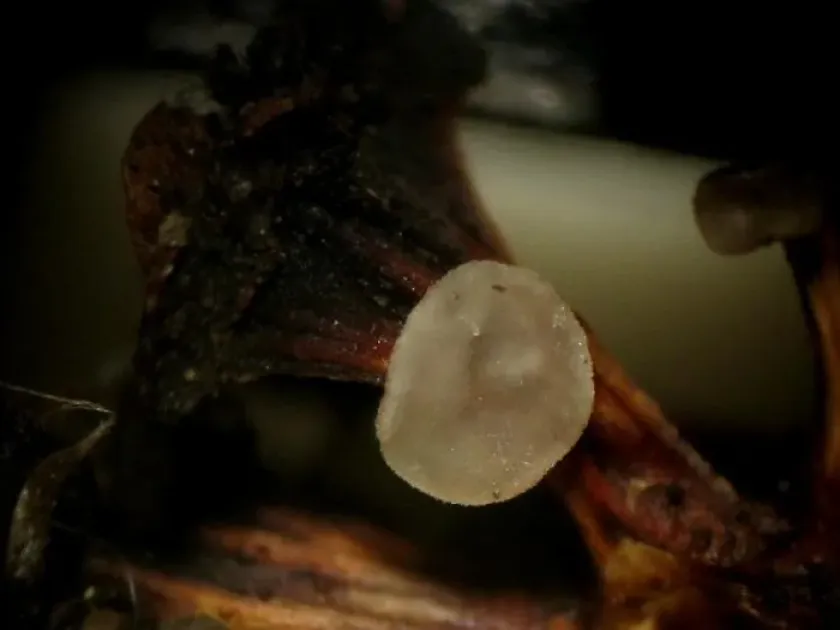
The primary diagnostic sign of the infection is the appearance of numerous minute, disc-shaped apothecia on the alder catkins. These fruiting bodies often cluster together on the catkin scales.
Affected catkins may appear prematurely withered, discolored, or dark in the areas colonized by the fungus. This deterioration is often visible on catkins that persist on the branches from the previous season.
Microscopic inspection reveals the waxy consistency of the apothecia. Their diameter is usually minimal, often requiring a hand lens or field microscope to clearly identify the presence of the fungal structures.
As the colonization progresses, the tissue of the catkin may become covered in a thin layer of fungal reproductive matter. This disrupts the normal anatomy of the reproductive organ, eventually leading to its decay.
The infection usually occurs in patches. Clusters of fruiting bodies serve as a visual indicator of localized infection centers where the fungus is actively decomposing the substrate.
Pathogen
The causal agent of this condition is the fungus Mollisia amenticola, a member of the ascomycetes class. It typically exhibits saprotrophic or weakly parasitic behavior, specifically targeting the generative structures of certain deciduous trees.
The life cycle of the pathogen is closely tied to the host tree's phenology. The fungus survives in organic debris and dead plant matter, producing spores that are disseminated via wind and rainfall to initiate new infections.
Biologically, this species is highly adapted to colonizing the catkins of alder. It thrives by breaking down organic tissues, utilizing them as a nutrient source for its mycelial growth and subsequent sporulation.
The reproductive structures, or apothecia, are typically small, cup-shaped, or disc-like. They exhibit pale colors such as white, grey, or cream, which allows them to remain inconspicuous to the untrained eye during early infection stages.
Classified within the Dermateaceae family, this fungus occupies a specialized ecological niche, showing a strong trophic affinity for the catkins of the Alnus genus, which defines its host range.
Conditions for development
High humidity levels are the primary driver of development for Mollisia amenticola. Frequent spring rainfall is critical for the germination of spores and the successful establishment of the fungus on host tissues.
The fungus thrives within a moderate temperature range, specifically between +10°C and +18°C. This climate profile provides the necessary conditions for rapid mycelial expansion during the active growth season.
The accumulation of old plant debris and persistent dead catkins provides a significant reservoir for the pathogen. These structures act as overwintering sites, ensuring the fungus remains present in the environment.
Reduced air circulation within the tree canopy, often caused by overly dense foliage or planting, maintains the high-moisture microclimate that the fungus prefers for its reproductive development.
Trees that are under stress—whether due to drought, insect damage, or nutrient deficiencies—often show reduced resistance, making them more susceptible to colonization by opportunistic fungi like this one.
Why it matters
While Mollisia amenticola is not typically responsible for massive tree mortality, it negatively impacts the tree's reproductive potential. The destruction of catkins limits seed production, which can hinder natural forest regeneration.
In forestry, the presence of this fungus is often viewed as a symptom of poor phytosanitary conditions. It can serve as a marker of weakened individuals or aging stands that require increased management attention.
Metabolic activity of the fungus during colonization can introduce secondary stress to adjacent healthy tissues. This cumulative effect can slightly impede the overall physiological vitality of affected branches.
High spore density within a tree canopy increases the risk of spreading the pathogen to other vulnerable plant materials, a concern particularly relevant in tree nurseries where high densities facilitate rapid spread.
Economic impacts arise from the necessity for increased phytosanitary monitoring and potential loss of viable seed stock, which may require remedial actions to maintain the desired density of saplings.
Protection
Proactive sanitation is the most effective control method. Removing and disposing of infected debris and persistent catkins significantly reduces the local pathogen pressure for the following season.
Pruning or thinning of stands helps to improve airflow and increase sunlight penetration in the canopy. These practices effectively reduce the humidity levels that the pathogen requires for success.
In nursery settings, the application of appropriate fungicides during the budding phase can protect the catkins from infection, ensuring that healthy seed production is maintained for future cultivation.
Regular phytosanitary monitoring is essential, particularly during damp springs, to identify infection hotspots early. Early detection allows for targeted management before the fungus spreads throughout the stand.
Biological control strategies, utilizing antagonistic microorganisms, offer an environmentally friendly approach to suppress fungal populations without the need for intensive synthetic chemical applications.
Discussion
No discussions yet — be the first.