
Mikronegeriaceae
Mikronegeriaceae
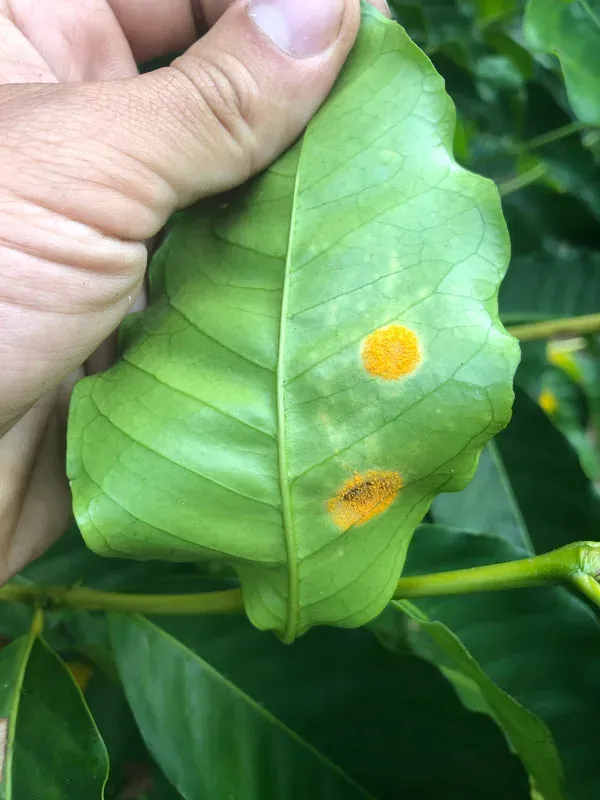
Description
Symptoms
Early symptoms of Mikronegeriaceae infection typically present as small, chlorotic spots or patches on the foliage. As the fungus colonizes the internal tissues, these spots may expand and eventually undergo necrosis.
The hallmark sign of the infection is the development of pustules on the leaf surface. These structures appear as raised bumps of various colors, often rust-colored or orange, which eventually rupture to release millions of microscopic spores into the air.
Affected plants may exhibit noticeable deformation, such as leaf curling, twisting of petioles, or stunted growth of new shoots. This is a direct consequence of the hormonal disruptions caused by the fungal infection inside the plant tissues.
In advanced stages, heavy infection leads to premature leaf senescence and abscission. The loss of foliage reduces the plant's photosynthetic capacity, leading to general weakening and diminished vigor across the entire canopy.
Field diagnosis requires careful observation, as the initial pustules are often tiny and can be overlooked without magnification. Consistent scouting of the undersides of leaves is essential for early detection in agricultural settings.
Pathogen
Mikronegeriaceae is a family of obligate parasitic fungi belonging to the order Pucciniales (rust fungi). These pathogens are highly specialized organisms that rely entirely on their host plants to complete their complex biological life cycles.
The fungus feeds by extracting nutrients from the host's living cells using specialized structures known as haustoria. This direct interaction with the plant's metabolism allows the fungus to thrive while causing significant physiological stress to the host.
The life cycle of the Mikronegeriaceae family involves multiple spore stages, which are adapted for both local infection and long-distance dispersal. These spores develop within tiny pustules that erupt through the plant epidermis during the maturation phase.
As obligate parasites, they show a strong affinity for specific host species, often evolving in parallel with their host plants. This specialization makes the disease dynamics predictable but sometimes difficult to manage without targeted control methods.
Genetic diversity within the family is significant, and researchers continue to study the molecular mechanisms these fungi use to evade host immune responses. Understanding these processes is vital for developing resistant cultivars in the future.
Conditions for development
High relative humidity and moderate temperatures provide optimal conditions for the germination and spread of Mikronegeriaceae spores. Persistent moisture on leaf surfaces acts as a critical factor for successful fungal entry into the host plant.
Wind is the primary vector for spreading the disease. Spores are easily carried by air currents from infected plants to nearby healthy hosts, facilitating rapid disease progression throughout an orchard or a nursery within a short period.
Stagnant air and high-density planting exacerbate the problem by keeping leaves wet for longer periods. Proper canopy management and spacing are crucial to ensure good airflow and faster drying after rainfall or irrigation.
The pathogen typically survives through the winter as dormant mycelium or spores within plant debris or protected bark crevices. When spring temperatures rise, the fungus reactivates, initiating the primary infection cycle for the new growing season.
Environmental stress, such as drought or nutritional deficiencies, can predispose plants to infection. A robust plant with balanced nutrient availability is generally more capable of withstanding the initial stages of a rust fungal attack.
Why it matters
The economic impact of Mikronegeriaceae lies in the reduction of overall plant productivity. By disrupting photosynthesis and nutrient transport, the fungus significantly drains the plant's resources, limiting flower and fruit development.
In ornamental and nursery industries, the cosmetic damage caused by foliar lesions often renders plants unmarketable. The visual impact of rust pustules and leaf distortion severely lowers the commercial value of the affected stock.
Chronic infections lead to significant plant decline over several seasons. In perennial crops, this might necessitate the removal and replacement of infected individuals, resulting in long-term financial losses for producers.
Furthermore, weakened plants are more susceptible to opportunistic secondary infections, such as bacterial spots or opportunistic molds, which can further aggravate the decline of the agricultural system.
The cost of implementing management strategies, including regular fungicide applications and labor-intensive sanitation, adds to the total economic burden faced by farmers in high-risk areas.
Protection
Effective management begins with the selection of resistant cultivars. Breeding programs aimed at identifying genotypes with natural resistance to rust fungi remain the most sustainable strategy for long-term disease management.
Sanitation practices are equally important: removing and destroying fallen leaves and infected plant parts minimizes the primary inoculum reservoir. Good pruning practices also help maintain air circulation within the canopy.
Chemical control involves the timely application of systemic or contact fungicides. It is recommended to rotate different classes of fungicides to minimize the risk of the pathogen developing resistance to specific active ingredients.
Adjusting irrigation methods—specifically using drip irrigation instead of overhead sprinklers—prevents unnecessary leaf wetness, thereby reducing the windows of opportunity for spore germination.
- Scout plants regularly for small rust-colored pustules.
- Apply preventative fungicides during periods of high humidity.
- Maintain balanced soil fertility to prevent plant stress.
- Implement strict sanitation measures in nursery environments.
Discussion
No discussions yet — be the first.