
Equine microsporia
Microsporum equinum
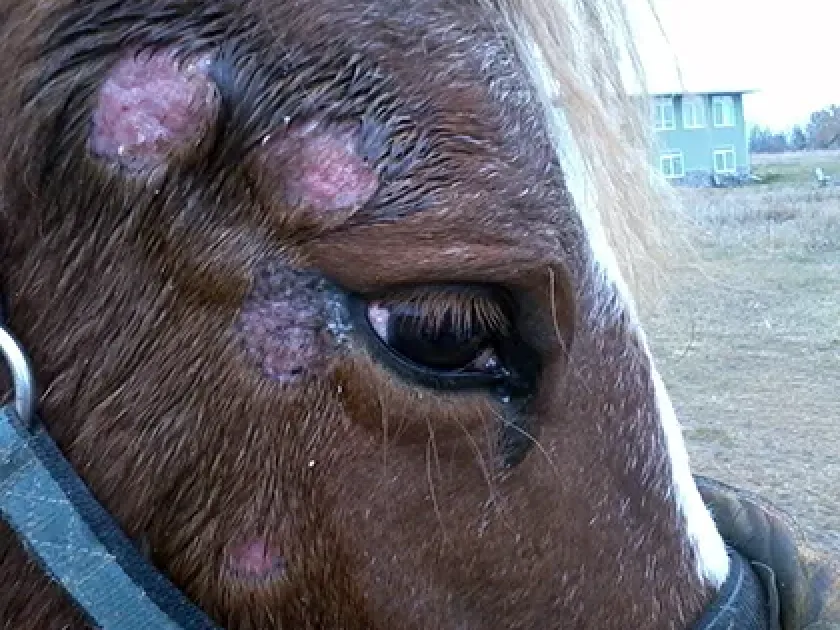
Description
Symptoms
The primary clinical sign of equine microsporia is the appearance of distinct, circular areas of alopecia, where the hair becomes brittle and eventually falls out.
In the affected areas, the skin typically shows signs of inflammation, characterized by the presence of grayish scales or scaly crusts overlying the bald patches.
While itching can be variable, horses often experience enough discomfort to cause them to rub against stalls or fencing, which may lead to further skin excoriation.
Lesions are most frequently found on the head, neck, and the saddle area, locations where equipment pressure or sweat accumulation might occur.
In younger animals, the disease often presents more aggressively due to their developing immune systems and thinner skin, leading to faster spreading of the fungi.
Pathogen
The causative agent of this condition is the pathogenic fungus Microsporum equinum, a member of the dermatophyte group. It is crucial to clarify that this organism is an animal pathogen, not a plant pathogen, and has no relation to crop diseases.
In agronomic science, there is no place for this fungus, as it is strictly specialized in feeding on keratin present in the hair and skin of equids.
The fungus develops by forming septate mycelium and arthrospores, which allow it to survive for extended periods in stables, in the soil, or on various inanimate surfaces.
Transmission primarily occurs through direct contact between horses or through contaminated grooming tools, saddles, blankets, and shared stall equipment.
Because the fungal spores are highly resistant to environmental changes, they can persist in the environment for months, posing a continuous threat to susceptible horses.
Conditions for development
Environmental conditions characterized by high humidity and poor air circulation in stables are primary drivers for the rapid development of fungal infections.
Crowded living conditions significantly facilitate the transmission of the fungus between horses, turning a localized infection into an outbreak.
Poor sanitation practices, such as the failure to disinfect grooming brushes or to change bedding frequently, allow spores to remain in the stable environment.
Winter months, when horses spend more time confined in indoor stalls, are particularly high-risk periods for the spread of Microsporum equinum.
Immunosuppression, often resulting from poor nutrition, concurrent illnesses, or excessive stress, makes horses significantly more prone to becoming symptomatic carriers.
Why it matters
The harm to the equine industry involves severe disruption of daily operations, as quarantine protocols often restrict the movement of affected animals.
The economic impact is driven by high costs for professional veterinary consultation, prolonged antifungal medication treatments, and intensive sanitation labor.
Equine microsporia is a zoonotic concern, meaning that stable staff and owners can be infected, necessitating strict hygiene and safety precautions during management.
If left untreated, chronic infections can lead to skin thinning, recurrent secondary bacterial infections, and a significant decrease in the horse's overall well-being.
Widespread outbreaks can severely impact an equestrian facility's reputation, potentially leading to canceled training sessions, competitions, and loss of revenue.
Protection
Effective control requires the immediate isolation of infected horses to prevent further spreading of the fungi within the herd or facility.
All affected animals should be treated with appropriate topical antifungal agents, such as shampoos or creams, alongside regular skin assessments by a veterinarian.
A rigorous disinfection program must be implemented for all stalls, halters, blankets, and brushes to eliminate spores residing in the environment.
Maintaining a high level of equine health through balanced diets and low-stress management helps horses resist the initial establishment of the pathogen.
Routine veterinary screenings and a dedicated hygiene protocol for incoming horses are the most effective strategies for preventing the introduction of the fungus.
Discussion
No discussions yet — be the first.