
Microsphaeropsis olivacea
Microsphaeropsis olivacea
Description
Symptoms
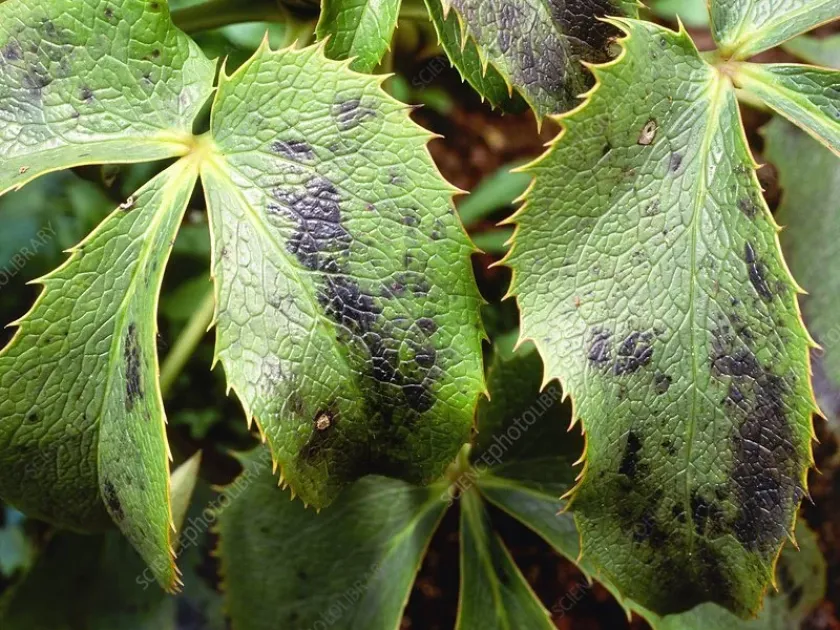
Symptoms typically present as localized necrotic spots on leaves and stems, initially showing a pale appearance. As the infection progresses, these spots darken to an olive or deep black color due to the development of fungal structures.
Tiny black fruiting bodies (pycnidia) are often visible within the center of the necrotic spots. Using a magnifying lens, these structures can be clearly identified, confirming the presence of the fungal pathogen.
In cases where fruits or storage organs are infected, the disease manifests as soft rot, leading to a degradation of tissues. The affected areas often exhibit a water-soaked appearance and may become covered in a dark, olivaceous layer of spores.
Infected foliage may turn yellow and wither prematurely, significantly reducing the leaf area available for photosynthesis. Stem infections can lead to wilting and, in severe cases, the collapse of the plant shoot.
Zonal patterns of tissue discoloration are frequently reported as a diagnostic feature, helping to differentiate this disease from other similar fungal leaf spot pathogens prevalent in agricultural landscapes.
Pathogen
The pathogen Microsphaeropsis olivacea is a coelomycetous fungus characterized by the formation of pycnidia, which serve as its primary reproductive structures. This fungus is known for its ability to persist in diverse environmental conditions as a facultative parasite.
Within the pycnidia, the fungus produces masses of conidia that are released during periods of high humidity and rainfall. These spores are easily disseminated by wind and water splash, allowing the pathogen to spread across crop fields rapidly.
Scientific studies indicate that the fungus possesses significant metabolic flexibility, enabling it to inhabit dead plant tissues as a saprotroph and transition to a pathogenic lifestyle under favorable conditions.
The life cycle of the pathogen is closely tied to the physiological status of the host plant. It exploits pre-existing damage, such as insect bites or mechanical injuries, to infiltrate host tissues and establish infection.
Genetic diversity within populations of Microsphaeropsis olivacea allows the fungus to adapt to varying host resistance mechanisms, posing a challenge for long-term integrated pest management programs.
Conditions for development
Moderate temperatures ranging from 18 to 25 degrees Celsius create an optimal environment for fungal growth. Fluctuations in temperature often trigger the maturation and release of conidia from pycnidia.
High relative humidity levels, usually exceeding 80%, are essential for the germination of spores on plant surfaces. Prolonged dew and overcast weather significantly exacerbate the risk of a widespread outbreak.
Poor ventilation within dense crop canopies creates microclimatic conditions that favor the pathogen. High planting density limits airflow, allowing moisture to persist on leaves and creating long-term infection windows.
Host plants suffering from nutrient imbalances or physical stress are significantly more susceptible to infection. Stress weakens the plant's natural defense barriers, making it easier for the fungus to penetrate the epidermis.
Plant debris left in the field serves as a major reservoir for the pathogen. In such residues, the fungus survives the off-season, ready to initiate a primary infection cycle when conditions become suitable again.
Why it matters
The primary economic harm caused by Microsphaeropsis olivacea is the reduction in yield due to extensive defoliation. A decrease in photosynthetic efficiency impacts the plant's ability to fill seeds or develop fruits.
Post-harvest losses are significant, as infected produce cannot be stored for long durations. The soft rot caused by this pathogen ruins the cosmetic appeal and marketability of vegetables and fruits.
In nursery environments, the disease can cause severe seedling death, leading to high replanting costs. An outbreak early in the growing season can compromise the uniformity and development of the entire crop.
Continuous management of this disease requires repeated fungicide applications, which increases production costs and impacts the environmental footprint of farming operations.
As the pathogen colonizes host tissue, it produces enzymes that degrade cell walls, which may facilitate the secondary colonization by other opportunistic fungal or bacterial decay organisms.
Protection
Effective crop rotation is the cornerstone of managing Microsphaeropsis olivacea. Avoiding host plants in the same area for several years reduces the buildup of inoculum in the soil.
Sanitation practices, including the removal and deep burial of crop residues, are vital to eliminate the primary sources of infection. Reducing the local inoculum load significantly slows the onset of the disease.
Systemic and contact fungicides are recommended when environmental conditions are conducive to disease development. Proper timing and the rotation of chemicals are necessary to prevent the development of resistant fungal strains.
Selecting and planting resistant or tolerant cultivars is the most sustainable long-term solution. Genetic resistance minimizes the need for chemical intervention and ensures a stable yield.
Optimizing plant spacing and nutrition helps create a robust, aerated canopy that is less conducive to disease. Healthy, well-nourished plants are generally more capable of resisting fungal invasion and development.
Discussion
No discussions yet — be the first.