
Giant Polypore
Meripilus giganteus
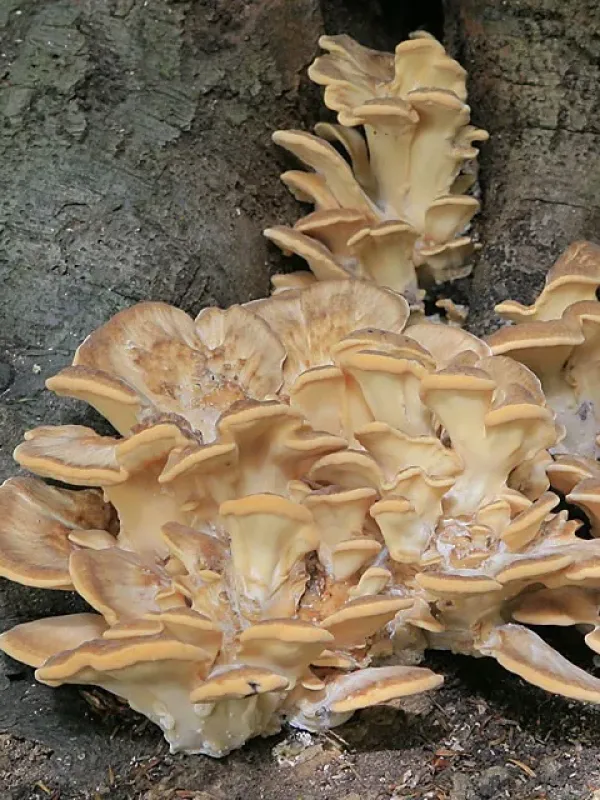
Description
Symptoms
The most prominent sign is the appearance of large, overlapping, fan-shaped fruiting bodies during the late summer and autumn seasons.
Above-ground symptoms include progressive crown thinning, premature yellowing of leaves, and a noticeable reduction in annual twig growth.
Below-ground examination often reveals the destruction of roots, which become soft, fibrous, and discolored due to the intense white rot process.
The wood affected by Meripilus giganteus loses its density, often leading to structural instability and a significant risk of the tree falling in strong winds.
In advanced stages, cracks and lesions may appear on the bark near the base, sometimes accompanied by a distinctive fungal odor.
Pathogen
The causative agent of the disease is the wood-decaying fungus Meripilus giganteus, which belongs to the Meripilaceae family. It acts as both a parasite on living hosts and a saprotroph on dead wood.
The fungus produces large, rosette-shaped fruiting bodies, which are typically found at the base of the trunk or spreading over the root flare.
The infection begins when fungal spores enter the host through physical injuries in the bark or compromised root tissue.
Once established, the mycelium spreads throughout the tree's vascular system, systematically degrading the structural integrity of the wood.
This fungus is highly resilient and can persist in soil or dead wood remnants for many years, waiting for an opportunity to infect new trees.
Conditions for development
High soil moisture and poor drainage conditions create an ideal environment for the spores to germinate and for the mycelium to expand rapidly.
The fungus primarily targets trees already under stress from drought, nutrient deficiency, or prior physical trauma to the root system.
Temperatures between 18°C and 25°C are optimal for the development of the fungal fruiting bodies, though the mycelium thrives in a wider range.
Compacted soil in tree pits prevents proper aeration, which promotes the anaerobic conditions often favored by the early stages of root infection.
Lack of proper sanitation, such as leaving stumps or dead wood in the garden, facilitates the spread of spores to healthy neighboring trees.
Why it matters
The fungus induces an aggressive form of white rot, effectively stripping the tree of its ability to transport nutrients and water from the roots to the crown.
The structural degradation of the roots and the base of the trunk poses a severe safety hazard to surrounding property and people due to potential tree failure.
The infection results in the gradual decline of the host tree, significantly shortening its lifespan and reducing its aesthetic value in landscape plantings.
Economic damage is substantial, as the fungus affects a wide variety of deciduous tree species, often requiring the expensive removal of large, hazardous trees.
The spread of the infection within a tree is often irreversible, making the control of the pathogen a challenging and often unsuccessful endeavor.
Protection
Preventive maintenance, including balanced irrigation and proper nutrition, is the best way to keep trees resilient against fungal attacks.
Avoid any mechanical impact on the tree bark or roots during landscaping, as every wound serves as a potential entry point for fungal spores.
Once fruiting bodies are detected, they should be removed and destroyed; if the tree is heavily infested, it must be removed to prevent further spread.
All gardening tools used on an infected tree must be thoroughly disinfected with ethanol or a suitable fungicide before being used on other plants.
Avoid planting new trees in the immediate vicinity of an infected root zone without professional soil treatment and a waiting period.
Discussion
No discussions yet — be the first.