
Melanogaster ambiguus
Melanogaster ambiguus
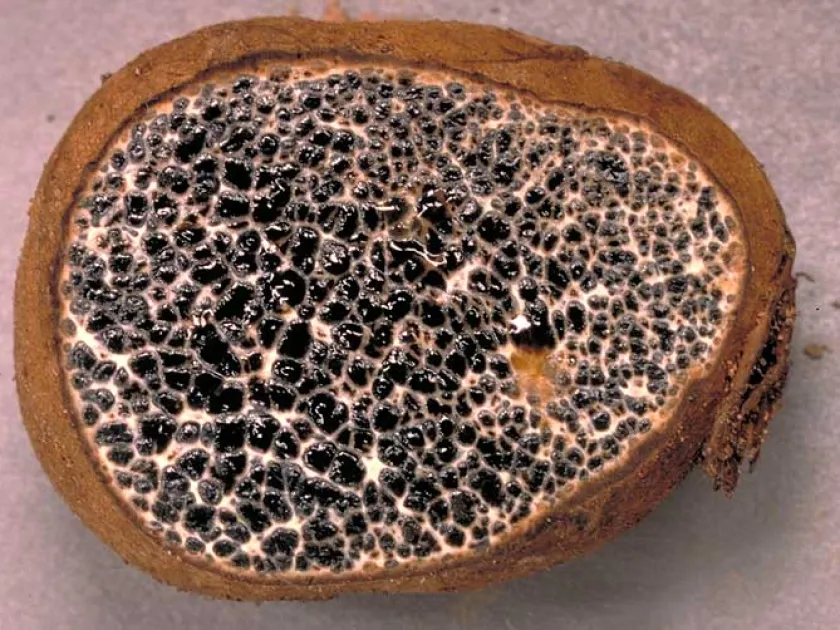
Description
Pathogen
Melanogaster ambiguus is a species of fungus in the family Paxillaceae, often characterized as a subterranean fungus. It typically inhabits forest soils, where it functions as a saprotroph, decomposing organic matter and forest litter.
The pathogen forms fruit bodies that grow beneath the soil surface, similar to truffles. These bodies contain spores that disperse through soil invertebrates and moisture movement. Its biology is deeply tied to the presence of decaying organic material in the soil profile.
While primarily a saprophytic organism, its dense mycelial networks can colonize the rhizosphere of trees and shrubs. In agricultural settings, this mycelium may interfere with the uptake of water and nutrients by the plant's root system.
The fungus is distinguished by its dark, often blackish interior chambers within the fruit body. When mature, it produces a pungent odor, which serves as an evolutionary strategy to attract animals that aid in spore distribution.
Scientific research classifies it as part of the soil microbiome that, under specific environmental conditions, shifts from beneficial decomposition to a factor that may negatively affect plant growth environments.
Conditions for development
The development of Melanogaster ambiguus is strictly dependent on high humidity and the presence of abundant organic matter. It thrives in clay-heavy or compact soils where water retention is high and air circulation is limited.
Moderate temperatures are ideal for this fungus, as it avoids direct sunlight and rapid desiccation. Shaded environments, such as orchards with dense canopy covers, provide the optimal microclimate for mycelial expansion.
Soil pH levels play a significant role in the colonization success of the fungus. It shows a preference for neutral to slightly acidic environments, often colonizing areas where the natural soil balance has been shifted by heavy organic mulch.
Lack of proper soil aeration is a primary driver for the fungus to establish itself. Areas with poor drainage often show higher rates of colonization, as the stagnant water creates a perfect medium for the growth of its mycelial filaments.
Accumulation of leaf litter and woody debris in nurseries or orchards serves as the primary food reservoir, allowing the fungus to maintain a stable population density throughout the growing season.
Why it matters
The harm caused by Melanogaster ambiguus is mainly indirect, manifesting as root stress in sensitive plant species. The mycelium can physically obstruct root hairs, impeding the absorption of essential macro and micronutrients.
In addition to physical obstruction, the fungal metabolism releases organic acids and enzymes into the soil, which can alter the local chemical environment, leading to root tip necrosis and increased plant susceptibility to drought.
By weakening the root system, the fungus facilitates the entry of secondary pathogens, including bacteria and other more aggressive fungi that cause severe root rots and systemic decline in crops.
For ornamental trees and seedlings, the presence of this fungus significantly reduces transplant success and vigor. Plants colonized by Melanogaster ambiguus often show stunted growth and yellowing of foliage due to insufficient resource uptake.
The accumulation of its mycelial mass in the root zone can eventually lead to a decline in overall soil fertility as the fungus dominates the niche, potentially suppressing the beneficial symbiotic microflora like mycorrhizal fungi.
Protection
Management of Melanogaster ambiguus focuses on modifying the soil environment to make it unsuitable for fungal growth. Improving drainage and soil aeration is the most effective long-term preventative strategy.
Regular cultivation of the topsoil, particularly in the root zone, is essential to disrupt the continuity of the fungal mycelium. This physical destruction prevents the fungus from establishing a strong hold on the crop's roots.
Adjusting soil pH through liming can create an unfavorable environment for the pathogen while promoting a healthier soil microbiome. This should be done based on precise soil testing to ensure compatibility with the crops.
In nurseries, if significant colonization occurs, the removal of the topsoil layer and its replacement with a well-aerated, low-organic mineral substrate is recommended to eliminate the fungal habitat.
- Regular removal of excess leaf litter to reduce substrate availability.
- Avoidance of over-mulching with raw organic materials in sensitive planting areas.
- Application of specialized fungicides if the fungal infestation threatens the survival of young, valuable stock.
Discussion
No discussions yet — be the first.