
Western poplar rust
Melampsora occidentalis
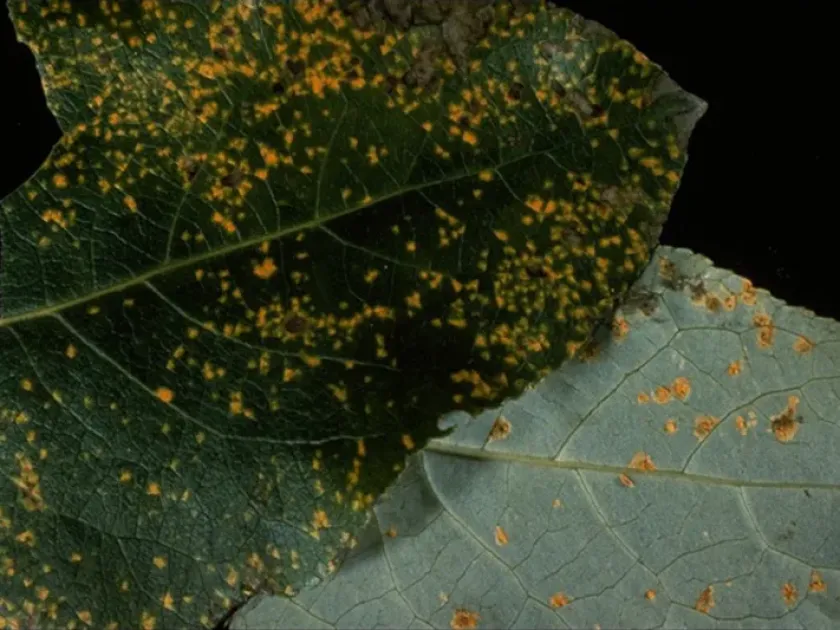
Description
Symptoms
Early symptoms appear as small yellow-orange spots on the underside of leaves. These spots eventually develop into pustules containing masses of powdery spores that are easily spread by the wind.
Chlorotic lesions often manifest on the upper side of the leaf, matching the pustule formation below. The leaves typically turn yellow and wither, leading to premature leaf drop during the peak summer months.
Heavy infections can cause the entire crown to appear scorched or discolored. The premature loss of foliage significantly disrupts the plant's seasonal biological processes.
Young shoots may show evidence of necrotizing infections if the disease pressure is high. This can weaken the development of new stems in nursery settings.
- Yellow-orange pustules on leaf undersides
- Premature yellowing and leaf senescence
- Crown thinning and scorched appearance
- Reduced diameter and height growth
Pathogen
The causal agent of this disease is the fungus Melampsora occidentalis, a member of the Basidiomycota division. This obligate parasite depends on poplars as its primary host for part of its lifecycle.
The fungus completes its life cycle by producing various types of spores, including urediniospores and teliospores. The ability to alternate between hosts is a key survival mechanism for the pathogen in various forest ecosystems.
Mycelium of the fungus penetrates the leaf tissue, extracting essential nutrients and disrupting the photosynthesis process. This activity leads to the characteristic symptoms observed on the foliage.
As a highly specialized rust fungus, it exhibits significant virulence against susceptible poplar species. Its microscopic structures, particularly the shape and size of spores, are diagnostic features used in laboratory identification.
Environmental adaptation is a hallmark of this species, allowing it to thrive in different geographic regions where susceptible hosts are present. Understanding its biology is essential for forest management.
Conditions for development
High humidity and moderate temperatures are the most favorable conditions for the development of western poplar rust. Moisture on the leaf surface is required for the spores to germinate and infect new tissue.
Densely planted nurseries or plantations often create stagnant air conditions, which exacerbate the spread of the disease. Proper spacing is crucial to minimize the duration of leaf wetness.
Optimal temperatures for fungal colonization usually range from 15 to 22 degrees Celsius. Frequent rainfall during late spring and early summer facilitates the initial cycle of infection.
Wind acts as the primary vector for spore dispersal, allowing the pathogen to move across large plantations quickly. Proximity to alternate hosts can also significantly increase infection rates.
Improper sanitation in nurseries, such as leaving diseased plant debris on the ground, creates a continuous reservoir of inoculum for subsequent seasons.
Why it matters
The primary impact of western poplar rust is the premature loss of leaves, which reduces the tree's ability to store carbohydrates for the winter. This significantly weakens the tree's vigor.
In commercial nurseries, the aesthetic and physical damage caused by the rust reduces the marketability of saplings. Unhealthy plants often fail to meet quality standards for sale.
Recurrent annual outbreaks result in cumulative damage, potentially leading to branch dieback or the death of younger, more susceptible trees. This leads to long-term economic losses for tree farmers.
Reduced biomass production is a major concern for forest industries relying on poplar wood. The disease essentially stunts the growth potential of an entire stand.
Compromised trees are also more susceptible to secondary pests and environmental stressors, such as drought or frost, following a severe rust season.
Protection
Sanitation is the most effective management strategy; removing and destroying infected leaf litter prevents the overwintering of spores. This breaks the infection cycle for the next year.
Selecting resistant poplar clones or hybrids is the best long-term solution. Breeding programs continuously work to improve tree tolerance to Melampsora occidentalis.
Fungicide applications, specifically copper-based or systemic formulas, can be used in nursery settings to protect young foliage when conditions are conducive to infection.
Improving air circulation through proper stand spacing and thinning helps keep leaves dry and limits the fungus's ability to infect new growth.
Monitoring programs should be implemented to detect the disease early. By managing host density and ensuring site sanitation, nursery operators can keep their crops productive and healthy.
Discussion
No discussions yet — be the first.