
Willow rust
Melampsora epitea
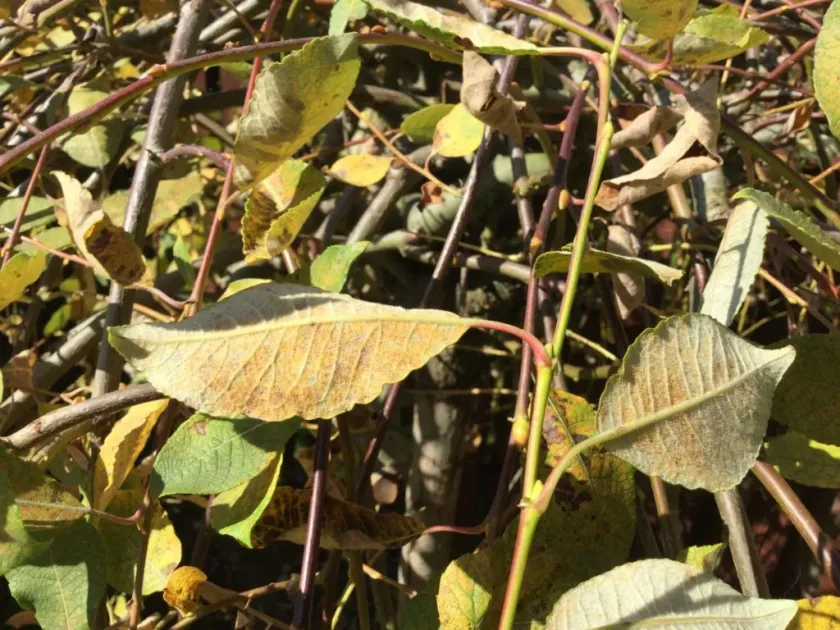
Description
Symptoms
Initial symptoms typically appear in late spring as small, bright yellow to orange spots on the upper surface of the leaves.
On the underside of the leaf, these spots develop into raised pustules filled with a powdery mass of bright orange or yellow spores, which are easily dispersed by wind.
As the infection progresses, symptoms spread to leaf petioles and young shoots, causing tissue distortion, galls, and premature withering of growing tips.
By late summer or autumn, the bright pustules turn into dark brown or black crusts, signaling the production of overwintering teliospores on the plant tissue.
Severe infections lead to extensive chlorosis and premature defoliation, which severely hampers the tree's physiological ability to store nutrients for the following year.
Pathogen
Willow rust is caused by the fungus Melampsora epitea, an obligate biotroph belonging to the Basidiomycota phylum. This pathogen strictly requires living plant host tissue to complete its life cycle.
The fungus is heteroecious, meaning it requires two unrelated host species to complete its life cycle. Willow (Salix) serves as the primary host, while various other plants may serve as alternate hosts.
The life cycle involves several spore stages, including urediniospores, which are responsible for the rapid spread of the disease within willow plantations during the growing season.
The pathogen overwinters as teliospores in fallen, infected leaves. When spring arrives, these spores germinate, producing basidiospores that initiate primary infections on emerging willow foliage.
The high genetic variability of Melampsora epitea allows it to develop specialized strains, making it a persistent challenge for breeders trying to achieve durable host resistance.
Conditions for development
The development of willow rust is heavily dependent on wet and humid conditions. Leaf surface moisture is essential for the germination of fungal spores.
Optimal disease spread occurs in temperate conditions with temperatures ranging from 15°C to 22°C, often coinciding with peak willow growth periods.
Poor site hygiene and high planting densities contribute to microclimates with restricted airflow, which trap humidity and promote rapid fungal infection cycles.
Excessive nitrogen fertilization promotes the growth of succulent, tender leaf tissue that is much more susceptible to penetration by fungal hyphae.
Proximity to alternate host plants, particularly certain conifer species, can significantly increase the inoculum load and the severity of rust outbreaks on willow trees.
Why it matters
The disease causes significant economic loss in willow plantations grown for biomass energy by reducing total annual yield and dry matter accumulation.
For ornamental willow trees, the aesthetic impact is severe; affected trees lose their foliage, develop stunted growth, and display distorted branching patterns.
Prolonged infection cycles weaken the overall vigor of the trees, making them more susceptible to secondary stressors like drought, frost, and wood-boring insects.
In cases of nursery stock production, the presence of rust-induced necrosis on stems renders the material commercially unsalable for basketry or woodworking.
Severe, repeated defoliation events compromise the tree's carbohydrate reserves, potentially leading to the death of young plants or significant dieback in older trees.
Protection
Effective management begins with strict sanitation: collecting and destroying fallen infected leaves to eliminate the primary overwintering source of the pathogen.
Cultural practices such as adequate spacing between plants and regular pruning help improve air circulation, effectively lowering the humidity around the foliage.
Chemical control is possible through the application of protective fungicides (such as copper-based products) or systemic fungicides (triazoles) at the first sign of symptoms.
- Ensure proper irrigation management to avoid wetting the leaves.
- Use balanced fertilization to prevent over-stimulation of vegetative growth.
- Rotate fungicide chemical classes to prevent the development of resistance.
The most sustainable strategy for long-term control is the use of disease-resistant willow clones selected specifically for regional environmental conditions.
Discussion
No discussions yet — be the first.