
Willow rust
Melampsora caprearum
Description
Symptoms
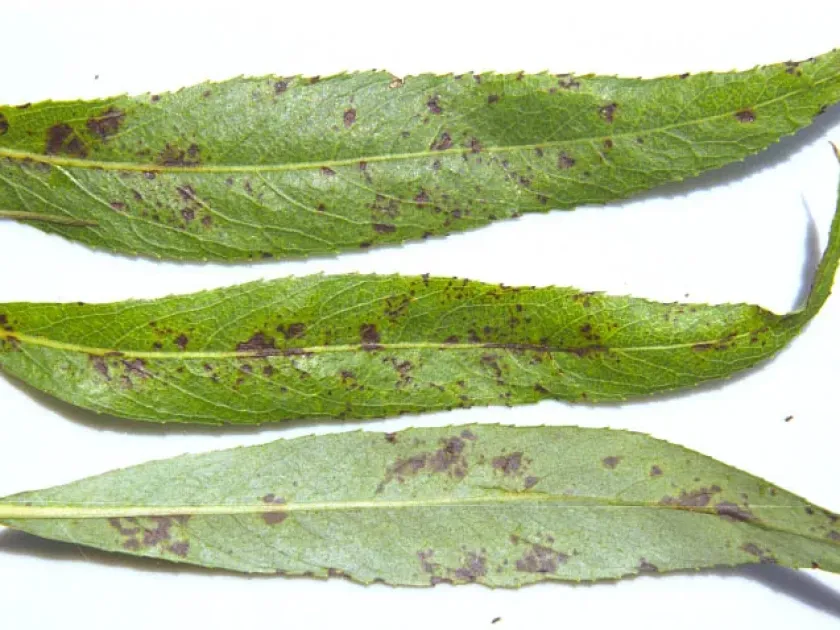
The first symptoms of willow rust appear on the underside of the leaves as small, bright yellow or orange pustules. These are clusters of urediniospores that easily disperse when disturbed.
On the upper side of the leaves, corresponding chlorotic spots form, which eventually turn brown or necrotic as the leaf tissue dies. The leaves may become distorted, curled, and brittle due to the intensity of the infection.
Later in the season, during late summer or autumn, these spots develop into flat, dark brown or black crusts, representing the telial stage of the fungus which signifies the end of the active infection cycle.
In cases of severe infestation, the tree's foliage may look significantly thinner, and early defoliation occurs, which compromises the tree's overall appearance and health for the following year.
The characteristic powdery orange dust found on the leaves or on the hands when touching affected foliage is the most reliable sign for identifying this specific fungal pathogen.
Pathogen
The causal agent of willow rust is the specialized pathogenic fungus Melampsora caprearum, which belongs to the order Pucciniales. This fungus is a biotrophic parasite that completes its complex life cycle by infecting willow leaves and twigs.
The fungus develops mycelium within the leaf tissues, eventually disrupting the plant's physiological processes. It produces various types of spores, including urediniospores and teliospores, which facilitate both rapid summer spreading and overwintering of the pathogen.
The life cycle is closely tied to the host plant and environmental conditions. Overwintering spores in fallen leaves germinate in the spring when moisture and temperature levels are optimal, starting a new cycle of infection.
The pathogen is highly specialized, and different strains may have varying levels of virulence towards specific willow species, making biological management a complex, ongoing process for arborists.
As the infection spreads, the fungal colonies expand, consuming nutrients from the host and producing mass quantities of spores that can be carried by wind to neighboring trees.
Conditions for development
Willow rust development is highly dependent on humidity and moisture levels. High relative humidity, frequent fog, and persistent morning dew are essential for the germination of fungal spores on leaf surfaces.
The optimal temperature range for the pathogen's activity is between 15°C and 22°C (59°F - 72°F). Under these conditions, the incubation period is significantly shortened, leading to rapid disease progression.
Dense plantings with poor air circulation are particularly prone to outbreaks. Lack of airflow prevents foliage from drying out quickly after rain, which creates the perfect environment for spore germination.
Weakened trees that suffer from nutrient deficiencies or environmental stress are more susceptible to infection. Maintaining overall tree vigor is a critical component in managing the disease.
Rain events during the growing season contribute to the splashing of spores, facilitating the rapid spread of the disease within the tree canopy and to neighboring plants.
Why it matters
The primary damage caused by willow rust is the reduction of the photosynthetic surface area. Premature leaf drop prevents the plant from accumulating sufficient carbohydrate reserves for overwintering.
Reduced vigor often leads to stunted growth, particularly in young saplings and nursery stock. Over time, recurring infections can cause significant dieback of branches and even the death of the tree.
The disease severely impacts the ornamental value of willow trees used in landscaping. Additionally, for basketry willow cultivation, the quality of the rods is drastically reduced, making them brittle and unusable.
The stress caused by rust infection leaves the willow susceptible to secondary infestations by pests and other diseases, creating a compounding effect that can devastate the plant's health.
In commercial nurseries, willow rust can lead to substantial financial losses due to the need for chemical control, labor-intensive sanitation, and potential loss of saleable stock.
Protection
Sanitation is the cornerstone of willow rust control. Gathering and destroying all fallen leaves in autumn is crucial to eliminate the primary inoculum source for the following season.
Selecting resistant willow cultivars is the most effective long-term strategy. Genetic resistance reduces the need for chemical intervention and ensures more stable growth in varying climates.
Proper pruning practices and adequate spacing between trees improve ventilation, allowing the foliage to dry faster and making it difficult for the fungus to establish infection.
When necessary, chemical control using copper-based fungicides or systemic products can be applied. Timely application, usually at the first sign of symptoms, is vital to prevent epidemic outbreaks.
- Regular monitoring of the canopy throughout the spring and early summer.
- Balanced fertilization to support host plant immunity.
- Removal of severely infected branches to reduce overall spore load.
Discussion
No discussions yet — be the first.