
Garlic parachute
Marasmius alliaceus
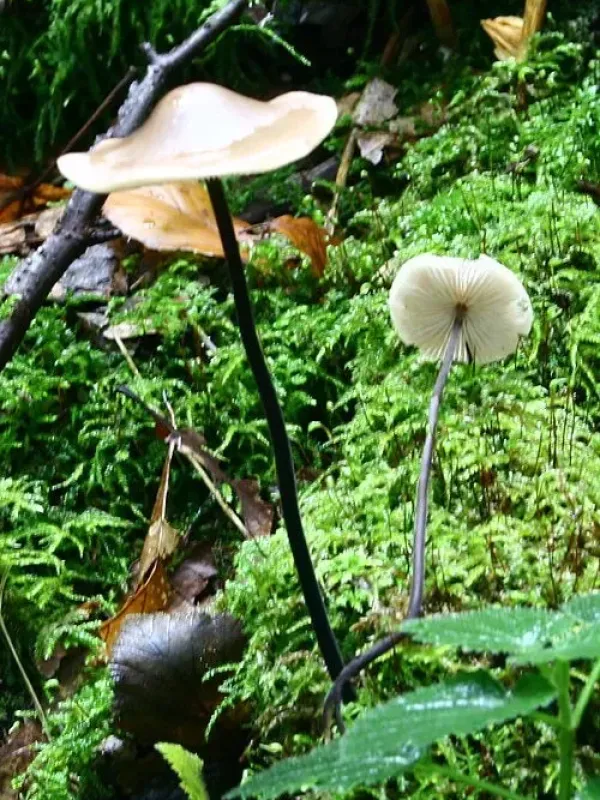
Description
Pathogen
The garlic parachute, scientifically named Marasmius alliaceus, belongs to the Marasmiaceae family. It is vital to classify it correctly as a saprotrophic fungus, which plays no role in plant pathogenesis for crops or garden plants.
This fungus survives by decomposing necrotic plant material, primarily dead wood, leaves, and small twigs found in forest environments. It functions as a reducer, essential for recycling nutrients back into the soil.
The distinct garlic-like odor it produces serves as a biological hallmark, resulting from the volatile sulfur compounds synthesized by the fungal mycelium during the process of wood degradation.
Unlike parasitic pathogens that cause diseases such as wilts, rots, or blights, Marasmius alliaceus is incapable of attacking living, healthy plant tissue.
From an agricultural standpoint, it is considered a beneficial or neutral organism that contributes to soil enrichment rather than a threat to cultivated plants.
Conditions for development
Marasmius alliaceus thrives in conditions characterized by high humidity and shaded environments, typical of the forest floor. It requires a steady source of moisture to activate its mycelium.
The fungus is commonly found on decaying beech wood and other deciduous tree remnants, which provide the necessary cellulose and lignin for its biological development.
The optimal temperature range for the appearance of its characteristic fruiting bodies is between 12°C and 18°C. Dry conditions or direct sunlight are detrimental to its growth.
In forest ecosystems, it often appears during autumn following sustained periods of rainfall, which moisten the forest litter layer where the fungus dwells.
In traditional agricultural landscapes, the lack of deep woody litter layers makes it difficult for this species to establish itself, preventing any potential interaction with cultivated fields.
Why it matters
There is no record of Marasmius alliaceus causing damage to agricultural, horticultural, or silvicultural crops. It does not induce lesions, root decays, or plant death.
As a saprotroph, it is restricted to consuming pre-existing dead organic matter, making it ecologically valuable rather than harmful.
No chemical control measures or plant protection protocols are required, as the fungus does not present any phytosanitary risks to vegetation.
Misidentifying this fungus as a plant disease can lead to unnecessary and harmful applications of fungicides, which could negatively impact the beneficial soil microbiota.
Management of this fungus in a forestry context is limited to standard wood storage practices to keep timber dry and prevent the natural decomposition processes that saprotrophs facilitate.
Discussion
No discussions yet — be the first.