
Description
Symptoms
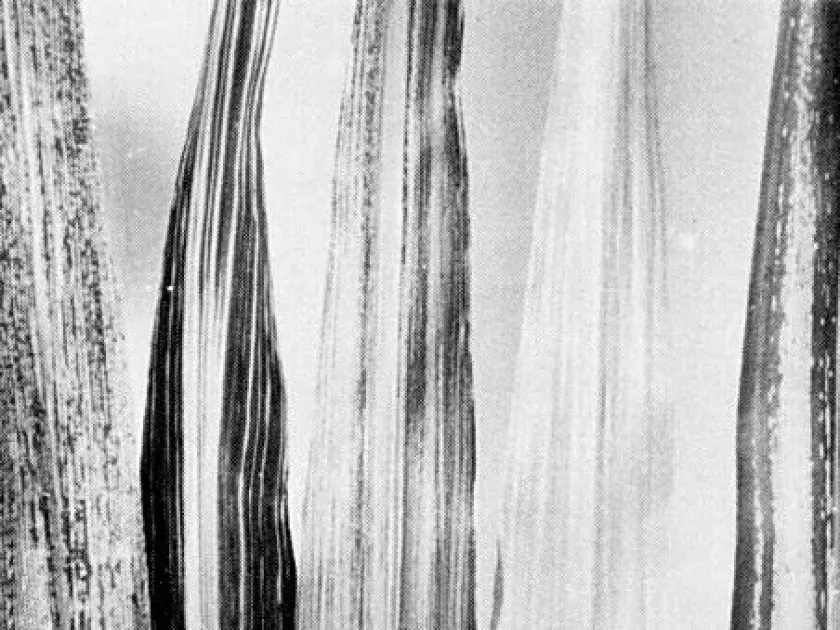
The primary symptom of maize stripe is the appearance of narrow, discontinuous chlorotic stripes on the leaves, running parallel to the veins. Over time, these stripes may coalesce, resulting in broad chlorotic or necrotic areas that significantly impede the plant's photosynthetic capacity.
Infected plants typically exhibit severe stunting, appearing much smaller and less vigorous than healthy plants in the same field. Internodes become shortened, giving the plant a deformed, bushy, or twisted appearance that is characteristic of systemic viral infections.
As the disease progresses, infected plants often fail to produce a tassel, or if they do, the tassels are often malformed and sterile. Ears may also show severe deformation, poor grain fill, or complete barrenness, leading to substantial reductions in total yield.
Plants infected at early growth stages may die prematurely, causing visible gaps in the stand. For plants that survive, the leaves often display necrosis along the margins, turning brown and drying out as the virus disrupts the internal water balance of the plant.
The systemic nature of the pathogen ensures that symptoms appear throughout the foliage. A tell-tale sign is the consistent pattern of striping that persists until the plant senesces or is destroyed by secondary opportunistic pathogens.
Pathogen
The causative agent of the disease is the Maize stripe virus (MStV), which is a member of the Tenuivirus genus. This virus is not mechanically transmitted; it requires a specific insect vector to move from plant to plant and maintain its lifecycle.
The primary vector for the disease is the corn delphacid leafhopper, Peregrinus maidis. The virus is acquired by the leafhopper during feeding and circulates within the insect, allowing for persistent, life-long transmission to healthy plants.
The virus is also capable of transovarial transmission, meaning it can be passed from the adult female leafhopper to its offspring. This mechanism creates permanent reservoirs of the virus in the leafhopper population even in the absence of a host crop.
Besides maize, the virus infects sorghum and a variety of wild grass species, which serve as crucial bridges for the pathogen throughout the growing season. These grasses sustain both the virus and the vector populations when maize is not actively growing.
Once injected into the plant by the vector, the virus spreads through the phloem to all parts of the host. The rate of viral multiplication is highly dependent on environmental temperature, which influences both the metabolic rate of the plant and the activity of the vector.
Conditions for development
The development of maize stripe is closely tied to warm and humid conditions, which favor the breeding and migration of Peregrinus maidis. High temperatures shorten the vector's life cycle, leading to rapid population explosions in maize fields.
Wild grasses and weed-filled fallow lands near maize fields act as major epicenters for the virus. Areas with high weed pressure often see an earlier onset of the disease, as leafhoppers migrate from these alternative hosts to the young, succulent maize seedlings.
Drought stress in maize can exacerbate the symptoms of the virus, making infected plants more brittle and prone to secondary infections. Conversely, irrigation can sometimes maintain the attractiveness of the crop to vectors, sustaining high infection pressure throughout the season.
Staggered planting dates create a continuous availability of hosts for the leafhopper. This "green bridge" effect allows the virus to circulate uninterruptedly, as vectors move from maturing crops to younger fields, ensuring the survival of the pathogen year-round.
Poor agricultural practices, such as lack of residue management, can also promote the survival of vectors. Leaving debris in the field allows for the survival of eggs and nymph stages, which will infest the next cycle of the crop shortly after germination.
Why it matters
The primary economic impact of maize stripe is the severe reduction in grain yield. Depending on the timing of infection, farmers can suffer yield losses ranging from 20% to nearly 100% in highly susceptible hybrid varieties, making it a major threat to food security.
In addition to quantitative losses, the quality of the harvest is severely compromised. Grains produced on infected plants are often poorly filled, shriveled, and possess low weight, which reduces their value in both feed and food markets.
The disease also affects the quality of forage, particularly when maize is grown for silage. Infected plants have lower nutritional value and altered chemical composition, which may not meet the dietary requirements for livestock production.
Infected crops are more susceptible to secondary pathogens, including stalk rots and leaf blights. This creates a synergistic effect where the virus weakens the plant's immune system, allowing other pathogens to cause extensive lodging and plant death.
The widespread nature of this disease forces agricultural producers to implement costly monitoring and chemical control programs. In some regions, the threat of maize stripe is so high that farmers are forced to avoid growing certain susceptible, high-yielding varieties entirely.
Protection
Effective control starts with sanitation, specifically the removal of wild grasses and weeds near field margins. By eliminating these reservoirs, producers can significantly reduce the local leafhopper population and lower the initial viral load.
Systemic insecticides should be applied during the early growth stages of the maize crop when plants are most vulnerable. Monitoring leafhopper populations using yellow sticky traps can help determine the timing for targeted applications.
The use of resistant or tolerant maize hybrids is the most sustainable long-term solution. Breeding programs focusing on resistance to MStV have provided several high-yielding options that can maintain productivity even under high disease pressure.
Implementing proper spacing between maize fields of different planting dates disrupts the movement of the vector. By avoiding "staggered" planting in close proximity, farmers can effectively break the infection cycle of the leafhopper.
Ensuring healthy plant growth through adequate fertilization and soil management helps the maize crop tolerate the stress induced by the virus. Strengthening the plant's vigor is essential to mitigating the total impact of the disease on final biomass and yield.
Pathogens and affected parts
Affects crops · 2
Discussion
No discussions yet — be the first.