
Magnaporthiopsis
Magnaporthiopsis
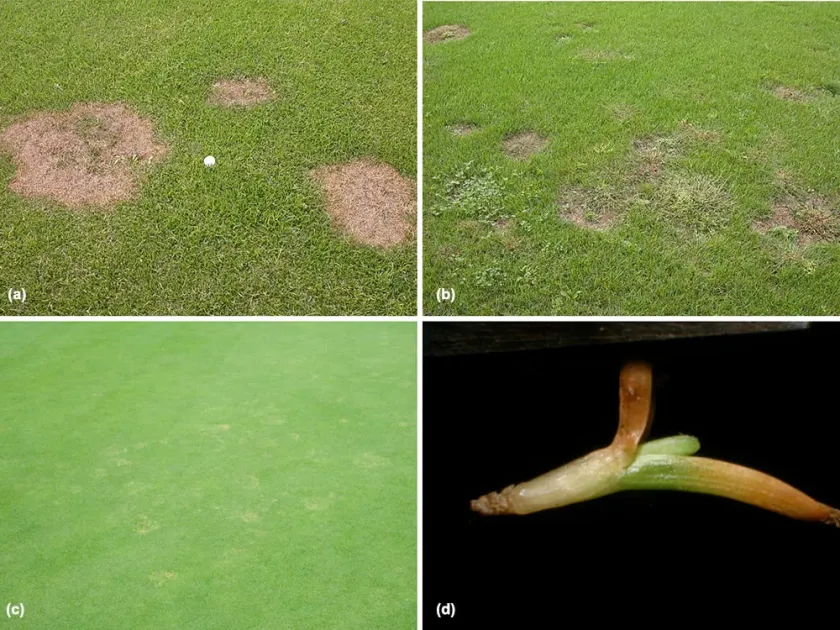
Description
Symptoms
Initial symptoms are often subtle, presenting as a slight yellowing or chlorosis of the leaves. Plants may exhibit stunted growth compared to healthy neighboring vegetation.
As the infection progresses, roots show characteristic discoloration, often turning brown, dark, or black due to tissue necrosis. This compromises the anchorage of the plant in the soil.
In turfgrass, the appearance of expanding irregular patches or "rings" of dying plants is a classic symptom. These areas often appear during hot, dry periods following a wet spring.
Individual plants may wilt suddenly, even when soil moisture appears adequate, due to the inability of the damaged root system to conduct water upwards to the foliage.
Upon closer inspection, a sparse fungal mycelium might be visible on the roots, although it is often difficult to detect without the aid of specialized laboratory equipment.
Pathogen
The disease is caused by fungi of the genus Magnaporthiopsis, most notably the species Magnaporthiopsis poae. This pathogen is a recognized threat to root health in a variety of turfgrasses and certain cereal crops.
These fungi are classified as ascomycetes. They are specialized to colonize the root cortex, eventually penetrating the vascular system and depriving the plant of essential water and nutrient uptake.
The pathogen can survive as mycelium or dormant spores within soil particles and infected plant debris for extended periods, making it highly persistent in the field environment.
The life cycle involves both sexual and asexual stages, allowing the fungus to adapt and spread efficiently under varying environmental conditions. Water movement and human activity are primary vectors for dispersal.
Advanced diagnostic methods, including molecular sequencing, are often required to accurately distinguish Magnaporthiopsis from other similar root-rot fungi in the field.
Conditions for development
Development is favored by moderate to warm temperatures, typically between 15°C and 25°C. Excessive moisture combined with high humidity provides the ideal environment for sporulation.
Poorly drained, compacted soils that lack adequate aeration promote the buildup of the pathogen. Such environments stress the plants, making them more susceptible to fungal invasion.
High nitrogen inputs can sometimes exacerbate the disease, as rapid, succulent growth may lack the structural integrity to resist infection by the fungus.
Stressful weather patterns, particularly periods of extreme moisture followed by drought, significantly weaken the root architecture and facilitate the progression of root rot.
Large-scale distribution is often facilitated by irrigation systems that distribute spores across entire plots, as well as the movement of contaminated equipment between different areas.
Why it matters
The primary impact of the disease is the destruction of the root system, which leads to reduced plant vigor, increased susceptibility to other environmental stresses, and eventual plant death.
Yield losses in cereal crops can be severe, as the plants fail to fill grains properly, leading to reduced test weight and overall biomass production in affected areas.
For turf professionals, the aesthetic damage caused by patches and thinning of the grass sward leads to significant economic losses and increased maintenance costs.
The long-term persistence of the pathogen in the soil means that previously infested areas remain a high risk for future plantings, limiting land-use flexibility.
Management costs increase significantly due to the necessity of repeated fungicide applications and the potential need for soil remediation or reseeding in damaged patches.
Protection
Long-term control relies on cultural practices, including crop rotation, which is vital to break the life cycle of the fungus and reduce the inoculum density in the soil.
Improving soil structure is critical. This includes aeration, proper drainage, and avoiding over-irrigation to maintain an environment less conducive to fungal growth.
Chemical control is an option, with systemic fungicides applied as seed treatments or as targeted drenches during the early stages of disease development to protect the root zone.
- Monitor irrigation to ensure roots are not chronically wet.
- Ensure balanced fertilizer programs to maintain plant health.
- Sanitize tools and equipment to prevent cross-contamination between fields.
Biological control agents, such as beneficial fungal strains, are increasingly used to manage the soil microbiome and naturally suppress the population of the pathogen.
Discussion
No discussions yet — be the first.