
Magnaporthales
Magnaporthales
Description
Symptoms
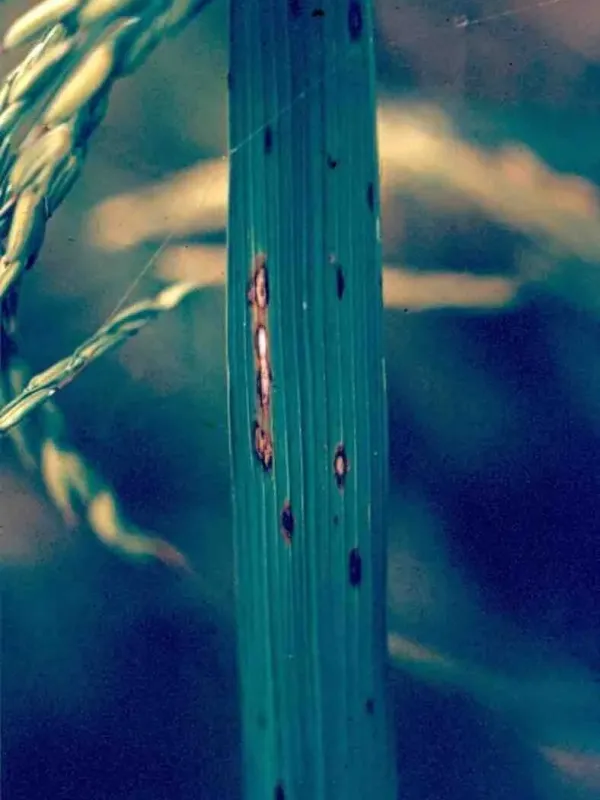
Symptoms typically begin as small, water-soaked spots that evolve into characteristic diamond-shaped or spindle-shaped lesions with necrotic centers and distinct yellow or brown margins.
On rice, a definitive sign is "panicle blast," where the rachis nodes become infected, leading to the blockage of nutrient flow and resulting in white, empty heads that fail to produce grain.
In humid conditions, the lesions often produce an olive-gray sporulating layer, which acts as a primary source of inoculum for secondary infection cycles within the canopy.
- Brown to black lesions on stems, particularly at the nodes, leading to lodging.
- Yellowing and premature necrosis of leaf blades, causing a significant loss in green surface area.
- Reduced grain quality, including shriveled seeds and discoloration of the husk.
Chronic infections lead to stunted growth and reduced tillering, severely compromising the plant's overall development and harvest potential.
Pathogen
The Magnaporthales order includes some of the most destructive fungal pathogens affecting cereal crops globally. The most infamous member, Magnaporthe oryzae, is responsible for the devastating rice blast disease.
These fungi utilize specialized infection structures known as appressoria. These structures generate immense turgor pressure, allowing the fungus to mechanically breach the plant cuticle and cell walls with high efficiency.
The life cycle involves both asexual conidia and sexual ascospores, ensuring both rapid spread during the growing season and long-term survival in crop debris and the soil profile.
Pathogenesis is characterized by the secretion of effector proteins that suppress the host plant's immune system, allowing the fungus to colonize host tissues without triggering an immediate defensive response.
High genetic variability among different strains of these pathogens makes the development of durable resistance in crop varieties a continuous challenge for plant breeders and pathologists.
Conditions for development
The development of Magnaporthales is highly dependent on humidity. Extended periods of leaf wetness, often caused by heavy dew, fog, or frequent rainfall, are essential for spore germination and successful penetration.
Optimum temperatures for infection typically range between 22°C and 28°C. These conditions allow for a short latent period, facilitating rapid secondary spread throughout the field.
High-density planting creates a microclimate with reduced airflow and trapped moisture, significantly increasing the probability and severity of an outbreak.
Over-fertilization with nitrogen promotes excessive, succulent leaf growth, which is softer and easier for fungal appressoria to penetrate compared to hardened, well-nourished tissue.
Effective inoculum buildup is promoted by the continuous cultivation of susceptible varieties and poor management of infected plant residues, which serve as overwintering sites for the fungus.
Why it matters
The economic impact of these fungi is profound, with global yield losses of rice and wheat amounting to millions of tons annually, directly threatening food security in many regions.
Yield reduction occurs not only through direct grain destruction but also through secondary effects like lodging, which prevents effective mechanical harvesting and leads to further field losses.
Quality reduction makes the harvested crop unfit for commercial use or seed purposes, leading to massive financial losses for producers and distributors.
Severe infestations can lead to complete field failure, necessitating total abandonment of the crop in extremely favorable conditions for the pathogen.
The spread of the pathogen via infected seeds presents a significant quarantine challenge, limiting the movement of germplasm and increasing the cost of international agricultural trade.
Protection
The most effective strategy is the integration of genetic resistance. Cultivating resistant or tolerant varieties is the cornerstone of managing these pathogens in endemic areas.
Cultural practices, including deep plowing to bury infected residues, precise irrigation management to reduce humidity, and balanced fertilization, are essential for lowering initial inoculum levels.
Fungicide applications, particularly using systemic strobilurins, triazoles, or carboxamides, are highly effective when timed correctly to coincide with the most vulnerable stages of crop development.
Crop rotation serves to disrupt the life cycle of the fungus, preventing it from establishing a persistent foothold in the field’s soil and debris.
Ongoing monitoring using weather-based forecasting models allows agronomists to predict high-risk periods, ensuring that chemical interventions are applied only when necessary for maximum economic efficiency.
Discussion
No discussions yet — be the first.