
Macrophoma tea blight
Macrophoma theicola
Description
Symptoms
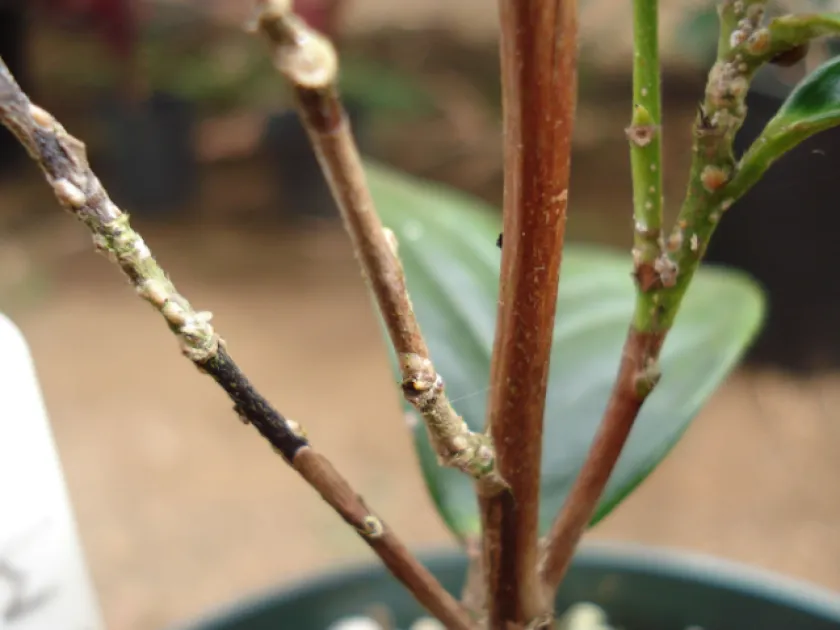
The first sign of infection is the emergence of dark spots on the bark of tea stems. These spots eventually become sunken, indicating necrosis of the tissue underneath the bark.
Over time, numerous small black dots, which are the fungal pycnidia, appear on the infected areas. These structures break through the epidermis to release spores, facilitating further infection.
As the disease progresses, necrosis may encircle the entire stem, stopping the flow of nutrients and causing sudden wilting of the foliage above the affected point.
Infected branches become brittle and break easily under wind pressure or their own weight. The disease often starts on smaller twigs and eventually spreads to the main framework branches.
During visual inspections, a clear contrast is visible between healthy green stems and dry, blackened, or cracked patches. The bark in affected areas often peels off or splits.
Pathogen
The disease is caused by the deuteromycete fungus Macrophoma theicola. This pathogen primarily targets the woody parts or weakened tissues of the tea bush.
The fungus acts as a parasite, entering the plant through mechanical injuries, pruning wounds, or winter frost cracks. It can persist in infected tissues for extended periods through its mycelium and pycnidia.
The pathogen's life cycle is closely tied to the tea plant's seasonal growth. Infected branches left in the field after pruning serve as the primary reservoir for the disease.
Fungal spores (pycnospores) are efficiently disseminated by rain splashes, wind, and contaminated pruning tools. This high mobility allows the infection to spread rapidly across the plantation.
The biology of Macrophoma theicola is characterized by high adaptability to subtropical environments, where it efficiently accumulates biomass inside decaying plant tissues.
Conditions for development
Macrophoma blight thrives in high-humidity conditions and moderate temperatures. Rainfall is the main driver for spore release from pycnidia and their subsequent transport to healthy plant tissues.
Weakened bushes, stressed by frost or drought, are significantly more susceptible to infection. Healthy plants with strong defense mechanisms can often limit the pathogen's spread.
Plantations with dense planting and poor airflow create an ideal microclimate for fungal development. Stagnant, moist air inside the canopy dramatically increases the risk of an outbreak.
Poor agricultural practices, such as pruning during wet weather, are major risk factors. Tools that are not sanitized between bushes act as mechanical vectors for the pathogen.
Unremoved pruned branches left on the ground provide a persistent source of inoculum, allowing the fungus to survive and resume sporulation in the next growing season.
Why it matters
The primary damage from Macrophoma blight is the premature death of fruit-bearing branches, which directly leads to reduced yields and lower quality of the harvest.
The disease exhausts the plant, lowering its vigor and overall resistance to other pathogens. Chronic infections of the skeletal structure significantly decrease the lifespan of the tea bush.
Severe outbreaks result in substantial biomass loss, requiring costly rehabilitation efforts and leading to several years of reduced productivity while the bush recovers.
Economic losses are cumulative, involving the costs of intensive pruning, chemical protection, and lost output. Neglected fields require expensive management to restore their health.
The disease complicates routine plantation management, as it necessitates strict phytosanitary protocols and constant monitoring of the health status of individual bushes.
Protection
Rigorous adherence to pruning standards is the foundation of prevention. All cuts should be clean and smooth, and tools must be disinfected after every bush to prevent cross-contamination.
Prompt removal of infected branches and their immediate disposal (burning or deep burial) is essential to eliminate the primary sources of infection within the plantation.
Preventive application of copper-based fungicides helps protect healthy tissues from infection. These treatments are most effective during high-humidity periods and after heavy rainfall.
Maintaining optimal plant nutrition and health strengthens the tea plant's natural immune system, enabling it to better resist the colonization of Macrophoma theicola.
- Regular field inspections to identify and isolate early infection sites.
- Use of disease-resistant clones and cultivars.
- Disinfection of pruning equipment with 1% copper sulfate or alcohol.
- Canopy thinning to improve air circulation and reduce humidity.
Discussion
No discussions yet — be the first.