
Parasol mushroom
Macrolepiota excoriata
Description
Symptoms
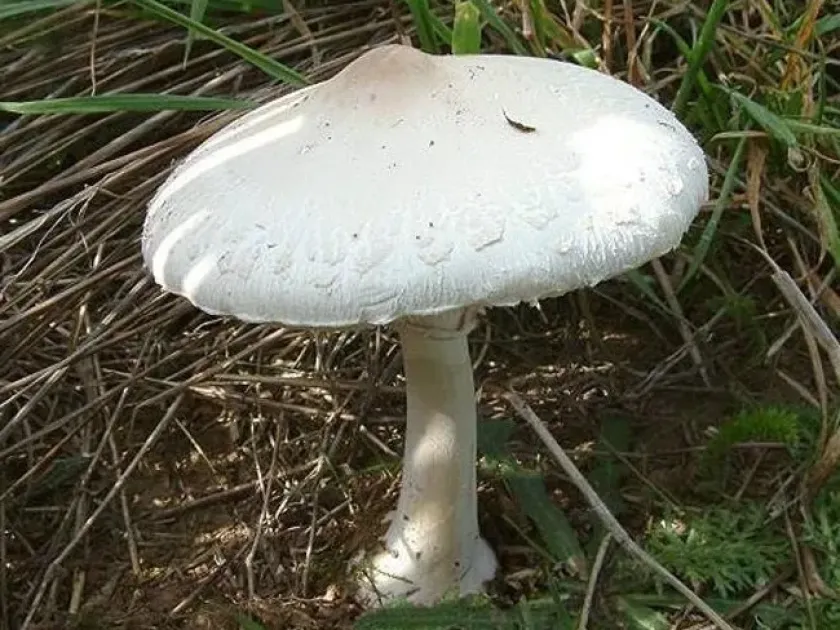
The primary visible sign of this fungus is the formation of fruiting bodies. The cap diameter ranges from 5 to 12 cm, with a cream or brownish color and a characteristic cracked, scaly appearance.
Mycelial activity in the soil often manifests as "fairy rings" or areas with denser, darker green grass growth, caused by the release of nutrients during organic decomposition.
Fruiting bodies typically appear in groups or rows in open fields, pastures, and along field edges. Young specimens are oval, eventually becoming flat with a distinct central bump.
The gills are free from the stem and white, which is a critical diagnostic feature for field identification. The stem is smooth, fibrous, and features a movable ring that may disappear with age.
A specific fungal odor, which intensifies after rainfall, is a strong indicator of active mycelial growth beneath the soil surface, even before the fruiting bodies emerge.
Pathogen
Macrolepiota excoriata is not a phytopathogen affecting living agricultural crops. It is a typical saprotrophic fungus that plays a crucial role in decomposing organic matter within the soil profile.
The organism functions by developing mycelium in the upper humus layer, where it breaks down plant residues, thereby acting as a natural decomposer in agricultural systems.
Biologically, it belongs to the Agaricaceae family. Unlike parasitic fungi, it derives energy from dead organic matter, contributing to the nutrient cycling process in the soil ecosystem.
In an agroecosystem, this fungus acts as a biological indicator of soil health and organic content. Its presence signifies stable humic levels and moderate moisture in the ground.
Systematically, it is a basidiomycete whose lifecycle is closely tied to seasonal temperature fluctuations and moisture levels in the soil during the growing season.
Conditions for development
Macrolepiota excoriata thrives in well-drained, humus-rich soils. It prefers open environments such as meadows, pastures, and the edges of wooded areas or field boundaries.
The development of the mycelium is stimulated by moderate temperatures (15–22°C) and sufficient soil moisture following precipitation, which allows the fungus to vegetate actively.
The fungus is frequently found in areas with livestock grazing, as organic waste increases nitrogen availability, creating an ideal nutrient source for the fungal mycelium.
Light is essential for the formation of fruiting bodies, which is why the fungus avoids densely shaded forests, preferring well-lit agricultural areas.
Spores are dispersed primarily by wind. Once they land in a favorable environment with high humidity and abundant organic matter, they germinate to form new primary mycelium.
Why it matters
Macrolepiota excoriata poses no direct threat to cultivated plants. It is not a pathogen and does not infect or damage the tissues of living crops in any way.
However, massive development of the mycelium can occasionally lead to localized changes in soil chemistry, potentially competing with beneficial microorganisms for nitrogen.
In terms of agricultural management, the emergence of fruiting bodies on lawns or hayfields might be undesirable due to aesthetic concerns or minor changes in the physical properties of the soil.
Secondary issues could include minor soil compaction near active mycelial mats, which might slightly hinder the root development of sensitive crops growing in the immediate vicinity.
In professional agronomy, this object is not considered harmful, and it does not require active control measures to preserve crop yields.
Protection
Specific protective measures are unnecessary since the fungus does not damage crops. Maintenance focuses on general soil health and agricultural practices.
- Regular mechanical cultivation helps disrupt the mycelial network and prevents it from spreading extensively.
- Improving drainage on waterlogged plots limits the activity of basidiomycetes by modifying soil moisture levels.
- Practicing proper crop rotation helps maintain a balanced soil microbiome, discouraging saprotrophic dominance.
- Balanced fertilizer application prevents excessive accumulation of non-decomposed organic matter on the surface.
If the fungus causes aesthetic issues in hayfields, soil liming may be used to shift the pH, as this species prefers neutral to slightly acidic conditions.
Fungicidal treatments are strictly avoided, as they are ineffective against this saprotroph and would cause unnecessary harm to the beneficial soil biota.
Discussion
No discussions yet — be the first.