
Loxospora elatina
Loxospora elatina
Description
Symptoms
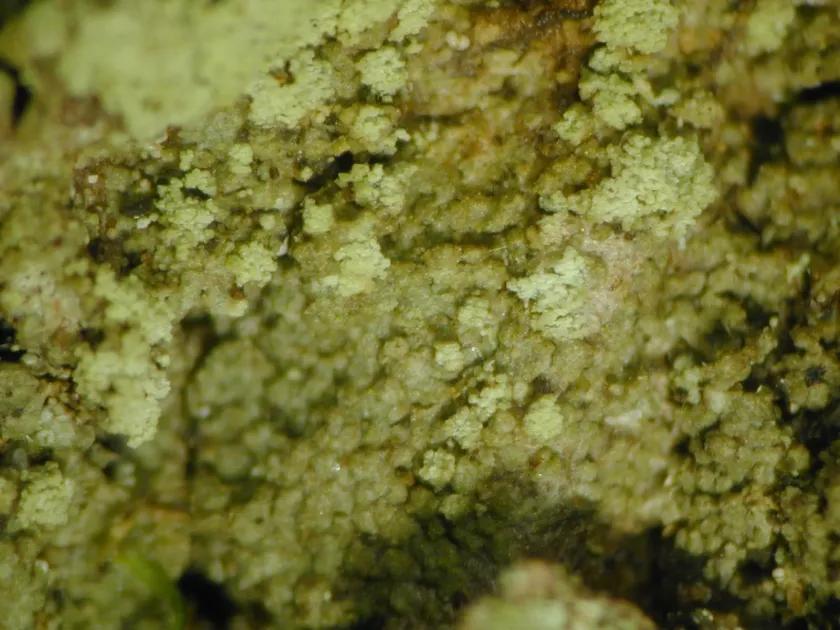
The primary visual sign of Loxospora elatina is the formation of crustose thalli. These appear as small, thin, greenish-gray or whitish patches closely adhered to the bark surface.
A distinctive feature of this species is the presence of apothecia—the sexual reproductive structures of the fungus. They appear as small, disk-shaped bodies that are reddish-brown to dark brown, contrasting with the lighter thallus.
The thallus can have a granular or wart-like texture, which is a key diagnostic characteristic. Over time, these small patches can merge, creating larger, irregular crusts across the trunk or branches of conifers.
The growth is typically observed on the rougher bark of older trees. It does not create lesions, cankers, or rotting tissues, which helps distinguish it from true pathogenic fungi that affect wood and cambium.
Under moist conditions, the color of the lichen may deepen, and the thallus can become slightly more pliable, allowing for easier observation of its morphology compared to dry, brittle states.
Pathogen
Loxospora elatina is not a plant pathogen but a species of lichen belonging to the family Lecanoraceae. In forestry and botany, it is classified as an epiphyte, a life form that grows on the surface of plants without deriving nutrients from them.
Like all lichens, this species is a mutualistic symbiosis between a fungus (the mycobiont) and algae (the photobiont). The fungal structure provides protection and attachment, while the algae perform photosynthesis to provide energy.
This species is specifically known for its presence on the bark of coniferous trees. It is not an invasive or parasitic organism; it does not harm the physiological processes or the structural integrity of the host tree.
The lichen is particularly sensitive to atmospheric quality, making it a recognized bioindicator. Its presence in forest ecosystems often suggests low levels of air pollution, particularly sulfur dioxide, which is toxic to many lichen species.
Loxospora elatina typically colonizes the bark of mature trees, where the microenvironment remains stable enough for the slow growth of the thallus over many years.
Conditions for development
High relative humidity is the most critical factor for the development of Loxospora elatina. It absorbs moisture directly from the atmosphere, making it common in foggy or damp forest environments.
The species prefers cool to moderate climates. It is frequently found in old-growth forests or stable woodland areas where the microclimate is sheltered from extreme temperature fluctuations.
Clean air is essential. As a sensitive bioindicator, it will not thrive in industrial areas or locations with high levels of atmospheric pollutants, which can kill or inhibit the growth of sensitive lichen species.
Light availability is also a factor. While it does not require full sunlight, it avoids deep shade where the algal component cannot effectively photosynthesize. It prefers light, airy environments typical of mature coniferous forests.
The stability of the bark substrate is important. The lichen favors old-growth trees with thick, fissured bark that provides a permanent surface, as opposed to young trees with smooth bark that sheds frequently.
Why it matters
Loxospora elatina is considered harmless to its host trees. It does not cause disease, growth reduction, or timber degradation. It acts purely as a passive occupant of the bark surface.
There are no recorded instances of this lichen interfering with tree health. It does not parasitize the tree's vascular system, nor does it excrete toxic substances that would damage the plant's tissues.
Some concerns regarding "lichen infestations" are usually based on aesthetic preferences rather than biological reality. The presence of lichens should be seen as a sign of a healthy, functioning forest ecosystem.
The lichen does not provide a bridge for other pests or diseases. In fact, it supports biodiversity by providing habitats for various micro-invertebrates that are beneficial to the forest soil and ecosystem health.
In conclusion, the presence of Loxospora elatina is ecologically positive. Forest managers should not view it as a target for control or eradication, as it is a component of natural forest diversity.
Protection
No control measures are necessary for Loxospora elatina. Since the lichen causes no harm, any attempts to remove it are biologically unnecessary and may disturb the natural balance of the forest.
Good forest management practices, such as proper thinning, ensure that trees have sufficient airflow. This natural regulation is the best way to maintain forest health, though it is not done specifically to target lichens.
If the appearance of lichens is undesirable in ornamental or landscaped settings, mechanical removal using a soft brush is the only recommended approach. Chemical treatments should strictly be avoided.
Monitoring efforts should focus on identifying genuine threats, such as bark beetles or fungal pathogens that cause necrosis. Misdiagnosing a harmless lichen as a disease can lead to wasted resources and unnecessary use of chemicals.
Preservation of this species is often encouraged in forestry, as it serves as a valuable bioindicator for long-term ecological health and air quality monitoring within the region.
Discussion
No discussions yet — be the first.