
Pine needle cast
Lophodermium pinastri
Description
Symptoms
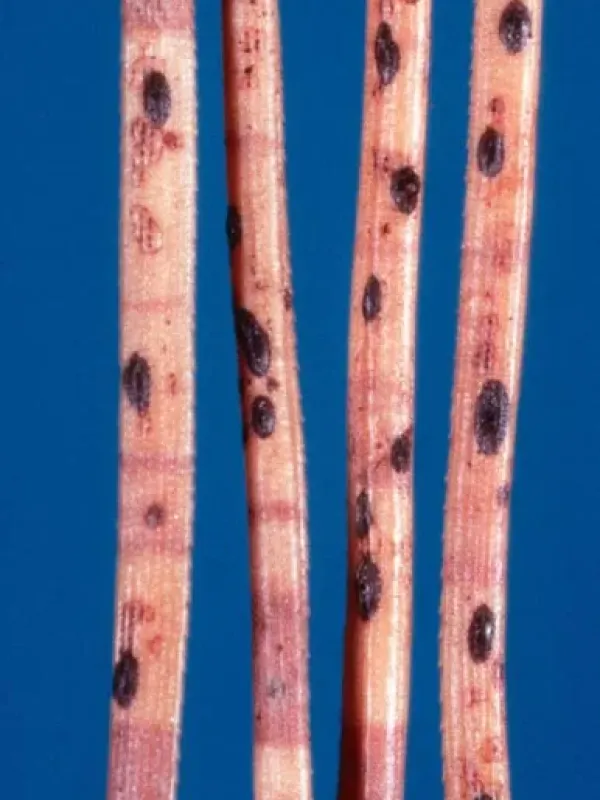
The primary symptom of Pine needle cast is the yellowing of needles in late summer, which later turns into a reddish-brown color.
Fine black transverse lines appear across the needles, serving as a distinctive diagnostic feature of the Lophodermium pinastri fungus.
During winter and early spring, small, elongated, black, shiny fruiting bodies known as apothecia develop on the needles.
As spring approaches, the affected needles shed prematurely, resulting in sparse foliage and thinning of the tree's crown.
Young trees show signs of decline, including stunted growth and the potential for total needle loss when the infestation is severe.
Pathogen
The disease is caused by the ascomycete fungus Lophodermium pinastri, which specifically targets various pine species.
The pathogen reproduces by releasing airborne ascospores, which travel to healthy needles during moist and mild weather conditions.
Once the spores germinate, the fungus colonizes the internal tissues of the needle, disrupting the tree's vital metabolic processes.
The fungus maintains its presence in the ecosystem by surviving in the fallen needle litter, acting as a reservoir for recurring infections.
The biological cycle of the fungus is highly adapted to the life span of pine needles, allowing it to complete its development phase efficiently.
Conditions for development
High humidity, frequent rainfall, and moderate temperatures are the key environmental triggers for the spread of the disease.
Dense plantings with poor air circulation create a conducive environment for the fungus to thrive and propagate its spores.
Trees that are already stressed due to poor soil fertility, drought, or inadequate light exposure are significantly more susceptible.
Mild and damp autumns create a perfect climate for the development of fungal structures, increasing the risk for the next season.
Lack of sanitation in nurseries or woodland management leads to the accumulation of inoculum, which facilitates large-scale outbreaks.
Why it matters
The loss of needles significantly reduces the tree's photosynthetic capacity, causing stunted development and reduced vigor.
In severe cases, the tree may experience branch dieback or total mortality, especially in young saplings or weakened trees.
The presence of the disease compromises the tree's immune system, making it an easy target for secondary pests and wood-boring insects.
Pine needle cast causes substantial economic losses in timber production and nursery operations due to seedling mortality.
Ornamental landscapes lose their aesthetic appeal and health, often requiring intensive care to restore their natural appearance.
Protection
Effective management begins with proper sanitation, which includes the removal and destruction of all fallen needle litter beneath the trees.
Applying fungicide sprays during the peak spore-release period is crucial for preventing infection in high-risk environments.
Improving cultural practices, such as spacing trees correctly to ensure good airflow, is essential for long-term health.
- Regular application of copper-based or systemic fungicides.
- Sanitation by clearing and burning infected needle debris.
- Promoting tree vigor through balanced fertilization and hydration.
Nurseries should implement strict quarantine measures and regular monitoring to detect and treat outbreaks before they escalate.
Choosing resistant pine varieties and ensuring healthy soil conditions help in building a resilient forest stand or garden environment.
Discussion
No discussions yet — be the first.