
Lophodermella needle cast
Lophodermella conjuncta
Description
Symptoms
The primary symptom is the yellowing or browning of the current year's needles. A distinctive feature is the clear demarcation line between the healthy green tissue and the affected, discolored portion of the needle.
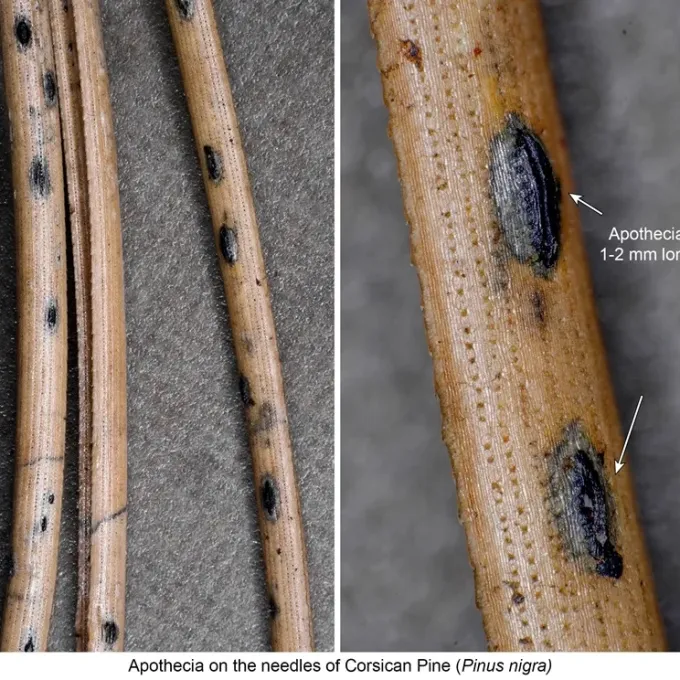
Small black, elongated fruiting bodies appear on the surface of the infected needles as the disease progresses. These are arranged in longitudinal rows, which is a hallmark of this specific fungal pathogen.
Affected needles often become brittle and shed prematurely, which significantly impacts the aesthetic appearance of the trees. In severe infestations, large portions of the canopy can turn brown within a single season.
As the season advances, the needles transition to a grayish-brown color. Microscopic examination of the hysterothecia reveals the specific structures where spores are housed and released.
Unlike some other needle cast diseases, the damage caused by Lophodermella conjuncta often results in a more rapid and uniform browning of the needles, making it easier to diagnose in field conditions.
Pathogen
The causative agent of this disease is the ascomycete fungus Lophodermella conjuncta. It is a specialized pathogen that primarily targets pine needles, leading to their premature decline and shedding.
The life cycle of the fungus is strictly synchronized with the phenology of the host pine trees. During the summer, the fungus produces fruiting bodies known as hysterothecia on infected needles, which release spores to initiate new infections.
The pathogen overwinters as mycelium and dormant spore structures within the fallen needles or on dead needles attached to the branches. This allows the disease to persist in the environment from one season to the next.
Spores are dispersed by wind and rain, infecting healthy needles via stomata. Once inside, the fungal mycelium colonizes the needle tissue, eventually leading to chlorosis and necrosis.
The cycle of infection can span one to two years depending on environmental conditions. Understanding this biological cycle is essential for timing disease management and control efforts effectively.
Conditions for development
High humidity and frequent rainfall are the most critical factors favoring the spread of the disease. These conditions facilitate spore germination and their entry into the plant tissues.
Dense, poorly ventilated stands of pine provide an ideal microclimate for the fungus, as stagnant air and trapped moisture accelerate the rate of infection across the population.
Trees under environmental stress, such as drought or nutrient deficiency, exhibit higher susceptibility to the infection. The physiological status of the tree plays a major role in its ability to resist the pathogen.
Temperatures ranging from 15 to 20 degrees Celsius are optimal for the pathogen's growth and spore production. Seasonal weather patterns in spring and early summer are decisive for epidemic development.
The presence of infected needle litter acts as a significant reservoir for the pathogen, ensuring a recurring source of inoculum if sanitary measures are not implemented.
Why it matters
The primary damage is caused by the impairment of the tree's photosynthetic capability. Excessive needle loss leads to reduced growth rates and a decline in overall tree vitality and resilience.
Prolonged infection cycles can lead to canopy thinning, branch dieback, and, in severe cases, the mortality of young or weakened trees. This results in direct economic losses for forestry operations.
Trees weakened by this disease are more susceptible to secondary attacks by wood-boring insects, such as bark beetles. The disease acts as a catalyst for a more rapid decline in forest health.
In nurseries, the presence of the disease ruins the quality of seedlings, making them unsellable and causing financial losses for producers. Effective management is crucial for the success of nursery stocks.
The alteration of the forest ecosystem due to needle loss affects local biodiversity and diminishes the recreational and conservation value of the affected woodland areas.
Protection
Effective control requires an integrated approach starting with the removal and destruction of heavily infected material. Sanitary thinning to improve airflow is a primary preventive measure in forest stands.
In nursery settings, fungicide applications during the period of active growth are recommended to protect the needles from infection. Proper timing, coinciding with spore release, is critical for effectiveness.
Maintaining optimal planting densities helps reduce the humidity within the canopy, creating a less favorable environment for the pathogen. Preventive cultural practices are as important as chemical ones.
Regular forest pathology monitoring allows for early detection of the disease, enabling management to act before an epidemic occurs. Selective breeding for resistant pine genotypes is also a long-term goal.
- Implementation of annual sanitation cuttings.
- Application of contact or systemic fungicides in high-risk areas.
- Improving stand aeration through selective tree thinning.
- Proper fertilization to boost tree host defenses against infection.
Discussion
No discussions yet — be the first.